
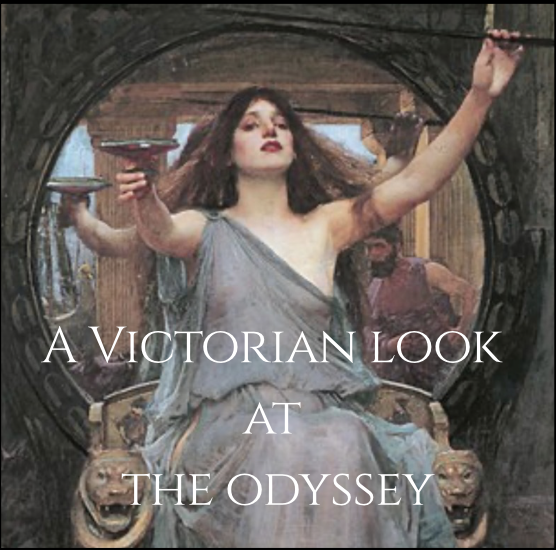
Christopher Nolan’s The Odyssey opened in cinemas on July 17th, carrying Homer’s ancient journey onto the vast scale of the IMAX screen. But long before Odysseus sailed into movie theatres, Victorian artists were imagining his world in paint, with its dangerous songs, commanding sorceresses, and uneasy encounters between curiosity and self-control. In this first post of the series, we’ll look at John William Waterhouse’s richly detailed visions of The Odyssey, and at the Victorian ideas quietly woven through them.
Ulysses and the Sirens
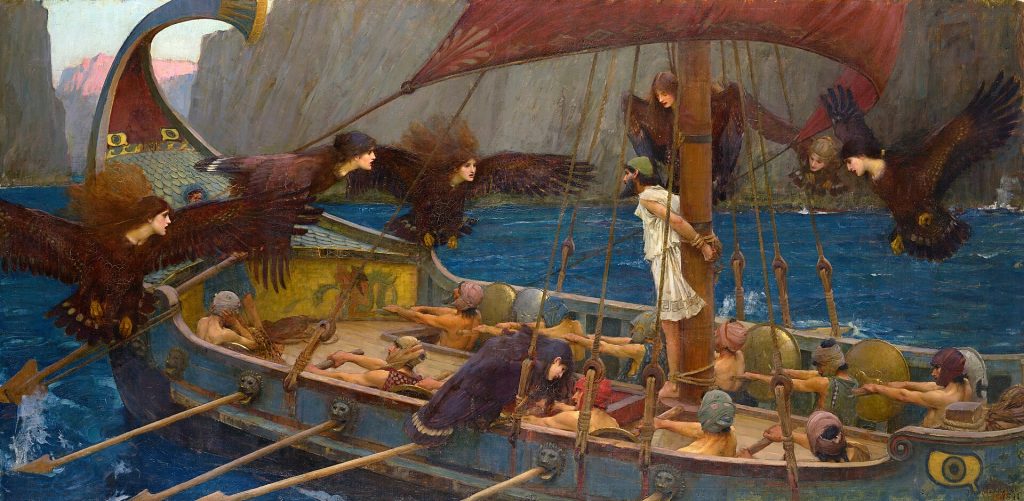
Waterhouse paints Odysseus tied to the mast as bird-like Sirens approach his ship. His sailors, with their ears blocked, keep rowing.
The painting looks at both temptation and preparation. Odysseus told his crew to block their ears so they wouldn’t hear the Sirens’ song. He wanted to listen, so he asked them to tie him to the mast so he could hear, but also be unable to steer himself or the ship into danger. Odysseus survives because he knows willpower alone isn’t enough in his situation, showing a different kind of resistance.
Penelope and the Suitors
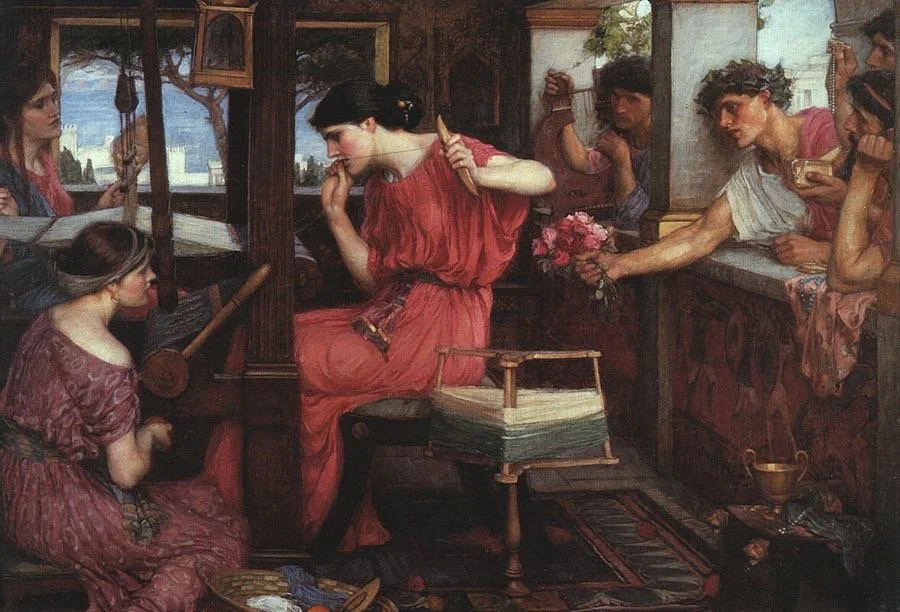
Penelope sits at her loom while suitors gather and offer gifts. Every day she weaves, and every night she quietly unravels her work to delay making a decision.
Her resistance is quiet but determined. Odysseus relies on his ship, while Penelope uses her thread. Both use what they have to survive their separation.
Circe Offering the Cup to Ulysses
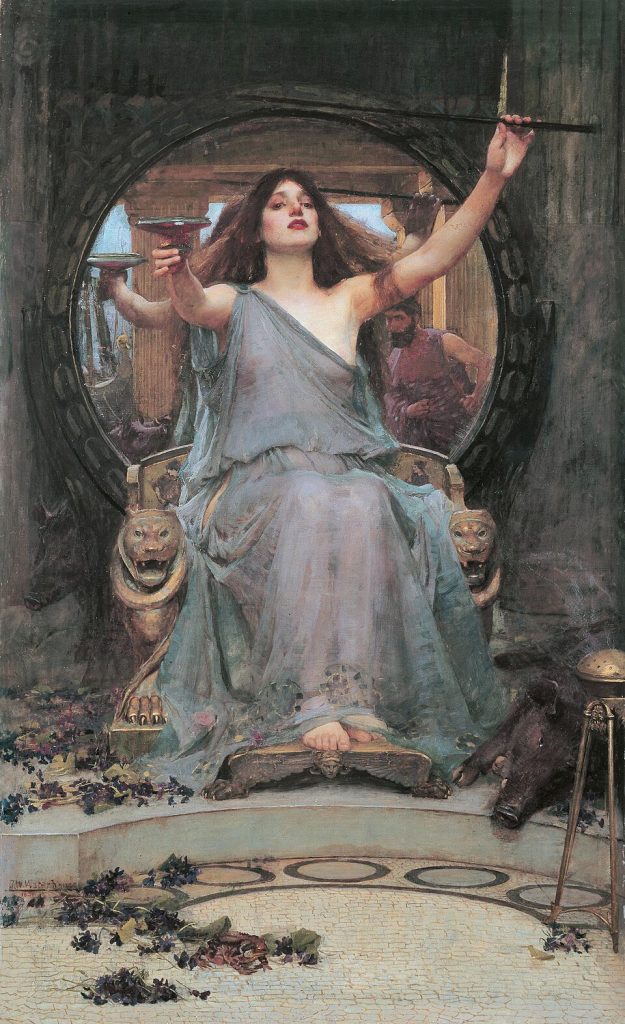
Circe looks directly at the viewer and holds out her cup. Odysseus appears only as a reflection in the mirror, while Circe controls the scene.
Waterhouse presents her as confident and powerful. She holds the room and the viewer’s attention, shifting the painting’s focus from seduction to authority.
Together, these paintings reveal what attracted Victorian artists to Homer: longing, self-control, resourceful women, and the perilous journey home.
Cinema brings The Odyssey to life with movement, while painting captures the moment just before a decision. Together, they make Homer’s story of return even more dramatic.