Category: Dante Gabriel Rossetti

English poet, illustrator, painter, translator, and member of the Rossetti family. He founded the Pre-Raphaelite Brotherhood in 1848.

  • “You Wouldn’t Hang a Stunner”: Rossetti and the Madeleine Smith Murder Trial

    “You Wouldn’t Hang a Stunner”: Rossetti and the Madeleine Smith Murder Trial

    Key Takeaways

    • Madeleine Smith stood trial in 1857 for the murder of her former lover, Pierre Emile L’Angelier, becoming a subject of public fascination.
    • The relationship between Madeleine and L’Angelier was secretive, with passionate letters that ultimately put her future at risk.
    • L’Angelier’s death from arsenic poisoning led investigators to Madeleine, who had previously purchased arsenic, making her a prime suspect.
    • Despite the scandal, the court ruled ‘not proven,’ and Madeleine continued her life, marrying George Wardle and later moving to New York.
    • The case reflects Victorian society’s obsession with crime and the complex interplay between beauty and morality, as illustrated by Rossetti’s remark on Madeleine.

    In 1857, a twenty-two-year-old woman stood trial in Glasgow for murdering her former lover, and Victorian Britain did what it does best: turned scandal into spectacle.

    Her name was Madeleine Smith, and she was not only accused; she was watched. Reported on. Speculated over. Consumed in newspapers the way we consume true-crime documentaries now, except with more soot, more sermons, and far fewer guardrails.

    And somewhere down in London, in the orbit of the Pre-Raphaelite circle, artist Dante Gabriel Rossetti heard about the case and delivered a remark so Rossettian it feels like a shard of his personality in a single line:

    “you wouldn’t hang a stunner!”
    (“Letters of D. G. Rossetti,” Atlantic Monthly, vol. 77)

    Rossetti used “stunner” often, his favorite shorthand for beauty with impact, beauty that almost feels like a force. But here, the word lands with a strange shiver. It’s funny in that appalling way men can be funny about women in danger. It’s a compliment that doubles as a verdict: she’s too beautiful for consequences.

    Which is, of course, its own kind of sentence.

    Madeleine Smith and the Secret Romance

    Madeleine was the daughter of an upper-middle-class family. Respectability was part of her furniture. Then she met Pierre Emile L’Angelier, a clerk at a shipping firm, who was low income, with uncertain prospects, and, crucially, not “acceptable.”

    So they did what so many people do when a relationship can’t survive daylight: they made it a secret.

    There were letters, of course. Dramatic, poetic, deeply Victorian love letters, full of the intensity that feels like forever right up until it doesn’t.

    Their relationship became sexual, and they wrote about it openly to each other. That detail matters, because it becomes the lever that could ruin her.

    Because once Madeleine’s feelings cooled and once her parents introduced her to William Minnoch, a suitable match in every social sense, L’Angelier suddenly held something dangerous:

    He had her words. In ink. In her handwriting.

    And he could use them to destroy her future.
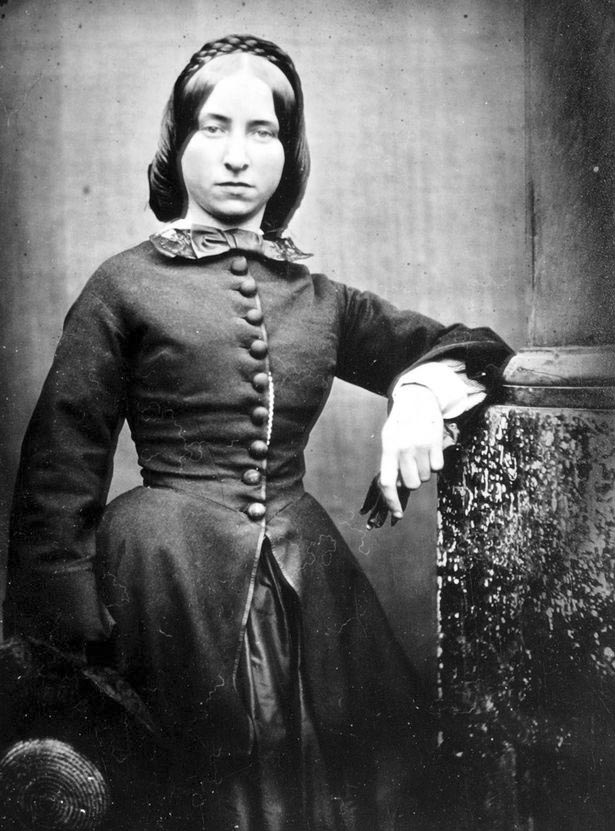
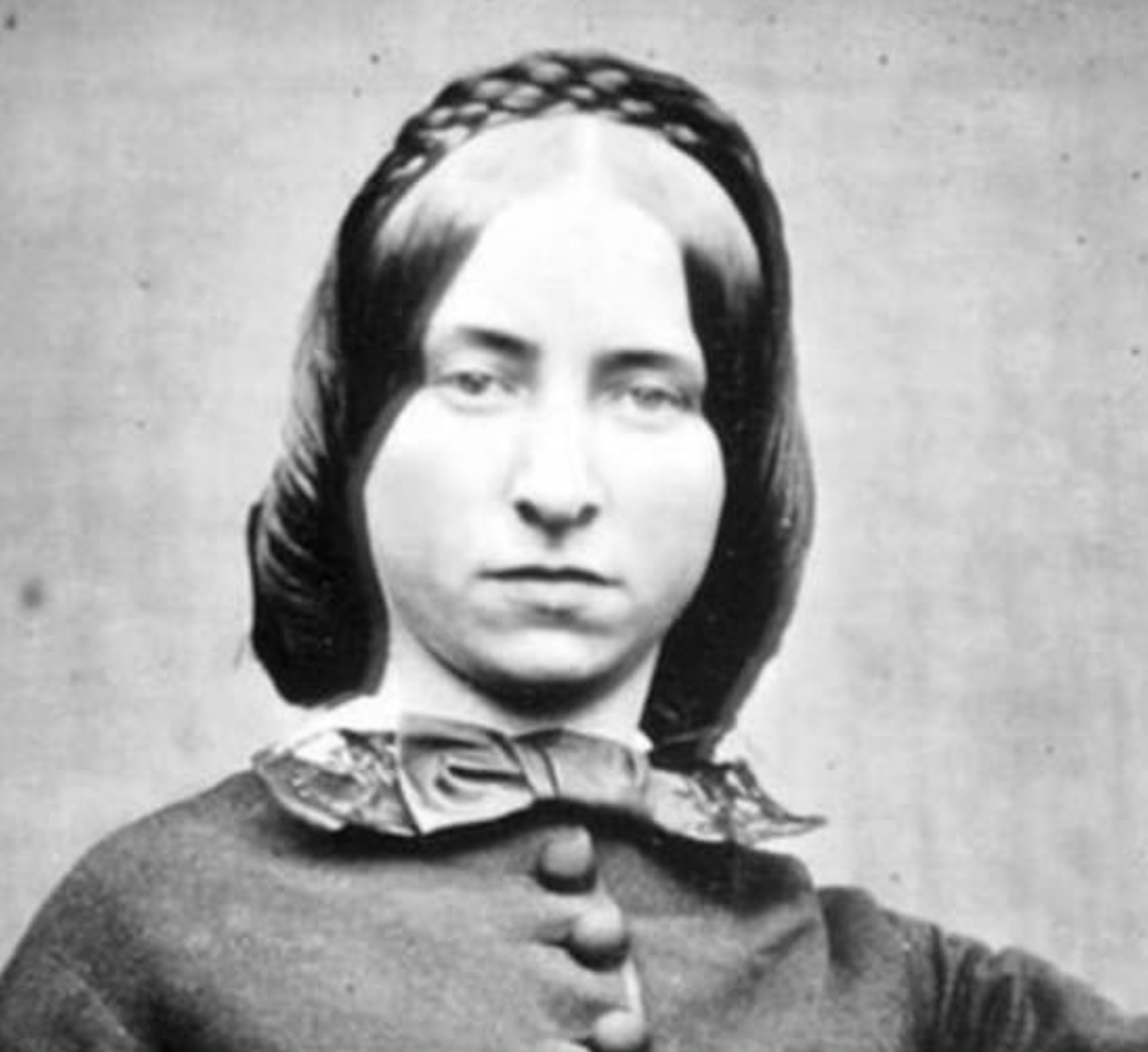
    Madeleine Hamilton Smith
    Madeleine Hamilton Smith. Did she murder L’Angelier?

    Arsenic, the “Poison Book,” and a Trail in Plain Sight

    When L’Angelier died of arsenic poisoning, investigators found Madeleine’s letters among his possessions, and the case snapped into a shape that the public could follow with relish.

    There was also the practical horror of proof: it was established that Madeleine had purchased arsenic twice and signed the “Poison Book” at the time of purchase. An ordinary administrative detail that, in a sensational trial, becomes a spotlight.

    The press seized the story. In The Invention of Murder, Judith Flanders describes the appetite for this kind of coverage and the protective language used around “good families,” a tone that tries to maintain decorum while the public crowds in for a better view. (You can almost hear the polite panic in lines like, “We fervently trust that the cloud over her head… may be speedily removed.”)

    And the Pre-Raphaelite circle, so steeped in sympathetic Guineveres and Ophelias, so practiced at painting women as tragic and tender, followed too. It’s easy to imagine how Madeleine Smith might have been folded into their emotional imagination: a young woman “led astray,” cornered by the consequences of desire, punished by a society that loved to moralize after it had finished gawking.

    Hence Rossetti: too beautiful to hang.
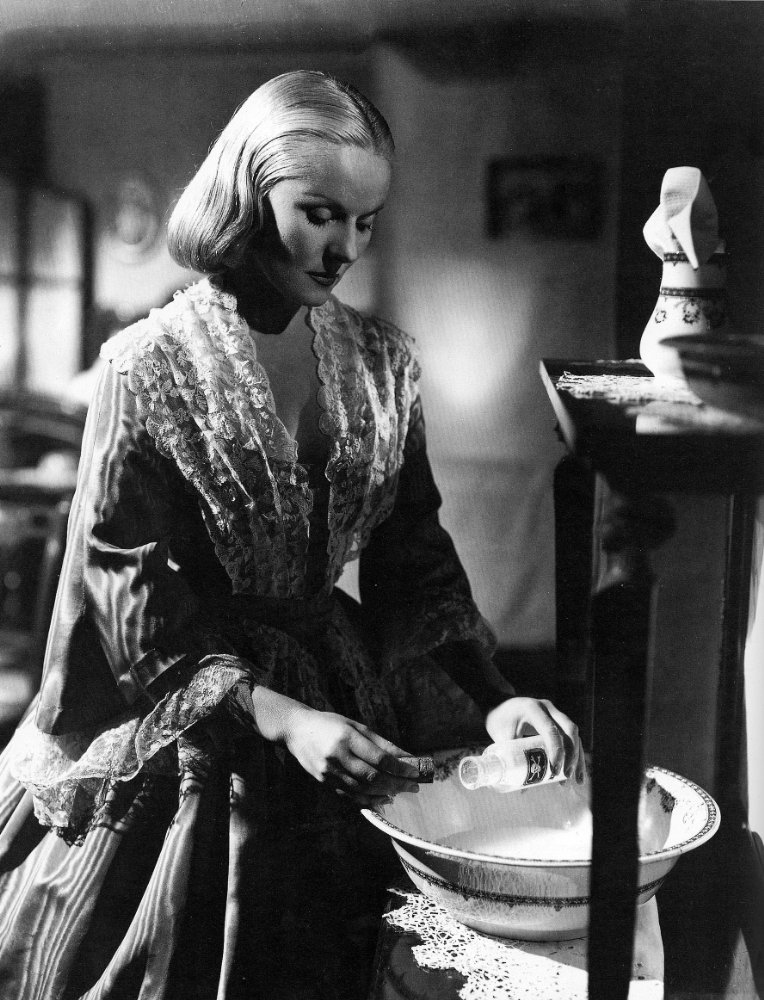
    Ann Todd as Madeleine Smith
    Actress Ann Todd portrayed Madeleine Smith in the 1950 film ‘Madeleine’, directed by Todd’s husband David Lean.

    “Not Proven”

    In the end, the verdict was “not proven.” Madeleine was released.

    She left Glasgow. She did not marry Minnoch. Her life continued, but not as it had been. Notoriety has a way of becoming a shadow that follows you into every room.

    And here is the twist that feels almost designed for a Guggums post, one of those strange little stitches connecting art world circles to scandal-world headlines:

    In 1861, Madeleine married George Wardle, a manager at Morris & Co., a man Rossetti and his circle knew well. Rossetti later wrote a satire, The Death of Topsy, in which Madeleine poisons William Morris with coffee. (Victorian men had many ways of processing their anxieties; satire was one of their safer outlets.)

    Madeleine and Wardle separated in 1889. She later moved to New York, remarried (to William Sheehy), and lived until 1926, long enough for the scandal to fade into “story,” the way public hunger always eventually moves on to the next thing.

    She may never have known that a famous painter/poet weighed in on her fate with a breezy line about beauty and execution.

    Why the Victorians Couldn’t Look Away

    The Madeleine Smith trial sits inside a larger Victorian obsession: murder as mass entertainment.

    There was a market for souvenirs of hangings. People bought pieces of the execution rope. Penny publications, called penny bloods and penny dreadfuls, fed a public appetite for villainy, gore, and moral panic packaged as thrill.

    And that appetite didn’t vanish. It evolved.

    It helped build the runway for sensation fiction and the detective story, genres that still shape what we frequently watch and read today.

    The Mystery Lineage (and the Pre-Raphaelite Overlap)

    Victorian crime culture helped produce the fictional mysteries we now treat like comfort food… cozy, macabre, brainy, addictive.

    And in that lineage, you can find flickers of Pre-Raphaelite connection:

    • Wilkie Collins, friend to Millais, gave us The Woman in White and The Moonstone, stories full of identity, concealment, and dread disguised as domestic order.
    • Mary Elizabeth Braddon gave us Lady Audley’s Secret, a sensation novel with a deliciously painterly awareness of surfaces and the violence they can hide.
    • Sherlock Holmes became the enduring Victorian detective, endlessly reimagined, and Holmes’s world even brushes against the Pre-Raphaelite orbit through the shadowy figure of Charles Augustus Howell, often cited as a model for Doyle’s villain Charles Augustus Milverton.

    What I love about these overlaps is that they reveal something the Victorians understood instinctively: beauty and danger are not opposites. They are often co-conspirators. The prettiest room can hide the darkest story. The most “respectable” household can be the one that needs the most careful looking.

    What Rossetti’s “Stunner” Line Really Exposes

    On the surface, Rossetti’s quip is easy to repeat. It’s witty, scandalous, irresistibly quoteable.

    But underneath it, there’s an uncomfortable truth: Madeleine’s beauty became part of the public argument about what she deserved. As if appearance could cancel out culpability or amplify it.

    As if a face could be a defense.

    As if a woman’s fate could be weighed on a scale where one side is morality and the other is the aesthetic pleasure she provides.

    The Victorians loved to paint women as symbols. They also loved to punish them for being human.

    And Madeleine Smith, whatever the truth of what happened between her and L’Angelier, became a perfect vessel for that contradiction.

    She was a scandal.
    A story.
    A stunner.
    A warning.

    And, like so many women in Victorian culture, she became legible to the public in ways that may have had very little to do with who she actually was.

    Which is exactly why she still haunts the imagination.
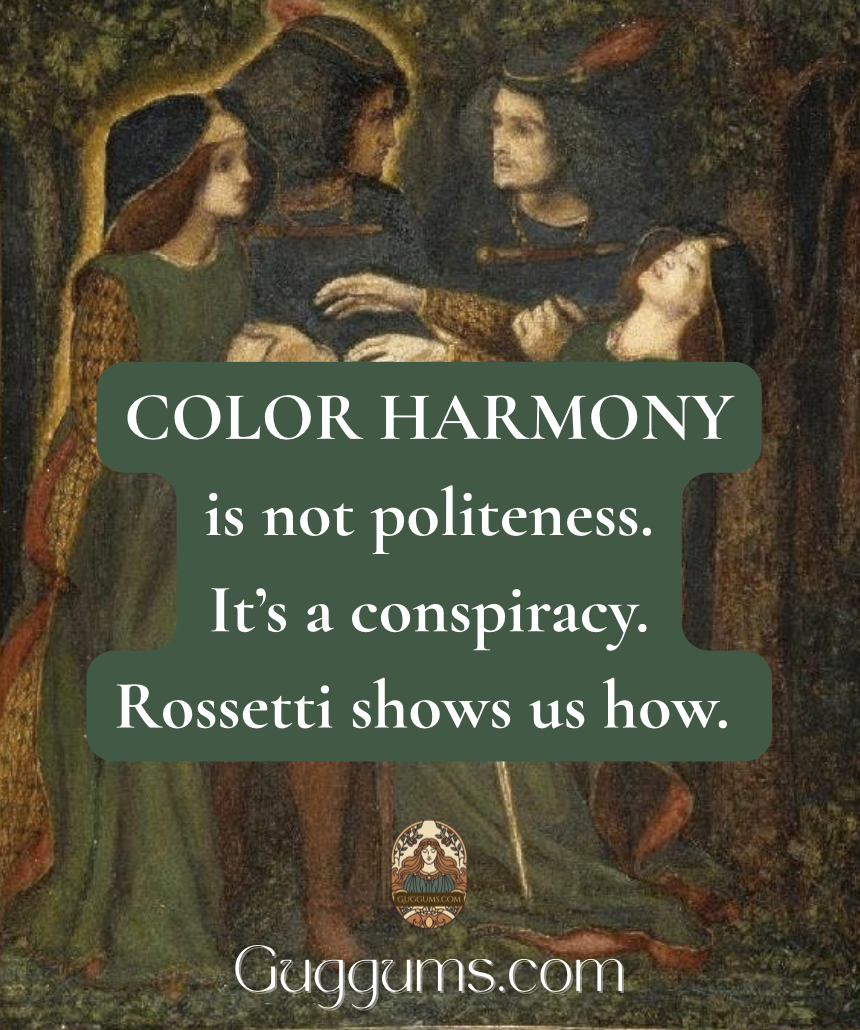
  • Color Harmonies, Explained (With Rossetti as Our Mischievous Guide)

    Color Harmonies, Explained (With Rossetti as Our Mischievous Guide)

    Color harmony sounds like a polite term, as if it should wear a waistcoat and speak softly in a museum.

    But in practice, it’s closer to a well orchestrated conspiracy: colors making private agreements in the corner of a painting, deciding who gets to glow, who must recede, and who will quietly ruin the mood.

    To keep it simple: color harmony is the way colors relate to each other so the image feels unified, even when the scene is tense, eerie, or emotionally unsteady.

    Today we’ll use two Rossetti paintings as our case studies:

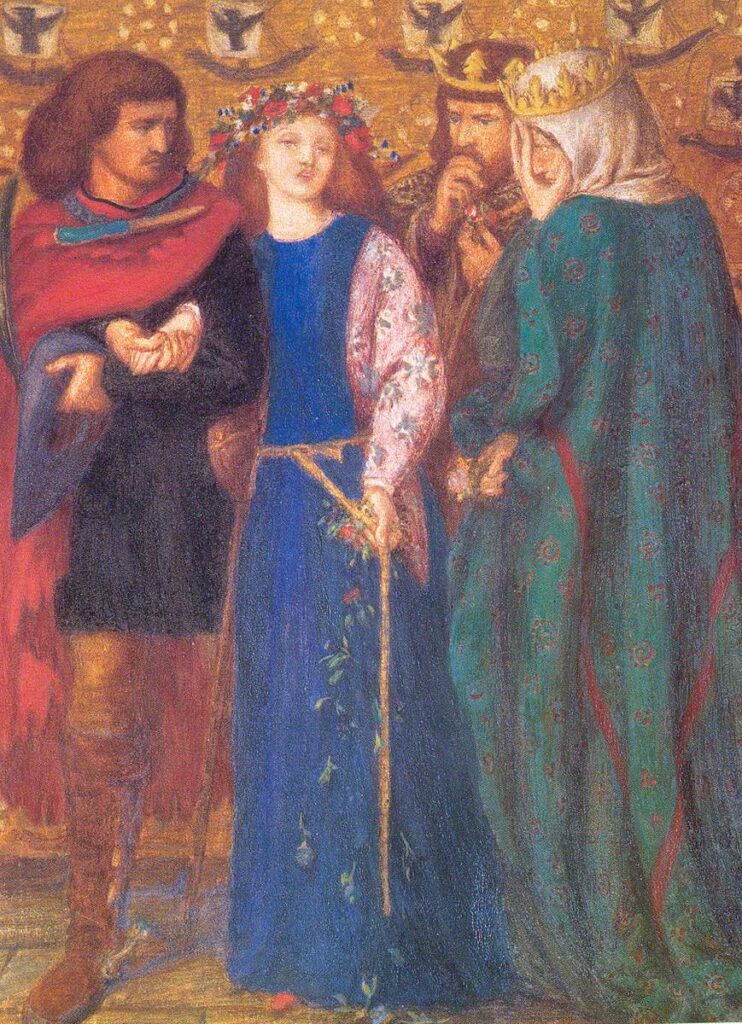
    • The First Madness of Ophelia a bright, jewel toned stage where color plays court politics.
    • How They Met Themselves  a dark forest where color whispers, doubles back, and does something unsettling behind your shoulder.

    The Four Harmonies You’ll Actually Use

    Analogous harmony (neighbors on the color wheel)

    Colors that sit beside each other: like green/blue/teal, or red/orange/gold.
    Effect: calm, cohesive, “all from the same world.”

    Complementary harmony (opposites)

    Colors across the wheel: like red/green or blue/orange.
    Effect: drama, vibration, attention. It’s the visual equivalent of someone saying, Excuse me? in a drawing room.

    Triadic harmony (three evenly spaced colors)

    Think red, blue, yellow (or versions of them).
    Effect: lively balance, storybook clarity, controlled energy.

    Tonal harmony (one family, many values)

    A limited palette with shifts in light/dark rather than hue.
    Effect: atmosphere, unity, mood, like fog in paint form.

    The First Madness of Ophelia: Harmony as Social Theater

    In The First Madness of Ophelia, Rossetti gives you a scene that feels decorative on first glance (gold, blue, red, green) until you notice how carefully the colors are arranged, like people placed at a dinner table to cause maximum tension without anyone “making a scene.”

    madness of ophelia
    The First Madness of Ophelia; Dante Gabriel Rossetti

    What you’re seeing, harmonically

    A blend of complementary and triadic harmony:

    • Blue (Ophelia’s dress) acts as the emotional anchor; cool, steady, and a bit removed.
    • Gold/orange (the background) presses forward, warming and enclosing her. It’s rich, theatrical, almost airless.
    • Red accents (in clothing and details) spike the whole arrangement with urgency.
    • Greens (notably in surrounding garments) act as a mediator. Earthy, tempering, but also quietly ominous.

    Why it works

    Rossetti is balancing hot vs. cool and stillness vs. flare:

    • Blue vs. gold is a classic complement (cool/warm opposition).
    • The red notes keep your eye moving like gossip traveling across a room.
    • The gold ground unifies everything, like varnish on a secret.


    This painting is what happens when Blue tries to remain composed at a party, Gold keeps leaning too close, and Red keeps interrupting with scandalous remarks. Meanwhile Green stands by the wall pretending to be helpful while taking notes.

    Takeaway you can use

    If you want a composition to feel coherent but tense, try this:

    • Choose one dominant color (Ophelia blue)
    • Surround it with its warm opposite (gold/orange)
    • Add tiny red “alarms” to direct attention

    How They Met Themselves: Harmony as a Trap

    This Rossetti painting is a very different creature: a forest scene, dim and enclosed, where figures double and the atmosphere feels like it’s holding its breath.

    Dgr Metthemselves
    How They Met Themselves, Dante Gabriel Rossetti (1864) Two lovers walk through a forest and encounter their own doppelgangers.

    What you’re seeing, harmonically

    Tonal harmony with a controlled red/green complement:

    • The whole painting lives in a restricted world of deep greens, browns, and black.
    • That limitation creates tonal unity, everything belongs to the same air, the same hour, the same moral weather.
    • Then Rossetti introduces red in small but strategic places (trim, details), and suddenly the image has a pulse.

    Why it works

    When you limit hue, value (light/dark) and temperature become the drama:

    • The forest is a single harmonic “key”, like a piece of music that refuses to modulate.
    • The figures feel caught inside it, because the palette doesn’t offer an escape route.
    • Red becomes the signal flare: not enough to brighten, just enough to warn.

    Perhaps this forest is not merely a forest. It is a well trained predator wearing green. The reds are its teeth, kept politely out of sight until you’re close enough to notice.

    Takeaway you can use

    If you want mood (and mild dread) in your own palette:

    • Keep most colors in one family (greens/browns)
    • Push contrast using light/dark values
    • Add a small complementary accent (a controlled red) to make the image feel “alive”

    A Simple Way to Spot Harmony in Any Painting

    1. What color dominates? (the “boss”)
    2. What color opposes it? (the “argument”)
    3. What color connects everything? (the “glue”, often golds, browns, grays, or repeated neutrals)

    In Ophelia, the glue is that golden atmosphere.
    In How They Met Themselves, the glue is the dark green/brown tonal world.

    Try This: Two Quick Color-Harmony Exercises

    Exercise A (Ophelia style)

    Pick:

    • 1 dominant cool (blue)
    • 1 enclosing warm (gold/orange)
    • 1 small alarm accent (red)

    Use it in a mood board, a room palette, a graphic… anything. Keep red small.

    Exercise B (Forest style)

    Pick:

    • 3 related darks (greens/browns/near-black)
    • 1 tiny opposite accent (red)

    Make the mood work by shifting light/dark, not adding more colors.

    Rossetti understood that harmony isn’t the same as happiness. Sometimes harmony is how a painting locks a feeling in place, beauty arranged so perfectly it becomes a kind of spell.

    And if you’re thinking, That’s dramatic for a color wheel, well… that’s exactly the point.

  • She Asked to Be Remembered: Rossetti’s La Pia de’ Tolomei

    She Asked to Be Remembered: Rossetti’s La Pia de’ Tolomei

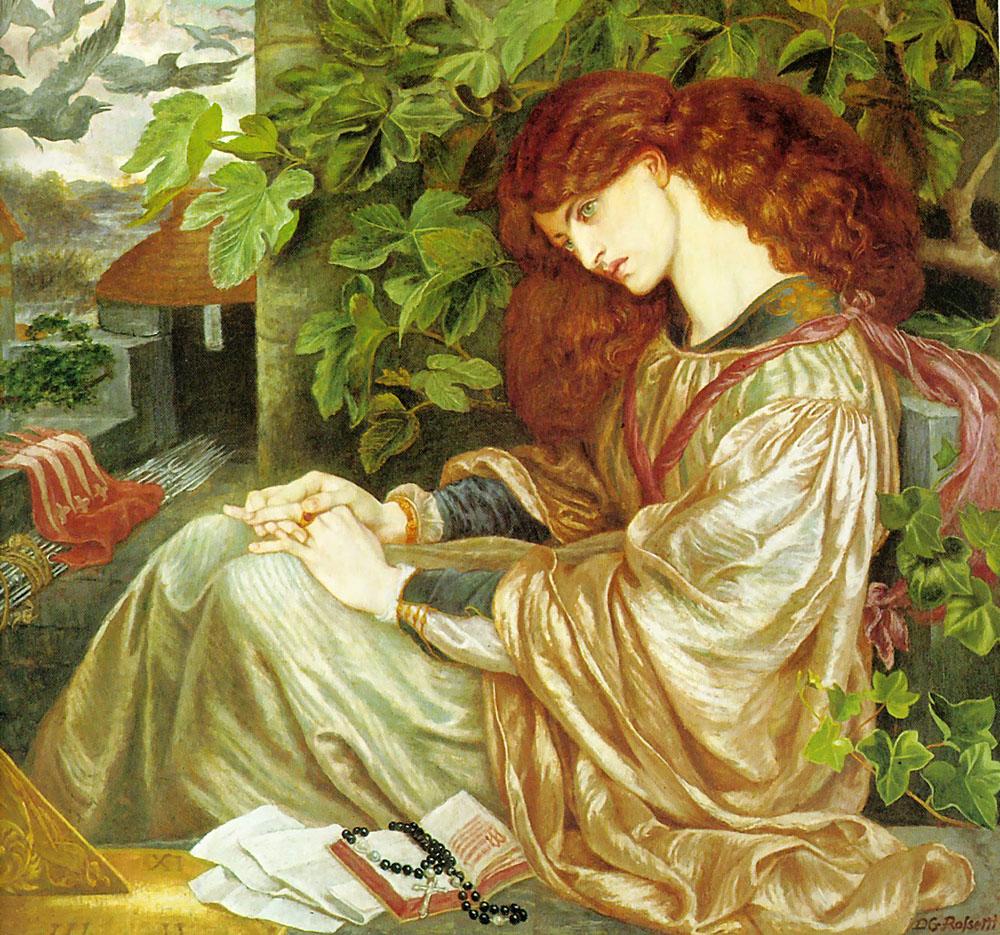
    In 1868, Dante Gabriel Rossetti painted Jane Morris as La Pia de’ Tolomei, a figure drawn from Dante Alighieri’s Purgatorio. Pia appears in Canto V, where she is encountered not in the blaze of Hell, but in that more chilling middle country where souls wait for release.

    Her story is brief in Dante, and therefore merciless. Her plea is simple:

    Please remember me, who am La Pia.
    Siena made me, in Maremma I was undone.
    He knows how, the one who, to marry me,
    first gave the ring that held his stone.”
     

    With quiet sorrow, she points to her wedding ring, which allows us to understand that the hand that placed it is also the hand that ended her life.

    Her husband, Nello, wanted another marriage, one with a countess, and so he removed Pia the way a man removes a troublesome object: by shutting it away.

    Pietra Castle becomes the site of her imprisonment, isolating her from the world. That is the scene Rossetti gives us: Jane Morris (as Pia) seated in that high, enclosed place, the air heavy with leaves and time. In the distance rooks traverse the sky like black annotations, marginalia added to a story whose ending is already fixed.

    What is most unsettling is how little drama Rossetti allows her. Pia does not claw at the stone. She does not beg. She sits with the calm of someone forced into stillness so long it has begun to resemble her nature.

    Her face is turned inward; her fingers return to the wedding ring, not lovingly, not even angrily, but with the dazed attention of someone touching the evidence of their own captivity.

    Strip away the medieval castle and the Dantean tragedy and you find the story’s core: a woman sealed inside a life arranged by cruelty instead of love.

    Like the Lady of Shalott, or Mariana in her moated house, Pia is not simply lonely, she has been removed from the human current. She exists apart. The world continues without her, and that, more than death, is the punishment.

    And so her simple request matters. Not grand justice. Not revenge. Only this: 

    “Remember me.”

    To be remembered is to be known. It is to insist, quietly, stubbornly, I was here. I felt. I mattered. 

    Pia asks for remembrance because forgetting is the final violence.

    Being erased is worse than being wronged.

    That is why La Pia de’ Tolomei still catches at the throat. It does not have to be about marriage alone. People are exiled in other ways. By duty, by grief, by the slow, reasonable compromises that become a prison before you notice the door has disappeared.

    The most dangerous confinements are the ones you decorate, the ones you call “fine.” What you learn to endure until endurance begins to feel like identity.

    Pia languished.

    We do not have to.

    I think that if the Pia of this painting could speak to us, she might say something like this:

    Go and live so authentically, and so fully that you cannot be lost to yourself.”