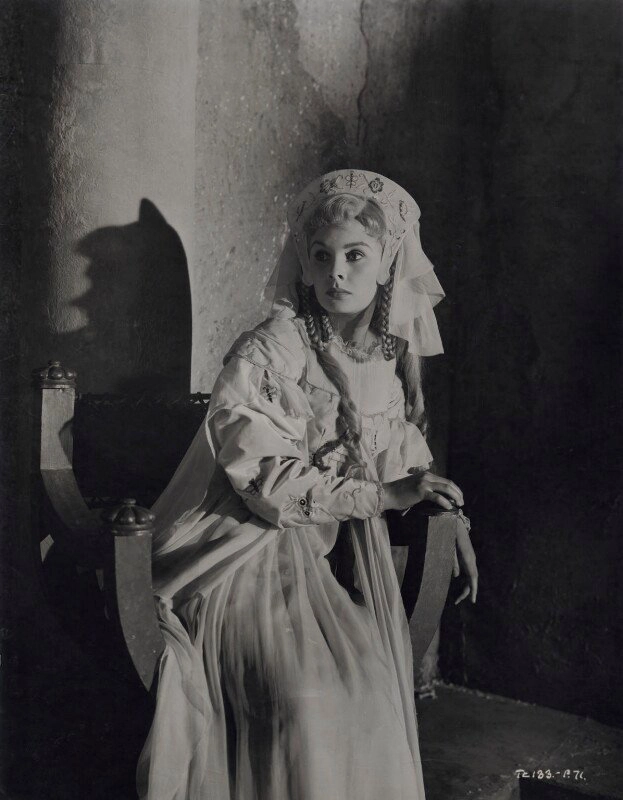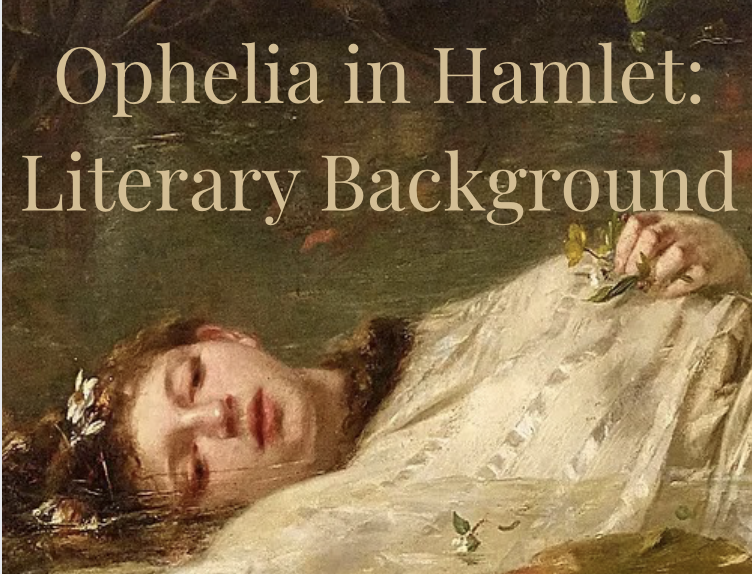
Ophelia enters Hamlet as one of Shakespeare’s most enigmatic and emotionally fraught creations. She’s a young woman navigating a world shaped by loyalty, desire, political tension, and filial duty.
Ophelia embodies the clash between public expectations and private longing, and her unraveling remains one of Shakespeare’s most haunting moments. To understand how artists, writers, and especially the Pre-Raphaelites reimagined her, we first need to understand how Shakespeare positioned her within the drama.

A Daughter in Denmark’s Political Machinery
The men around Ophelia dictate her life. Her father, Polonius, and brother, Laertes, treat her as a symbol of honor rather than as a person with her own desires. In a court brimming with suspicion and strategic alliances, Ophelia is drawn into chaos that she is ill-equipped to handle.
Shakespeare shows how patriarchal systems restrict her agency and offer love only as a possibility, never as a path she can choose freely.

Ophelia and Hamlet: Love, Distance, and Emotional Fallout
Ophelia’s relationship with Hamlet defies simple interpretation. Their past suggests tenderness, yet Hamlet’s erratic behavior hurls her into confusion. Whether Hamlet feigns madness or truly unravels, he channels his turmoil toward her. His command, “get thee to a nunnery”, does not simply reject her; it erases her. He pushes her out of the narrative and demands that she remove herself from the world entirely.
Shakespeare situates Ophelia in the emotional blast radius of Hamlet’s crisis, and she carries the fallout alone.
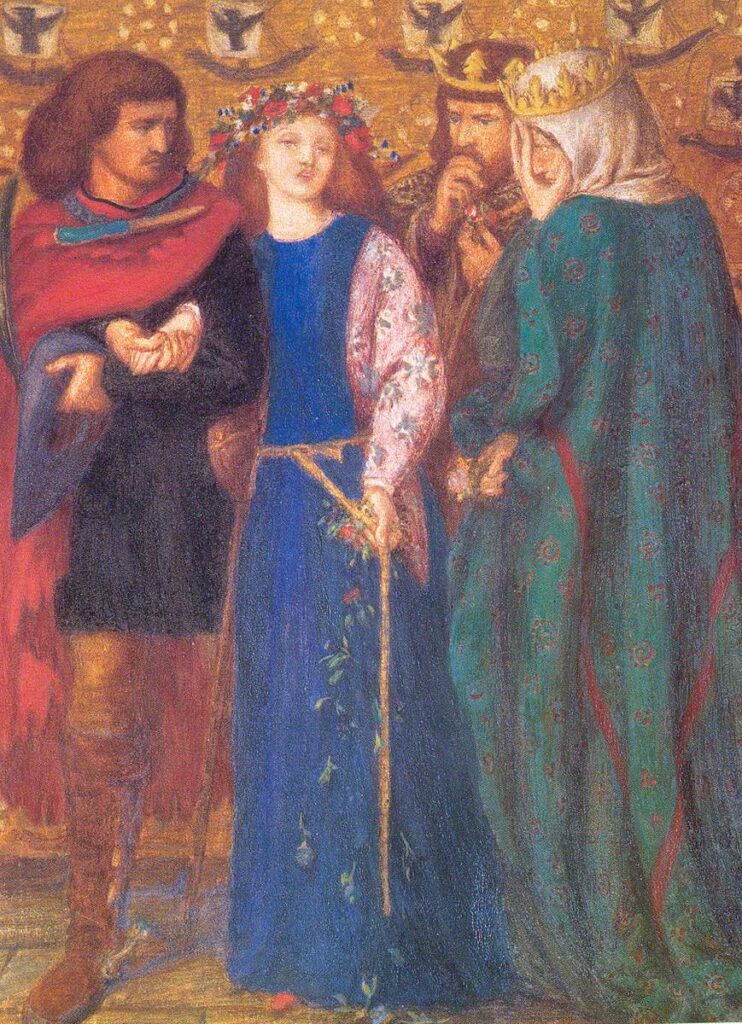
The Descent into Madness
Although Victorian painters tended to idealize Ophelia’s madness, Shakespeare presents it with psychological clarity. Her breakdown emerges from cumulative trauma, most notably Hamlet’s murder of her father.
Ophelia channels her anguish into fragmented songs. She uses this fractured music to say what she cannot state directly: her grief, her fear, her lost trust, and her sense of betrayal.
Shakespeare gives her no formal monologue, so she creates one through song and it’s a raw, poetic language that reveals everything others refuse to hear.

Death by Water: Symbolism and Ambiguity
Gertrude delivers a lush, lyrical account of Ophelia’s death, describing her drifting among flowers with garments spreading “wide and mermaid like.” Although Gertrude’s imagery carries beauty, it masks deeper uncertainty. Did Ophelia fall accidentally? On purpose? Did she surrender to the water? Did she choose silence over the life others forced upon her?
Shakespeare never resolves these questions. He invites readers and audiences to interpret Ophelia’s end as accident, surrender, or final resistance.
This ambiguity fueled the fascination of the Pre-Raphaelites, who saw in Ophelia a figure of emotional depth and visual radiance, someone whose story invites endless reinterpretation.
Ophelia’s Resonance Beyond the Play
Even though Ophelia appears briefly, she continues to evolve far beyond the world of Hamlet. Artists, writers, filmmakers, and scholars repeatedly return to her. Many see her as the quintessential drowned maiden, the silenced woman, the figure whose suffering becomes spectacle. Others work to reclaim her as a young woman crushed by impossible pressures, not simply as an emblem of beauty in decline.
Understanding how Shakespeare crafted Ophelia’s role allows us to understand why generations of artists find her so compelling. Her story continues to reveal new meaning, especially when viewed alongside Elizabeth Siddal, the woman who embodied her most iconic image.