
Shakespeare’s ghosts carry unfinished things.
The Ghost in Hamlet
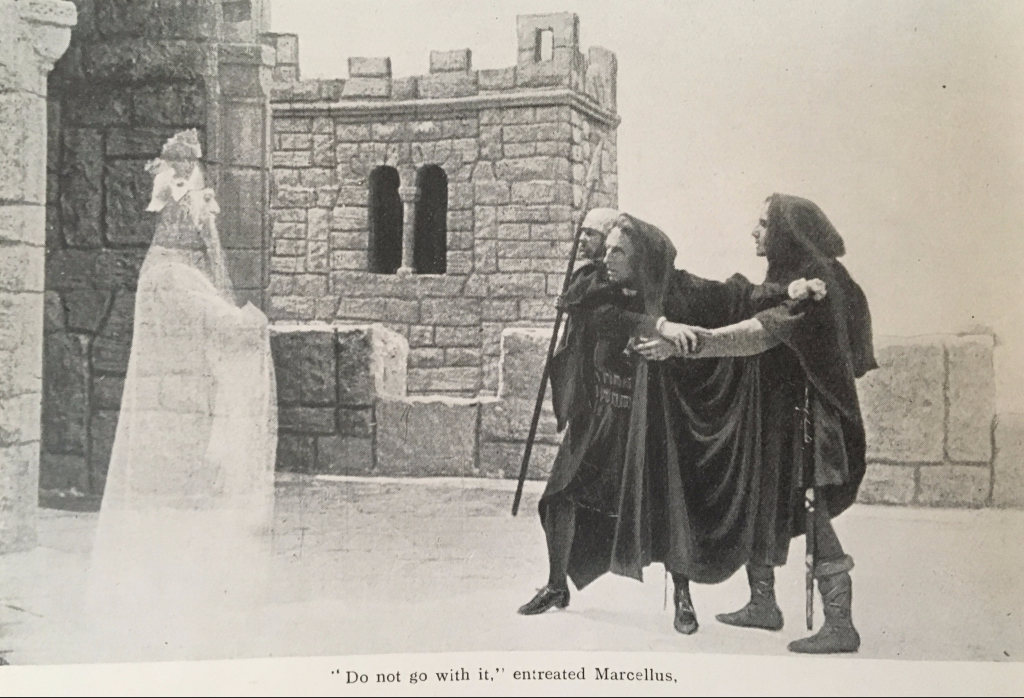
The most famous ghost in Shakespeare appears on the cold battlements of Elsinore. Armor shines in the dark, the air is cold at midnight, and guards whisper in fear.
Even before Hamlet himself talks to his father’s ghost, Shakespeare sets the mood so well that the audience already feels uneasy, as if the world itself is uncertain.
The ghost transforms grief into suspicion, suspicion into obsession, and obsession into tragedy.
Maybe the most unsettling thing is that Shakespeare never lets us be sure what the ghost really is.
Is he a real spirit who misses his son? Or is he just something in Hamlet’s mind?
Shakespeare understood that hauntings become more frightening when they resist explanation.
Ghosts as Memory
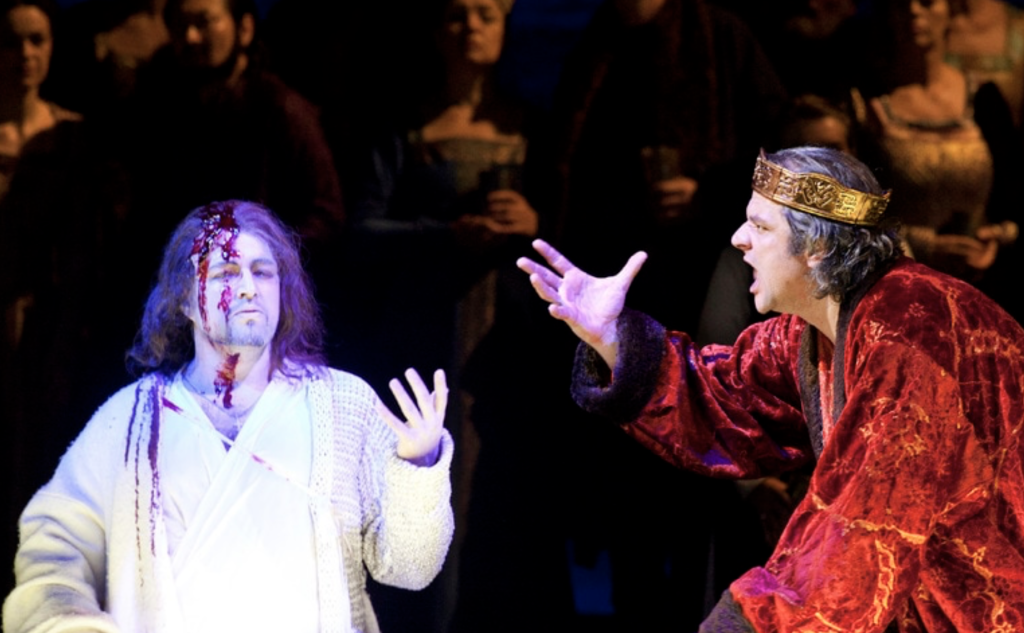
In Macbeth, Banquo’s ghost appears not because Banquo seeks revenge in the traditional Gothic sense, but because Macbeth himself cannot escape the memory of what he has done. The haunting emerges from guilt.
Again and again in Shakespeare, the supernatural mixes with the mind. The real horror is inside Macbeth’s conscience.
Long before modern horror stories looked at troubled minds, Shakespeare knew that people carry ghosts inside themselves.
The Thinness Between Worlds
People in Shakespeare’s time felt the line between the living and the dead was much thinner than we do today.
Ghost stories were everywhere, and the religious changes between Protestants and Catholics made people very anxious about the afterlife, purgatory, spirits, and what happened to souls after death.
Shakespeare writes directly into this uncertainty. His ghosts come from a culture that wasn’t sure if the dead were really gone. That doubt helps give the plays their strange feeling. The supernatural in Shakespeare rarely feels distant or fantastical. It feels close, as though the veil between worlds might briefly lift in the middle of an ordinary night.
Why Shakespeare’s Ghosts Still Feel Frightening
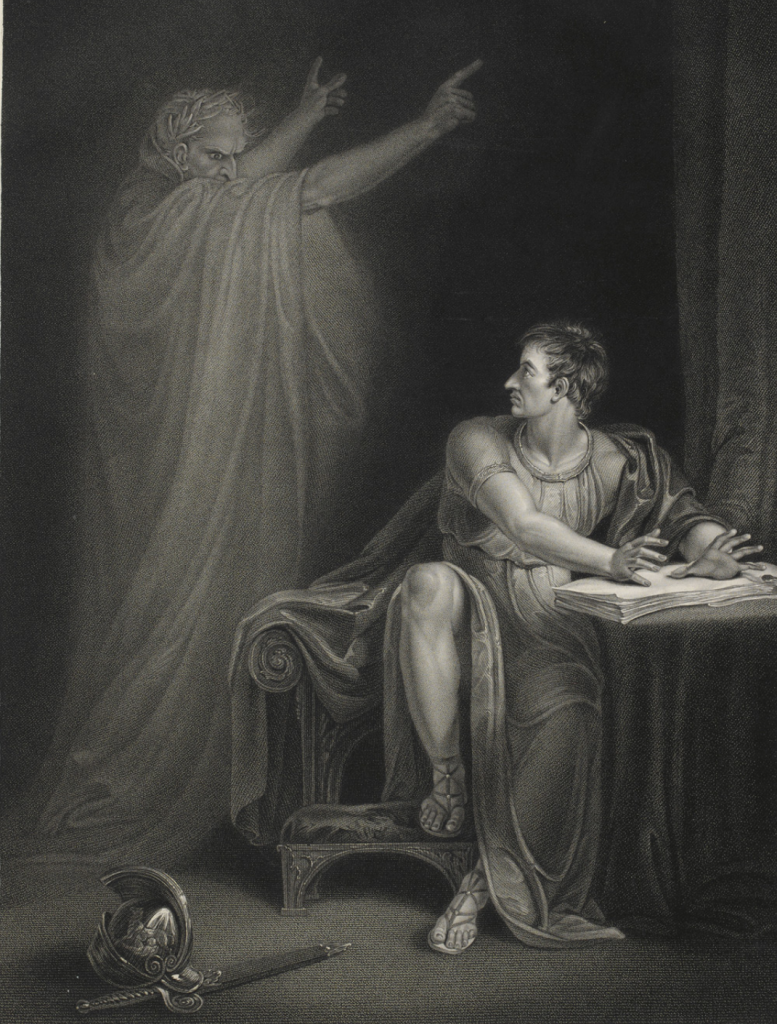
While modern horror often relies on jump scares, Shakespeare’s ghosts evoke the atmosphere of dark hallways, candlelight, and the tense feeling of seeing what others can’t. Even today, these scenes still work because Shakespeare knew that not knowing is scarier than being sure.
His ghosts never fully explain themselves, but you can feel them, and their presence stays with you.
Often, the most unsettling part isn’t the ghost itself, but what it shows us about the living people who see it.
Richard III is haunted by the dead before his battle even starts. Macbeth falls apart from guilt, and Hamlet is driven by the need to get revenge for his father.
Ophelia’s Ghost

Interestingly, one of Shakespeare’s most haunting characters isn’t a ghost at all. Yet she still haunts us today.
Ophelia never returns supernaturally in Hamlet, but she lingers over the play long after her death.
Artists, writers, and audiences have continued to resurrect Ophelia for centuries precisely because Shakespeare leaves her suspended between presence and absence, making her a sort of cultural ghost.
Not fully gone, but also never entirely recoverable.
The Pre-Raphaelites understood this instinctively. Their paintings transformed Ophelia into one of the great haunting feminine images of Western art: beautiful, tragic, symbolic, impossible to fully separate from death itself.
Ghosts and Longing
This is why Shakespeare’s ghosts endure, not because modern audiences literally believe in spirits wandering castle halls, but because everyone understands the emotional reality of haunting.
We all know what it’s like to replay old conversations or feel the presence of people who shaped us, even after they’re gone. Shakespeare turns these feelings into drama, and the ghosts he created make grief visible.
The Candle Still Burning
There’s something oddly comforting about Shakespeare’s ghosts, too. It’s not that they make us feel safe, but they remind us that the dead stay connected to the living through memory, stories, and longing. Ghosts appear because something mattered.
Love.
Betrayal.
Or a life unfinished.
Maybe that’s why these plays still speak to us after so many years. Shakespeare knew that people are haunted by nature.
We go through life carrying echoes… memories, voices, and words left unsaid. Sometimes, late at night when the house is quiet, and our minds wander, those ghosts still know just where to find us.