A flat in Blackfriars, a winter evening, and a sound you can’t quite place… A Light in the Stairwell begins in the sort of domestic quiet that usually feels safe. But this is a Guggums ghost story, where the hauntings don’t arrive as shrieks; they arrive as details: it could be a glow where no lamp has been lit, a pause between footsteps, or a familiar corridor that suddenly seems to have learned your name. Step in gently, keep your hand on the banister, and follow the light upward, because whatever waits on the landing wants to make you look.
The Laugh in the Stairwell
by Stephanie Chatfield
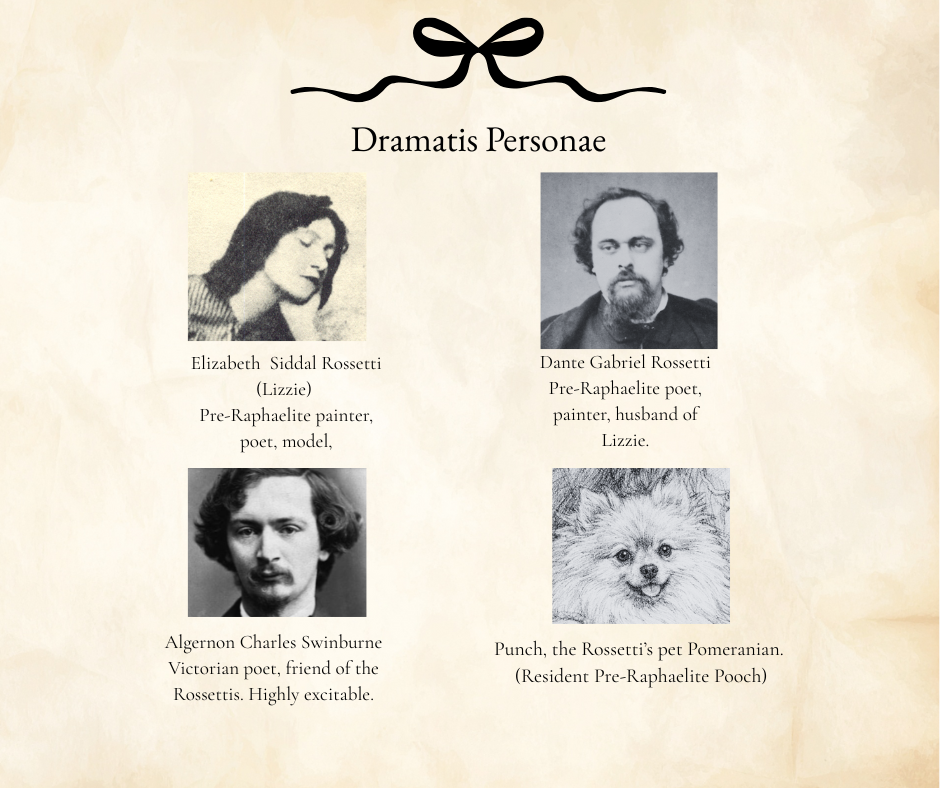
At Chatham Place the river was never content to stay outside. It crept into the rooms the way damp does, quietly, without apology, so that even on Christmas Day the air smelled faintly of coal smoke and wet stone, and the windowpanes held a film you could not quite wipe away.
Punch, curled like a small ember on the rug, lifted his head and growled at nothing. It was not his usual officious bark, the one he saved for footsteps and knocking and the insolence of deliveries. This was lower, and doubtful. Something in the room had shifted a fraction, and he had noticed.
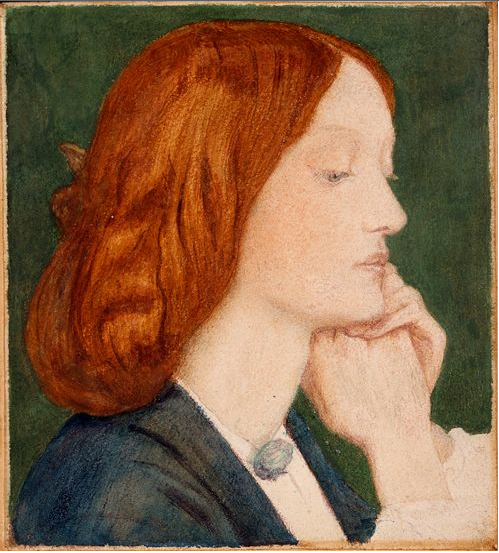
Lizzie glanced up from the mantel where she was attempting, without much success, to arrange a sprig of greenery so it looked intentional rather than desperate. “It’s only the house,” she said, half to Punch, half to herself. But the words landed oddly, as though the house had somehow been listening and found them amusing.
Gabriel, of course, paid no attention. He was at his table, ink on his fingers, a half written line pinned beneath his hand like a captive moth. He had that expression he wore when he believed the world must yield to him if he stared hard enough. Lizzie watched him with a fondness, knowing his penchant for perfection.

There was a knock at the door. Quick, insistent, cheerful.
“Now that,” Lizzie said, brightening, “is not a ghost.”
Gabriel opened it to Algernon Charles Swinburne, who swept in like a gust of scandal, his coat flung wide, cheeks pink from cold and eyes alight with mischief. He brought with him, as he always did, a sense that the day might become an event rather than a collection of mundane moments.
“My dear sinners,” he declared, kissing Lizzie’s hand with theatrical devotion, “I have come to rescue you from domestic virtue.”
“I was just about to become virtuous,” Lizzie said gravely. “You’ve ruined everything.”
Swinburne’s laugh was sharp and delighted. He adored Lizzie’s dry humor; he treated it as an intelligence test the world had failed but she had passed. Punch, usually suspicious, allowed Swinburne a brief sniff of approval, then with renewed uneasiness, continued watching the corner by the stair.
They had tea that felt thin, because everything in London was thin in winter except the fog; and Swinburne told stories. He had a talent for making even ordinary incidents sound like conspiracies undertaken by the Fates. Lizzie laughed, really laughed, her shoulders loosening, her eyes brightening. Gabriel watched with an expression that was both proud and oddly anxious. Joy in her was something he wanted to protect.
It was while Swinburne was in full flight, recounting some absurd scene in Paris, his hands conducting invisible music, that the sound came.
A laugh.
Not Swinburne’s. Not Lizzie’s or Gabriel’s.
A woman’s laugh, low and intimate, the kind that belongs in a room among friends, not an empty stairwell.
It rose from the narrow space behind them, the little passage by the steps, Thin, breathy, almost tender, and then stopped too neatly. It seemed that whoever laughed cut herself off the instant she remembered she was not meant to be heard.
The teacup in Lizzie’s hand paused halfway to her lips.
Swinburne, remarkably, fell silent.
Punch stood. Every hair along his small spine lifted. He did not bark. He stared.
Gabriel’s face tightened. “Did you…”

“Yes,” Lizzie said, and set down her cup with exaggerated care. A careless clink felt suddenly, absurdly impolite. The house demanded manners in exchange for whatever it had chosen to reveal.
Swinburne recovered first. “Well,” he said lightly, “if we are to be haunted, let it be by a woman who appreciates wit.”
Against her better instincts, Lizzie chuckled.
Another echo of a laugh, then, fainter and farther, a sound of someone attempting to imitate Lizzie and failing.
Lizzie’s stomach went cold in a slow, steady way. It was not the laugh itself. It was the timing of it; the way it arrived on cue, the way the house waited for Lizzie to laugh first and then decided it could do it better.
Gabriel stood, abruptly. “This is nonsense.”
He strode to the stair, candle in hand. The flame made a faint halo in the passage. The stairs rose tight and steep, disappearing into shadow. Nothing moved.
“Hello?” Swinburne called, his fear already turning into another story he could tell. “Madame Ghost, are you in need of tea or verse?”
Punch darted forward and then stopped, rigid, at the base of the first step. He whined once, quiet and disbelieving. His whine made Lizzie’s skin prickle more than the laughter had.
Because Punch, for all his foolish pomp, did not whine unless something in the room had become wrong.
Lizzie rose and went to Gabriel, her hand closing on his sleeve. “Don’t,” she said softly.
He looked at her, impatient. “It’s…”
But he didn’t finish, because the laugh came again, close now, right beside them, so close it seemed to brush their ears. And this time it was unmistakably Lizzie’s laugh. The exact cadence of it. The same quick, delighted intake at the end.
Lizzie felt as if the floor dropped slightly beneath her feet.
Swinburne’s eyes widened. “That,” he said quietly, “is in devilishly bad taste.”
Gabriel lifted the candle higher, furious, as if his anger might force the unseen to become visible. “Show yourself.”

The candle flame wavered.
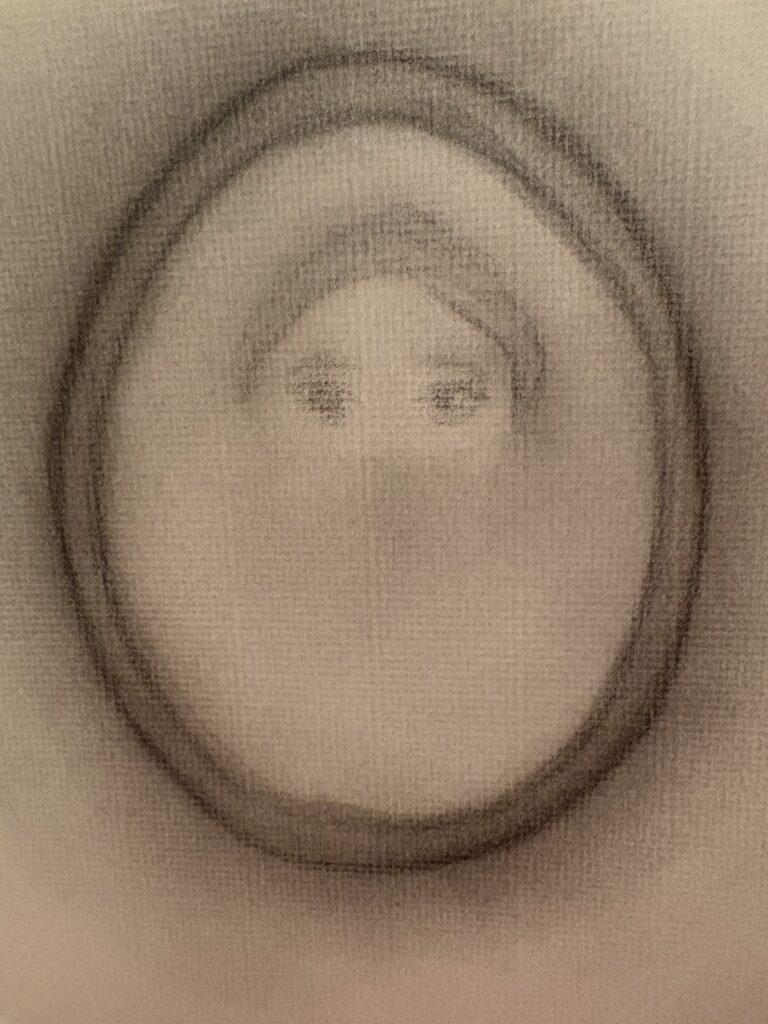
In the little oval mirror nailed beside the stair, a cheap, practical thing Lizzie barely noticed day to day, its glass deepened for an instant, like dark water.
And Lizzie saw, not a face, but a gesture.
A pale hand at the edge of the frame, fingers curled as though holding the mirror from the other side.
Not reaching out.
Holding on.
It was her own hand, Lizzie realized with a shock of recognition. The same long fingers, the same slight bend at the knuckle.
Her hand, yet not her hand.
It wanted to be her. Or had already decided it was.
Lizzie stepped forward with a decisive manner that brought Gabriel to a standstill.
She didn’t raise her voice or argue. Instead, she did the simplest, most domestic thing imaginable.
She took a small cloth from the table, an ordinary cloth, stained with tea in one corner, and covered the mirror.
The laughter ceased at once, as if the house had been cut off mid-performance.
Punch released a single sharp, triumphant bark, and having proved his point, trotted back to the rug and sat down with dignity restored.
Swinburne exhaled a laugh that was only half real. “My dear,” he said to Lizzie, “you are far more practical than any romantic heroine deserves to be!”
“I’m tired of romance,” Lizzie said, and surprised herself with how true it was. “It always wants too much.”
Gabriel stared at the covered mirror. “You can’t just… cover it.”
“I can,” Lizzie said, and her voice carried a quiet edge that made even Swinburne look at her with something resembling respect. “Because it wants attention. It wants us to fuss and stare and invite it closer. And I won’t.”
Swinburne’s wit cautiously resurfaced. “Then let us be dull,” he declared. “Let us be painfully alive and ordinary. Let us eat and drink and offend all spirits with our unpoetic domesticity.”
Lizzie smiled. Gabriel, after a moment, did too, reluctantly, smiling being something of an awkward concession.
They went back to the table. Tea was poured again. Swinburne began a new yarn on purpose, louder than before, filling the small rooms with human noise, partially illuminating the gloom.
And once, only once, Lizzie thought she heard it again: the faintest echo of a laugh from the stairwell, not mocking now, but sulky, like a bitter guest turned away.
She did not look.
She kept her eyes on Punch, warm and solid on the rug. On Swinburne’s animated hands. On Gabriel’s eyes, softened by the sight of her smiling.
Outside, the river moved on, indifferent. Inside, the house settled into its small, stubborn life.
The cloth remained over the mirror.
Yet, something lingered behind it, jealously listening to the spirited sounds of the living.