
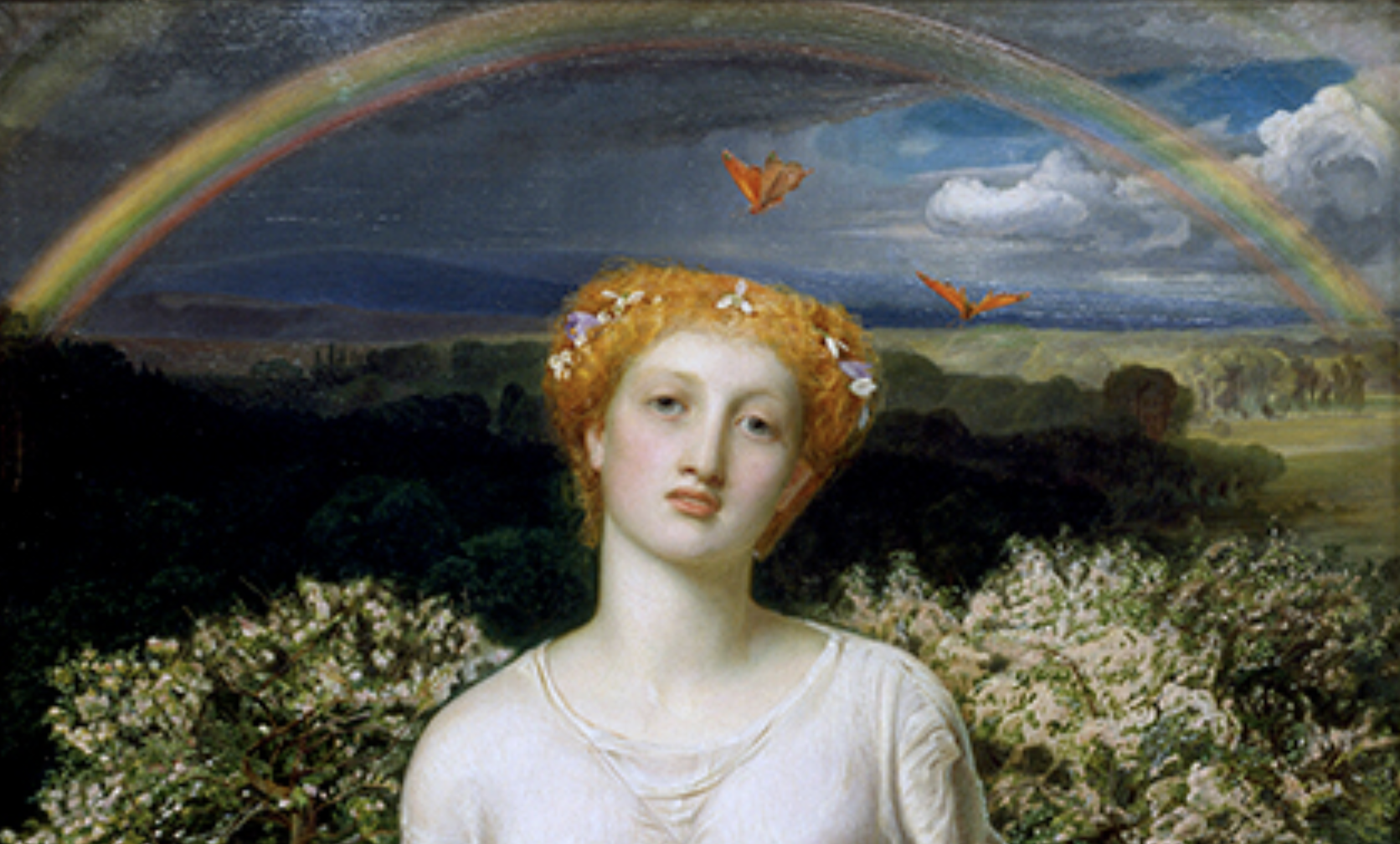
We seem to imagine spring as soft and feminine by default: mild weather, pastel colors, and a dreamy sense of renewal. Decorative rather than forceful.
In his painting Gentle Spring, Victorian artist Sandys leans into that visual language, yet he gives it more gravity. His central figure represents Proserpina (Persephone) returning from the underworld, and knowing the subject gives the image a sense of shadow.
She doesn’t skip or scatter petals with cheerful abandon. She advances with composure, less a girl in a garden than an embodiment of return.
That distinction matters.
Because Gentle Spring belongs to a long nineteenth-century habit of making women carry ideas larger than themselves: spring, virtue, beauty, grief, nations, seasons, salvation, doom.
Femininity in art is often asked to symbolize life rather than simply live it.
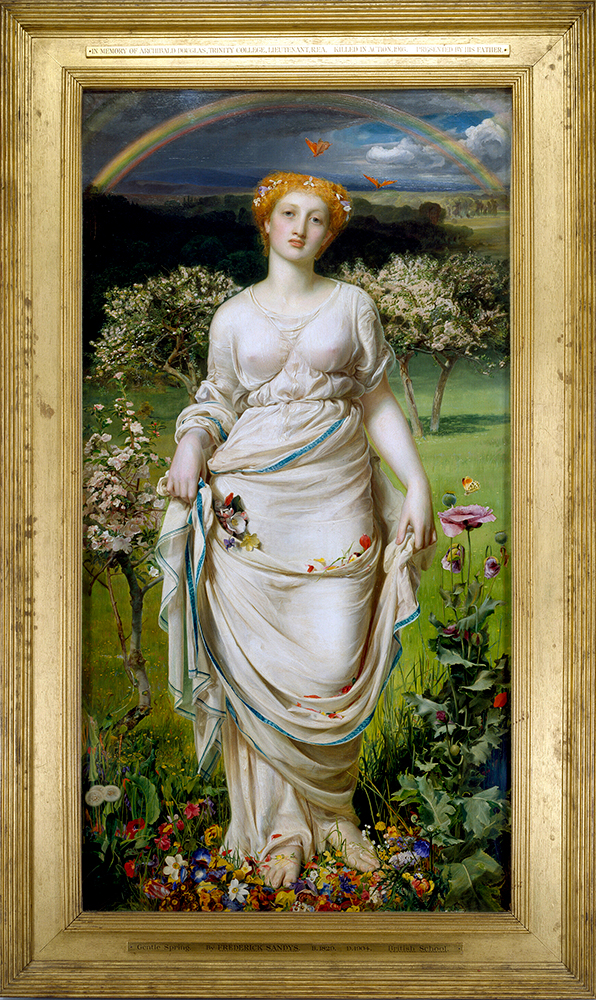
There is restraint in her posture and a seriousness in her facial expression. And a sense that spring is not arriving untouched but returning from difficulty, which is spot on for a representation of Proserpina. That symbolism leaves room for the realization that renewal is rarely as innocent as it often looks in paintings.
That is part of what makes the beginning of spring such a charged subject.
We celebrate it, but we also project onto it.
As if we ask it to heal the whole year in a single gesture.
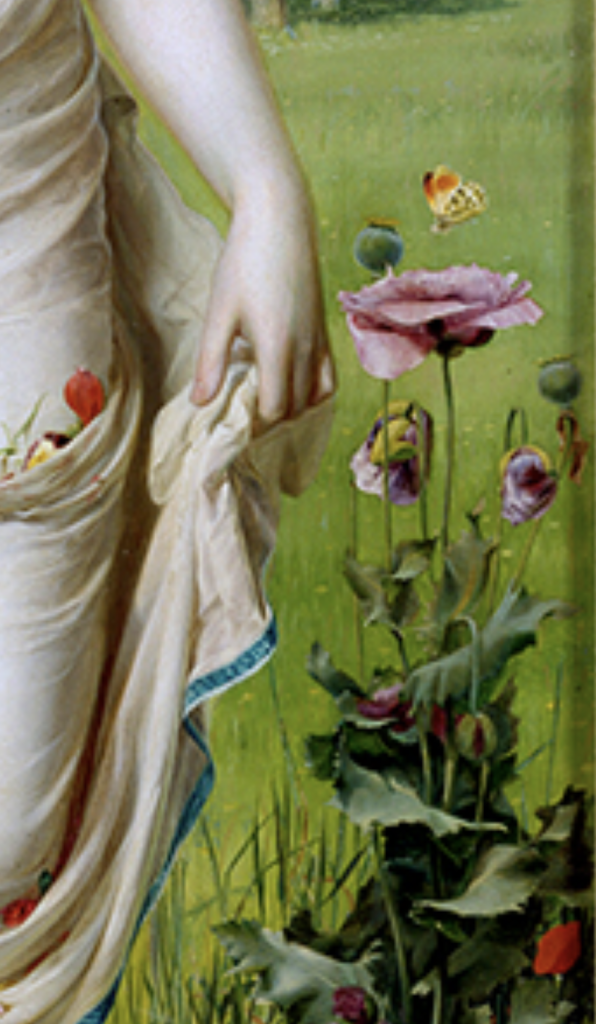
And there is a cultural question to ponder: when a woman becomes the image of spring, who is being renewed? Her, or the viewer?
Beauty is never just beauty; it is arrangement, emphasis, and framing. Who is seen, how they are framed, what they are asked to mean, and none of that is neutral. Victorian artists knew this perfectly well, even when they dressed the fact in flowers.
(Especially when they dressed the fact in flowers.)
Yet I do not think Gentle Spring collapses into cynicism. The painting still has real emotional resonance, and its pleasures do not ring false because they are constructed.
All art is constructed.
The point is to notice what the construction is doing.
What this one does, especially at the beginning of spring, is offer renewal without pretending renewal is simple. The rainbow arches, but the dark sky still holds its clouds. The landscape blooms, but within the new growth and bright colors there is still the promise of turbulent weather.
That feels true to the season.
Spring is not a Technicolor pastel reset. It is the world resuming itself, unevenly and in earnest. It is beauty and blooms, as well as thorns and storms.
And perhaps that is why Gentle Spring remains worth returning to: not because it gives us a flawless emblem of the season, but because it reminds us that beginnings can be lovely without being naive. And I find something very human in that.