
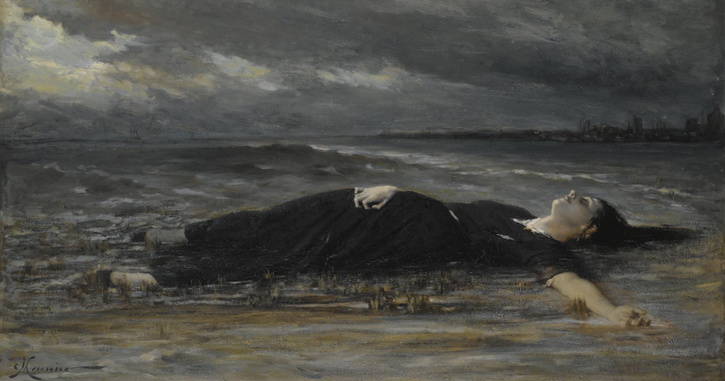
The Ophelia aesthetic exists at the crossroads of beauty and ache. She is the image we return to again and again, not because she is simple, but because she refuses to be. Each generation rediscovers Ophelia in its own likeness, finding in her story the tension between longing and loss, rebellion and surrender, identity and erasure. She haunts us because she is not merely a character; she is a cultural echo.
She Is the Still Point in a World in Motion
Ophelia’s image has always been strangely quiet. While Hamlet rages and plots, she drifts into silence (first emotional, then literal.) This stillness becomes a canvas.
Artists, writers, and filmmakers have projected onto her their questions about innocence, madness, femininity, fragility, and desire.
The Ophelia aesthetic, then, is not just the sight of a young woman floating among flowers; it is the longing to pause time long enough to ask, What broke her? And perhaps, What does this say about us?
The Pre-Raphaelites Turned Her Into a Myth

When John Everett Millais painted Ophelia, he transformed her from Shakespeare’s subplot into a cultural icon. The painting’s bright greens, dreamy blues, and bright flowers created a visual language that still defines the Ophelia aesthetic today. Elizabeth Siddal, who modeled for the work, infused the image with a strange, intimate realism. Her stillness became legend.
Through the Pre-Raphaelites, Ophelia became more than tragic; she became a mood, a symbol, a mirror to Victorian anxieties about femininity, drowning, and emotional excess.
An Archetype of the “Beautiful Ruin”
The Ophelia aesthetic embodies a contradiction we can’t quite let go of: the pairing of youth with decline, beauty with peril, tenderness with collapse. She is the beautiful ruin, an idea culture has returned to for centuries because it reveals something uncomfortable about the way we look at women.

She is the woman adored only as she breaks.
She is the muse people notice only when she is quiet.
She is the fragile figure we romanticize because her tragedy is easier to hold than her rage.
This troubled dynamic is part of why the Ophelia aesthetic still unsettles us: her beauty feels complicit in her undoing.
Each Generation Rewrites Her
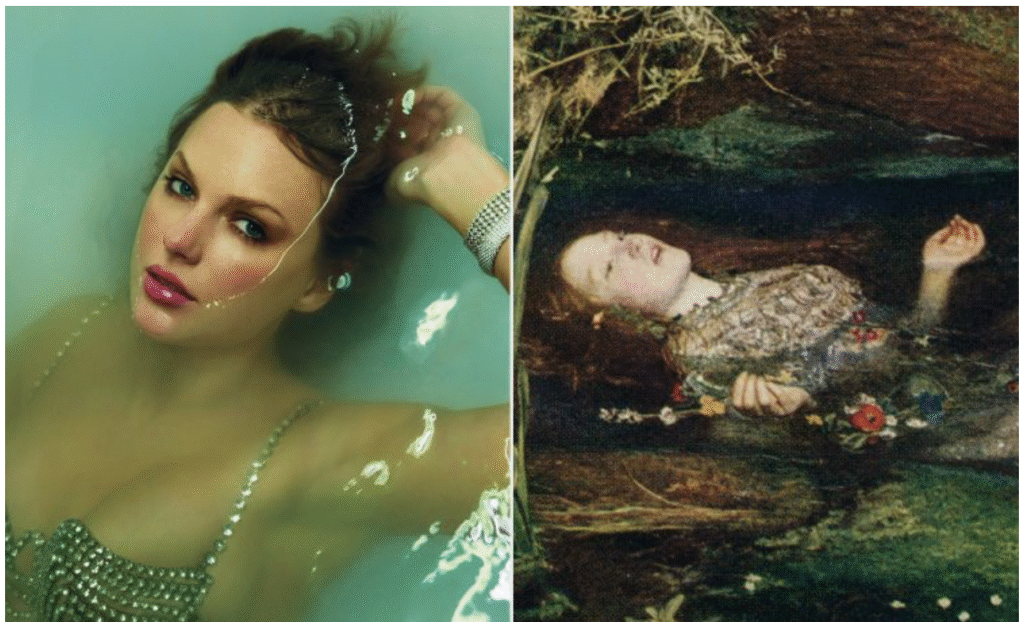
Victorian audiences saw Ophelia as a warning.
Modern audiences see her as a wound.
Some reinterpret her as a feminist reclamation: a woman crushed by a world that silenced her, whose story can now be retold with agency and anger.
Others claim her as a symbol of softness, melancholy, or aesthetic introspection. She becomes everything from a Tumblr moodboard to a cinematic trope, from fashion inspiration to psychological shorthand.
The Ophelia aesthetic endures because she is endlessly adaptable. She’s a mythic shapeshifter reflecting each era’s fears and fascinations.
She Represents What We Fear We Might Become

At the heart of the Ophelia aesthetic lies a deeper truth: she unsettles not because she is strange, but because she is familiar. She embodies the moments when we have felt unseen, unheard, or overwhelmed. She carries the weight of expectations, the ache of being looked at but not understood, the quiet unraveling beneath a composed surface.
Ophelia haunts us because she reveals the fragile line between performance and collapse.
And What We Hope We Never Forget
Ophelia also haunts us for her beauty. Not simply the external loveliness artists have given her, but the glimmers of sincerity, vulnerability, and yearning that feel painfully human. She is a reminder that art can hold our sorrow without letting it consume us. She is a mirror that lets us study grief safely. She is a figure who, though fictional, has shaped how countless people understand tenderness, tragedy, and the ways women are seen.
Why She Endures
The Ophelia aesthetic persists because she sits at the nexus of so many human truths: fragility, longing, rage, beauty, despair, silence, collapse, and resilience that never quite arrives.
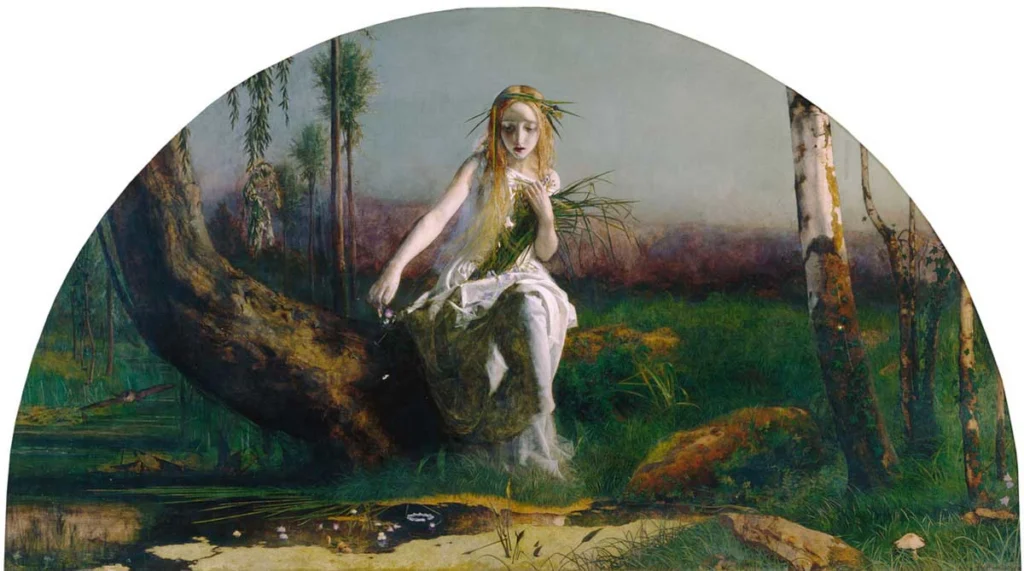
And because her image is unresolved, we return to her hoping for clarity, but find only reflection.
Ophelia haunts us not because she died,
but because she never fully tells us why.