
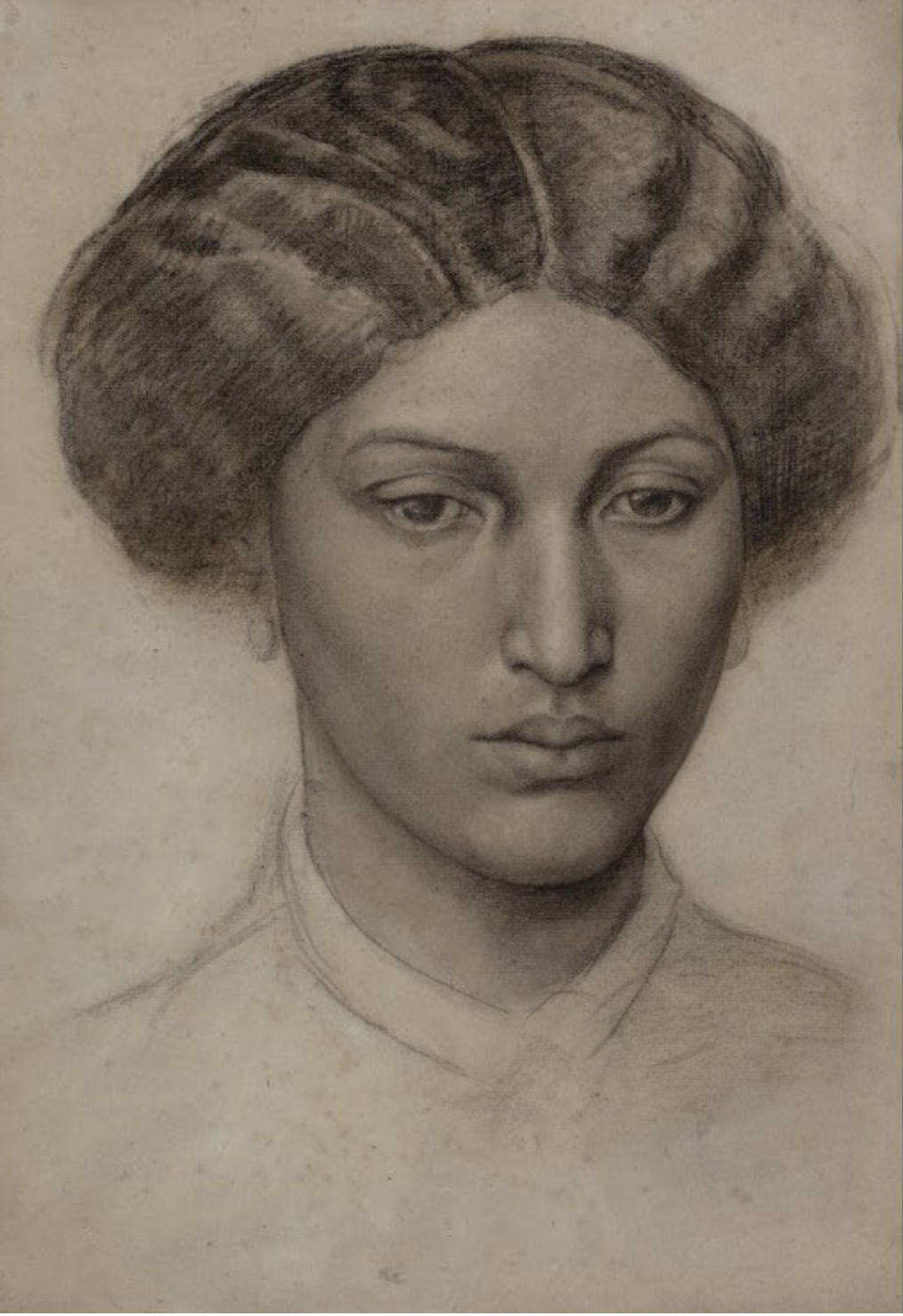
When we encounter Fanny Eaton in Pre-Raphaelite paintings, we are prompted to reconsider how artists chose to represent their subjects.
Her image encourages us to look more closely at these paintings and the assumptions that shaped them, especially those about race, beauty, and who was allowed to be seen as beautiful.
Fanny Eaton was born Fanny Antwistle or Entwistle in Jamaica in 1835, in the first years after emancipation in the British Empire. By the 1840s, she and her mother had settled in England. She worked as a domestic servant, married James Eaton, and raised a large family. Only later did she become a figure in art history.
Around 1859, Eaton began modeling for artists connected to the Royal Academy and the Pre-Raphaelite circle. She sat for artists including Simeon Solomon, Dante Gabriel Rossetti, John Everett Millais, Rebecca Solomon, Joanna Mary Boyce, William Blake Richmond, and Albert Joseph Moore. Her public debut came through Solomon’s The Mother of Moses, exhibited at the Royal Academy in 1860.
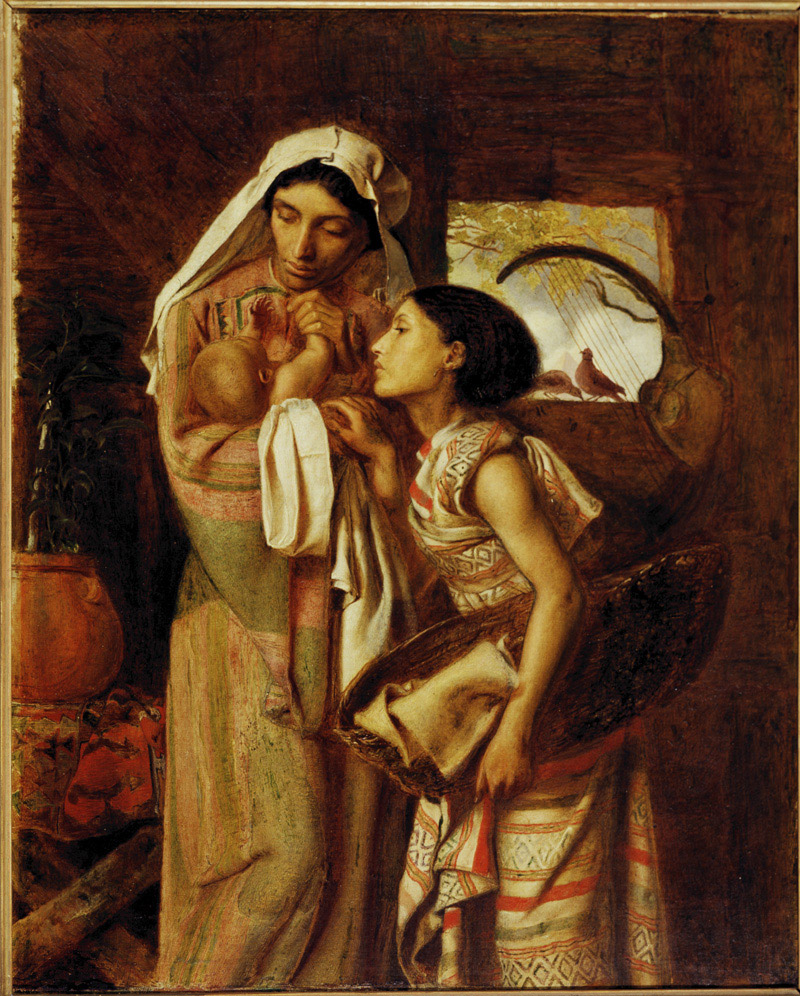
The Pre-Raphaelites searched for and created beauty with intention. By including Eaton, a Jamaican-born woman of African descent, they slightly shifted the narrow, white ideals that shaped much of Victorian art.
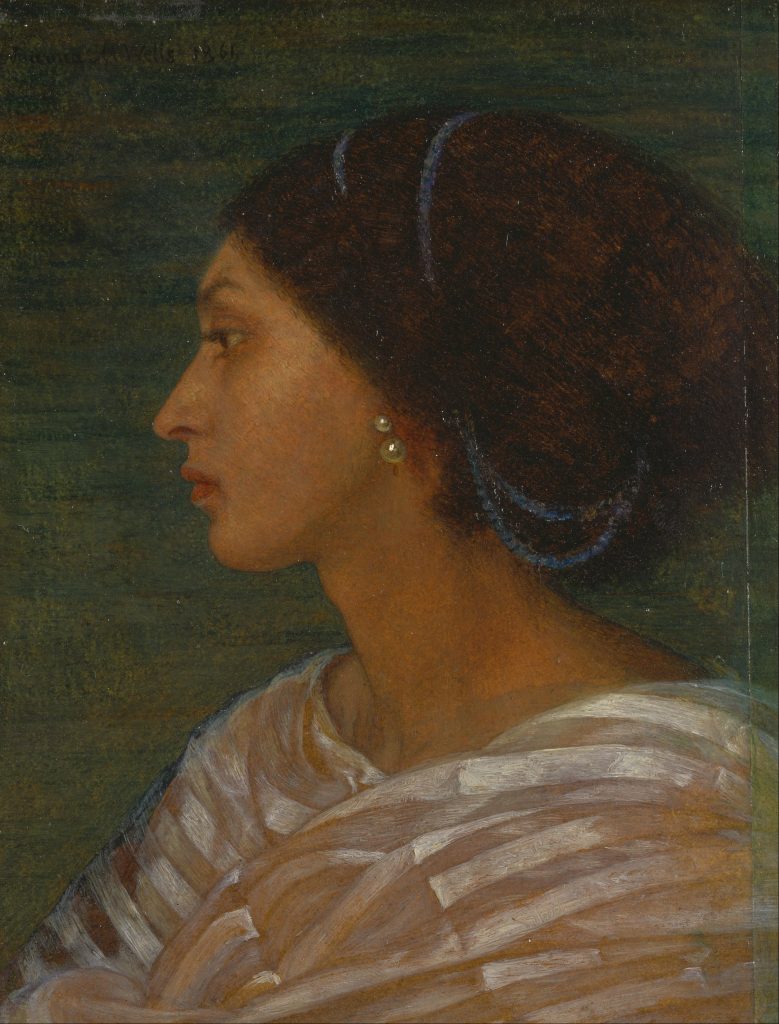
Her presence quietly expanded the movement’s visual language.
Yet this broadening brought its own complexities. Eaton was often asked to embody biblical or foreign figures, her features set apart as different.
It is worth resisting the urge to see her only as either a victim of the gaze or as a triumphant symbol. The record leaves us with no private words from Eaton herself. We do not know how she felt about modeling, the artists, or the paintings.
What we know demands care.
Eaton worked, posed, and was paid, helping to shape some of the most memorable images of Victorian art. After her modeling years, she lived as a widow, seamstress, cook, mother, and grandmother.
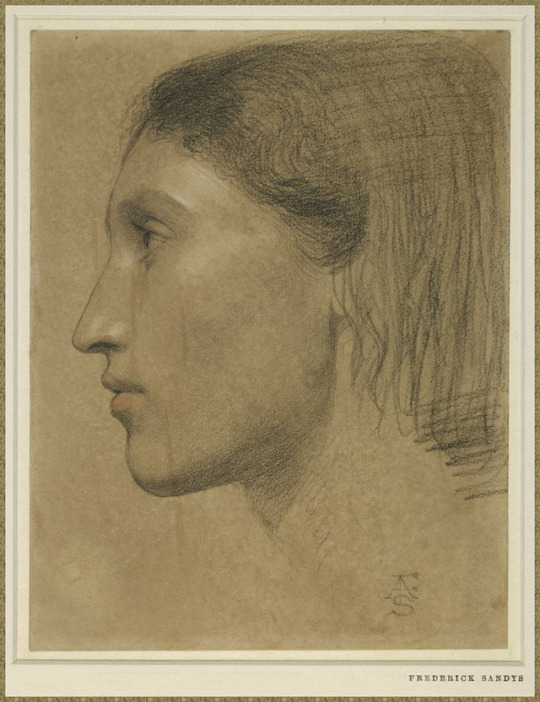
Her presence in Pre-Raphaelite art invites us to reconsider an old story.
Who was considered beautiful?
Which figures were allowed to stand at the center?
And who could be painted with admiration, yet still be denied a voice?
And what happens when the person at the edge of the canvas becomes the reason we return to the painting at all?
Fanny Eaton helps us see Victorian beauty not as a fixed ideal, but as a contested one that was shaped, stretched, and sometimes challenged by artists like the Pre-Raphaelites. In her image, we glimpse both the limits of nineteenth-century vision and the possibility of looking beyond them.