
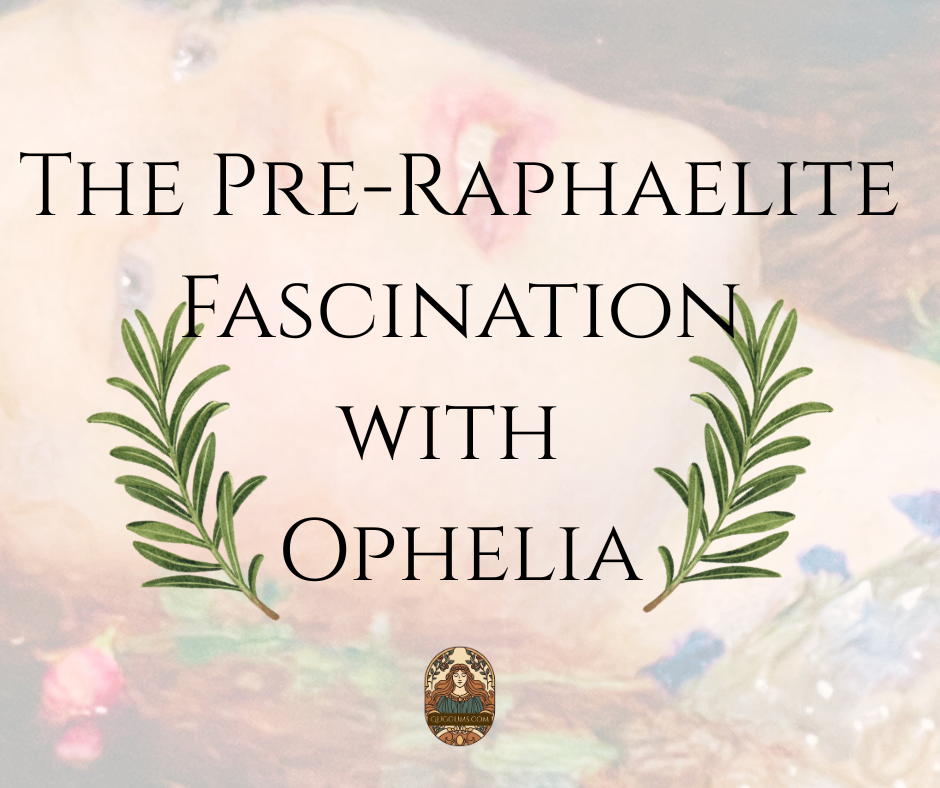
Few literary figures gripped the imagination of the Pre-Raphaelite Brotherhood as powerfully as Ophelia. When John Everett Millais painted her floating among the river plants of the Hogsmill, he was not simply illustrating Shakespeare, he was crystallizing a cultural obsession. The Pre-Raphaelites returned to Ophelia again and again because she embodied everything they sought to express: emotional intensity, symbolic richness, psychological depth, and a haunting fusion of beauty and tragedy.
But their fascination wasn’t accidental. Ophelia was uniquely suited to the artistic revolution they were staging.
She Brings Poetry Into Paint
The Brotherhood wanted to unite literature and visual art; to make paintings that felt like poems, charged with atmosphere and symbolic detail. Ophelia’s story, full of longing, grief, wildflowers, and water, offered a ready made poetic landscape.
In Ophelia, they found a figure whose world was already:
- lush
- symbolic
- emotional
- nature bound
- dreamlike
She allowed them to visually translate Shakespeare’s verse into something immediate and sensory.
Her Story Blends Innocence, Desire, and Tragedy (A Pre-Raphaelite Trinity)
The Pre-Raphaelites were drawn to emotional extremes. Ophelia’s narrative arc (obedient daughter, rejected lover, grieving daughter, mad wanderer) offered a full spectrum of feeling.
Her character touches several themes the Brotherhood explored constantly:
- longing
- heartbreak
- madness
- beauty threatened by a hostile world
- the tension between purity and vulnerability
In Ophelia, they saw the perfect Victorian heroine: tender yet doomed, expressive yet silenced, luminous even as she breaks.

Nature Surrounds Ophelia, and Nature Was Their Sacred Language
When Ophelia falls into the river, she becomes part of the landscape. The flowers she carries, the water that holds her, the willow branch that snaps… they’re all symbols Shakespeare chose with care. The Pre-Raphaelites reveled in this natural vocabulary.
Millais famously painted the background of Ophelia first, on location, capturing:
- moss
- lilies
- violets
- forget-me-nots
- river weeds
- carefully observed English flora
This devotion to nature was part of the movement’s rebellion against the dark, idealized canvases of the Royal Academy.
Ophelia allowed them to merge human emotion with the living world.

Ophelia Let Them Explore the Edge Between Life and Death
Victorian culture was deeply fascinated by the moment between breathing and stillness, between consciousness and oblivion. Ophelia’s drowning sits at that threshold.
The Pre-Raphaelites, especially Rossetti and Millais, saw in her a way to explore:
- the spiritual
- the morbid
- the beautiful
- the liminal state between life and afterlife
Her body afloat in water symbolizes both surrender and transcendence, a visually arresting paradox that Victorian audiences found mesmerizing.
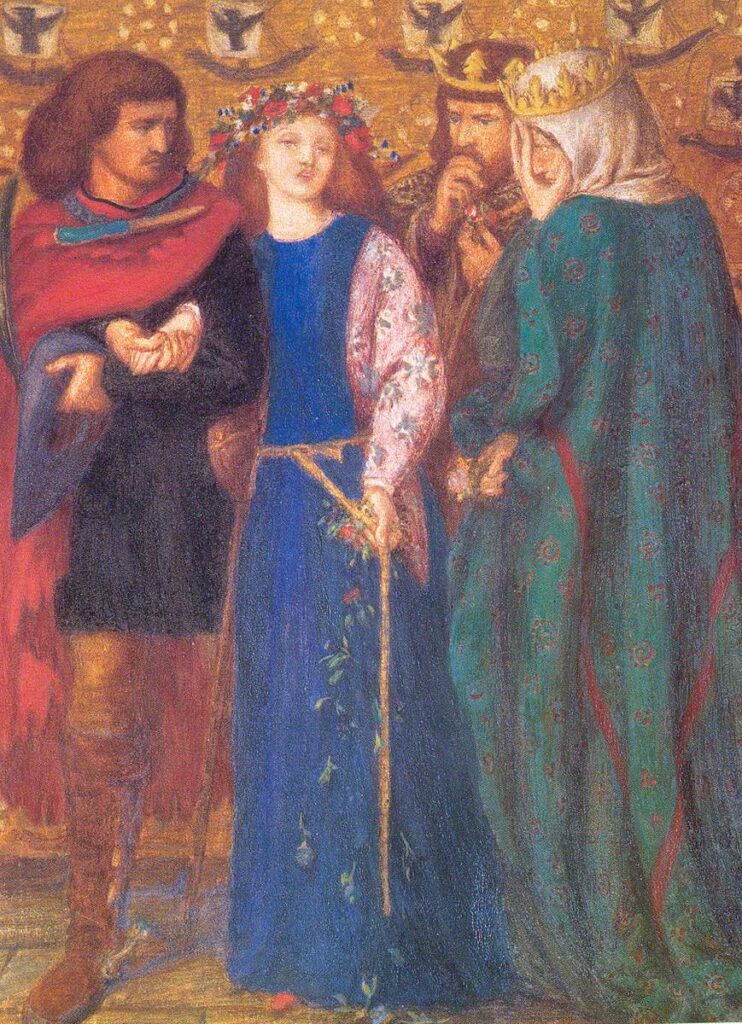
She Offered a Space to Examine the Consequences of Patriarchy
Ophelia is a young woman undone not by madness alone, but through the pressures of the men who shape her fate:
- a father who manipulates her
- a brother who lectures her
- a prince who loves and rejects her
- a court that gives her no room for grief
Victorian audiences were sympathetic to figures like Ophelia, whose suffering reflected the emotional constraints placed on women.
Though the Pre-Raphaelites did not write feminist manifestos, their paintings often revealed the psychological cost of these constraints. In portraying Ophelia with tenderness and depth, they acknowledged her humanity in a way earlier generations had not.
She Allowed Them to Break Artistic Rules, and Remake Them
The Pre-Raphaelites were rebels. They resisted academic formulas and sought dramatic, emotionally charged storytelling. Ophelia gave them an opportunity to:
- paint directly from nature
- use intense, luminous color
- ignore classical composition
- depict psychological interiority
- embrace realism and symbolism at once
She wasn’t just a subject, they used her to rewrite the visual language of Victorian art.
Ophelia as the Pre-Raphaelite Muse
Ophelia captivated the Pre-Raphaelites because she embodied the very essence of their movement: the union of nature and emotion, beauty and sorrow, literature and art. Through her, they could express longing, fragility, rebellion, and the desire to see the world with startling clarity.
She wasn’t merely a character.
She was a mirror of their artistic soul.