Category: 21st Century Thoughts

  • When Critics Confuse Personal Taste With Cultural Judgment

    When Critics Confuse Personal Taste With Cultural Judgment

    In a recent interview, actor Timothée Chalamet stirred up controversy by saying ‘no one cares’ about ballet and opera anymore, and defenders of both art forms took to social media to set the record straight. Many argued that just because something isn’t to someone’s taste doesn’t mean it’s lost its value. Alex Beard, who runs The Royal Ballet and Opera, said ticket sales have actually increased thanks to the attention. It’s funny how one offhand remark can spark a conversation about what matters in culture and how easily personal opinion is mistaken for universal truth.

    Here’s The Royal Ballet and Opera’s Instagram response to Chalamet’s comments:

    When people say no one cares, they often just mean that they don’t care, or that their friends don’t care. That’s not the same thing.

    This pattern is longstanding.

    Admirers of Pre-Raphaelite art know this script by heart.

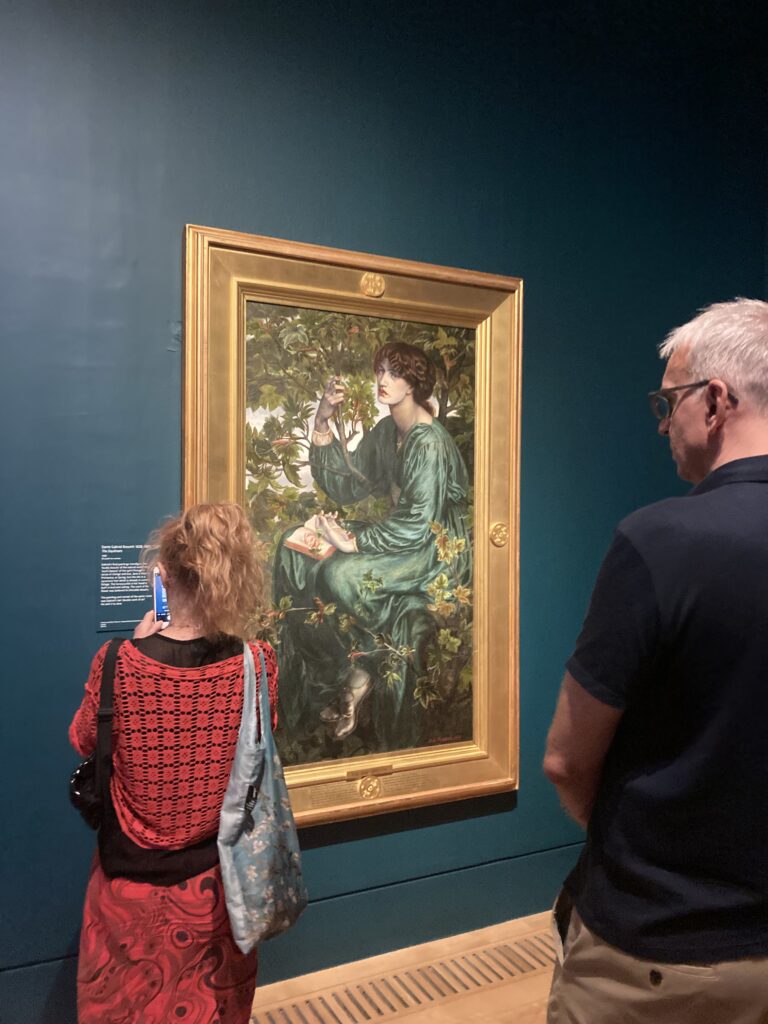
    The Day Dream, Dante Gabriel Rossetti
    The Day Dream, Dante Gabriel Rossetti

    Founded in 1848, the Pre-Raphaelite movement challenged stale academic routines. The Brotherhood sought sharper observation, richer symbolism, and more focus on beauty, nature, and emotion. It was never just decorative. It was meant to matter.

    In the twentieth century, the Pre-Raphaelites were often criticized as excessive, sentimental, or embarrassingly lush. ‘Overly sentimental’ was a common rebuke, but the real issue often lay in the open expression of strong emotion.

    Importantly, this issue is not confined to Victorian England or the mid-twentieth century. Even today, some critics continue to dismiss Pre-Raphaelite art.

    Jonathan Jones observed that ‘a lot of critics disdain this period,’ and in his review of the Burne-Jones exhibition at Tate Britain several years ago, he described it as ‘how boring beauty can be’ and declared Burne-Jones to be ‘a stupid artist.’ 

    the beguiling of merlin
    The Beguiling of Merlin, Sir Edward Burne-Jones

    These attitudes may seem discerning, but are often habitual. Beauty is dismissed as superficial, narrative as naive, and emotion as weakness. Critics can appear more unsettled by art that evokes strong responses than by art that fails to engage.

    Here, Chalamet’s episode and the Pre-Raphaelite story meet. Both show how personal dislike is confused with cultural judgment, and how authority figures shape what is deemed significant.

    A recurring pattern of scorn

    Ballet and opera are called elitist or dull. Pre-Raphaelite art is labeled sentimental, decorative, or excessive. The terms change, but critics persistently dismiss them, then act surprised or scornful when the public remains interested.

    Nevertheless, audiences continue to attend these performances and exhibitions.

    This persistence is key. However labeled by critics, audiences engage. This is not naivety. Audiences see what critics overlook: beauty, atmosphere, emotion, and art that invite appreciation.

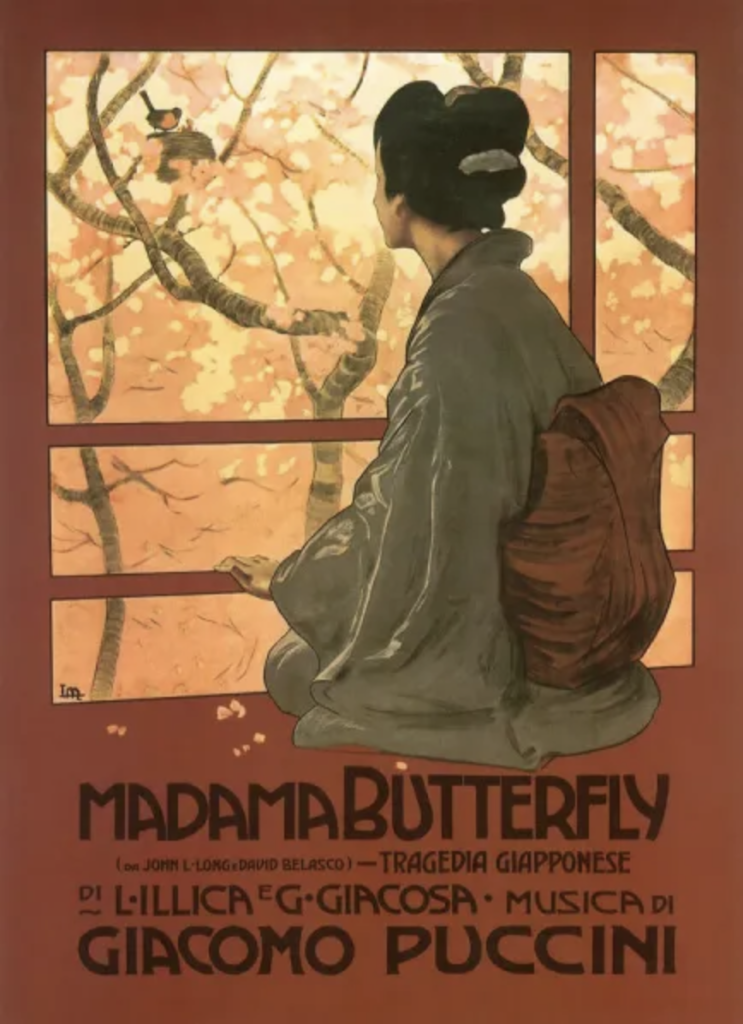
    Madama Butterfly

    Of course, this does not mean all criticism is wrong.

    Acknowledging that critics can be dismissive does not suggest that critique itself is unnecessary.

    Some Pre-Raphaelite works are uneven or excessive. Some raise questions about gender, idealization, medievalism, empire, and the politics of beauty. Those questions matter; serious criticism helps us see and understand more.

    However, it is important to distinguish between critique and contempt.

    Critique involves careful and thoughtful examination. Contempt feels performative and superficial.

    Personal dislike does not constitute cultural judgment.

    It’s easy to conflate personal dislikes with genuine judgment. Historically, critics have often proclaimed the demise of art forms they did not favor, confusing personal opinion with cultural fact.

    Yet these art forms persist.

    They live on because they are vital. 

    Art endures through those who passionately engage it. Its vitality comes from devoted audiences: proof that meaning and value are not bestowed by critics, but earned by ongoing, genuine appreciation.

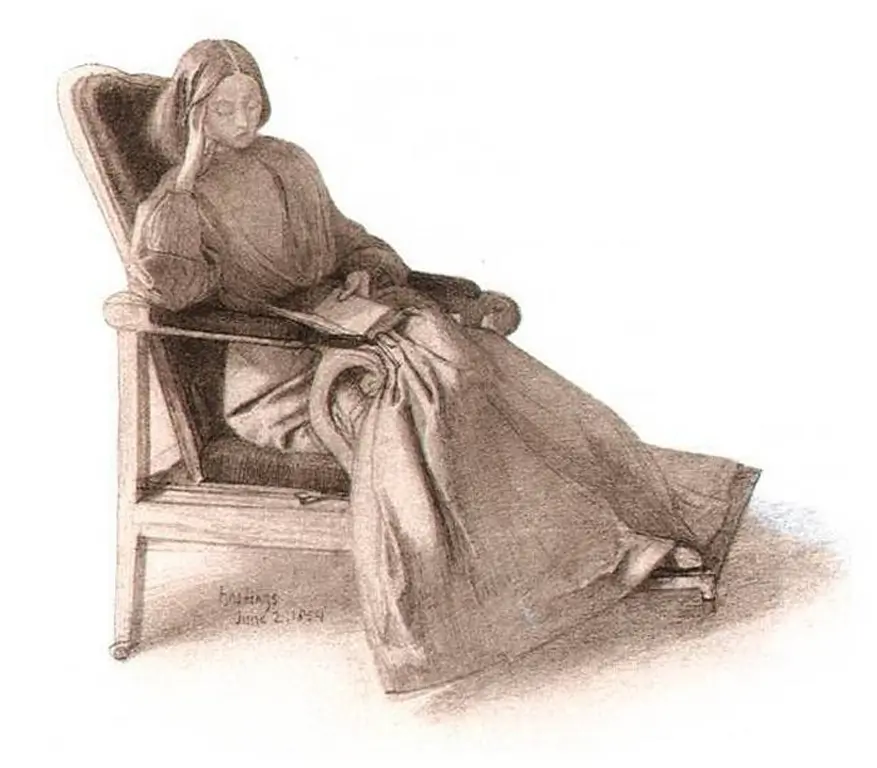
    Elizabeth Siddal
  • The lie we were sold: that beauty equals escapism

    The lie we were sold: that beauty equals escapism

    Somewhere along the way, we learned a suspicious equation:

    beauty = avoidance
    joy = ignorance
    aesthetic pleasure = moral failure

    Art history disagrees.

    The creation of art has rarely been a lounge chair on a sunny terrace. More often, it’s been a hand pressed to the wall in a burning building, testing for heat, searching for the exit, steadying the trembling. People have turned to images in plague years, war years, famine years, and exile years. Not because they were indifferent, but because the human psyche cannot metabolize catastrophe in a single sitting.

    We do not live on truth alone. We live on truth with a pulse.

    Beauty, then, isn’t a sugar coating.

    It’s a nutrient.

    It’s one of the ways we remain human while the world tries, daily, to render us numb.

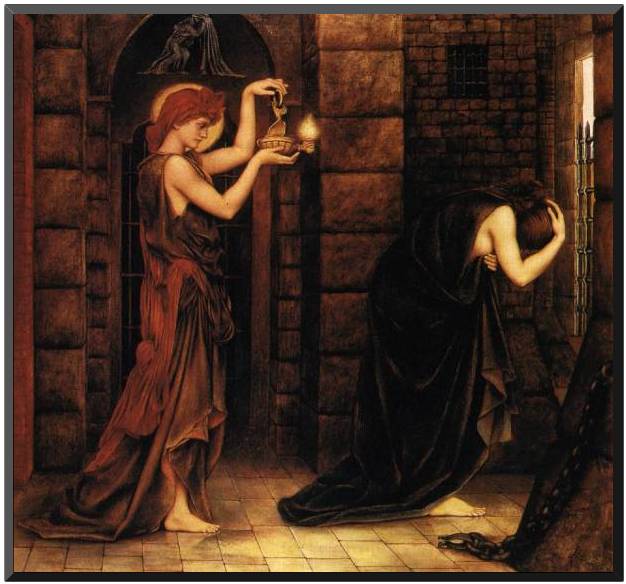
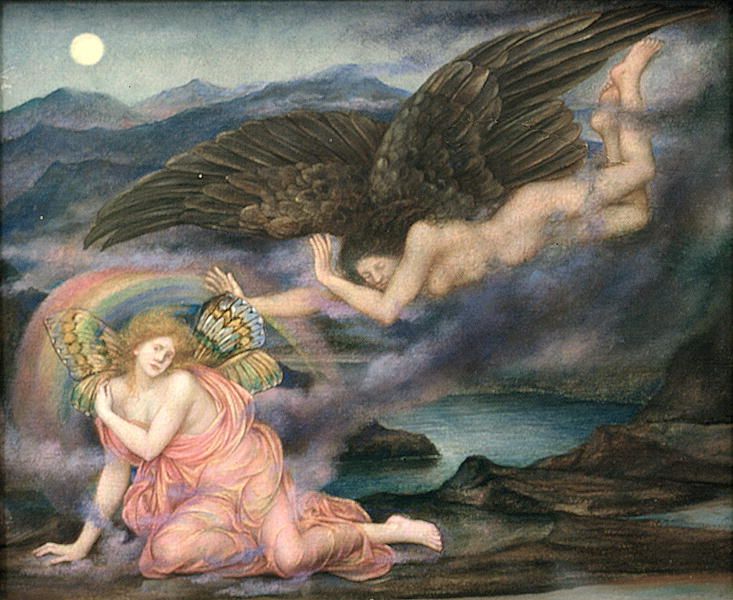
    Hope in the Prison of Despair, Evelyn De Morgan
    Hope in the Prison of Despair, Evelyn De Morgan

    Beauty as companionship, not denial

    Behold: the modern feed, a corridor of sirens and screams. The news arrives like a tumultuous weather system. Uninvited, invasive, changing the pressure in the room. Many of us are walking around with a body that thinks it’s still in emergency mode: shoulders near the ears, jaw locked like a stubborn gate, breath held as if air must be rationed.

    And then someone posts a painting. A small still life. A luminous face. A forest green drapery, a gold-edged sleeve. The comments split into two camps: How can you post this now? versus Thank you, I needed this.

    I’m realizing that this is where Guggums lives: in the tender seam between those reactions. Not to arbitrate who is correct, but to ask a more useful question:

    What if beauty isn’t a detour from reality, but a way to stay with it?

    What if art, at its best, is not denial?
    Perhaps it is companionship.

    Community care isn’t always a grand sweeping movement. Sometimes it’s a “quiet room.”

    When people say “community care,” we often imagine action: fundraising, organizing, showing up, building the infrastructure of survival. Yes. Absolutely. No argument from me; bring the banners, bring the water, bring the phone chargers.

    But community care also includes something subtler: regulation.

    A community of dysregulated nervous systems cannot sustain long-term work. If your body is constantly braced for impact, even your compassion will start to feel like a task you’re failing.

    This is why we should make space for art.

    Not art that says, “Everything is fine.”
    Art that says, “You are here. I am here. Breathe with me.”

    Companionship, not denial.

    What the painters knew: the eye can be a lifeline

    Let us wander back through a few centuries, as one does.

    The medieval icon: a stare that holds you steady

    medieval icon st George
    Medieval icon of St. George

    Icons aren’t “pretty.” They are present. Their gold grounds do not mimic the world; they insist that another kind of reality is available, one where your suffering is seen without spectacle. The gaze is frontal, unwavering. Not entertainment. Not escape.

    A companion.

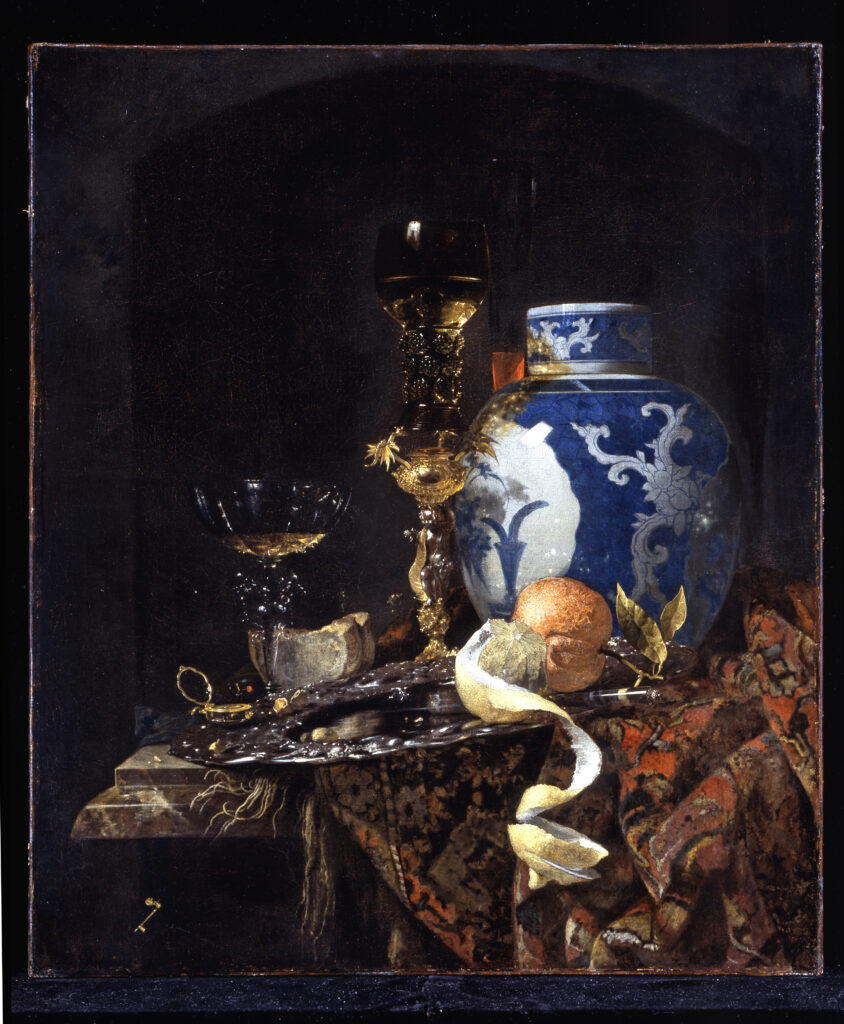
    Willem Kalf, Still-Life with a Late Ming Ginger Jar, circa 1650

    The Dutch still life: attention as resistance

    A lemon peel spirals. A wineglass catches light. The tablecloth wrinkles like a small landscape. In eras shadowed by death (and yes, the Dutch knew plague and war intimately), still lifes were not naive. They were meditations on time, fragility, and the holiness of the ordinary.

    Sometimes the most radical thing you can do is look slowly.

    The Day Dream, Dante Gabriel Rossetti

    The Pre-Raphaelite dream: beauty with a bruise

    Those lush greens and medieval reveries? They weren’t just aesthetic indulgence. They were a protest against industrial brutality, against a world flattening into soot and speed. Their beauty wasn’t complacent; it was insistent.

    Art doesn’t always solve. It often stays.

    The Black Brunswicker, Sir John Everett Millais
    The Black Brunswicker, Sir John Everett Millais

    The difference between tone deaf and tender

    So how do we share beauty without sounding like we’re handing someone a lavender-scented bandage for a broken bone?

    Here’s the difference, distilled:

    Tone deaf beauty says: “Look at this and stop feeling bad.”
    Tender beauty says: “Look at this while you feel what you feel.”

    Tone deaf beauty insists on a pivot.
    Tender beauty offers a parallel lane.

    Tone deaf beauty performs positivity.
    Tender beauty practices presence.

    Tone deaf beauty centers the poster’s comfort (“let’s keep it light!”).
    Tender beauty centers the audience’s reality (“this is heavy; you’re not alone”).

    If you want a rule you can carry in your pocket like a coin:

    Do not use beauty to erase pain. Use beauty to accompany people who are in pain.

    death of a butterfly, evelyn de Morgan
    ‘Death of a Butterfly’, Evelyn De Morgan
  • Pre-Raphaelite: Not a Look, a Movement

    Pre-Raphaelite: Not a Look, a Movement

    Somewhere along the way, “Pre-Raphaelite” became shorthand for a look: abundant hair, pale skin, some moody greenery. A woman who seems to have wandered out of a medieval daydream and into your Pinterest feed.

    I understand the appeal, but when we reduce the Pre-Raphaelites to solely an aesthetic, or a vibe, we miss the thing that made their work so unnervingly alive.

    The Pre-Raphaelites weren’t a hairstyle. They were a worldview.

    They treated nature not as backdrop but as a living language. A river wasn’t scenery; it was fate. A flower wasn’t decoration; it was a message. The world itself seemed to press in with meaning.

    And they treated stories the same way.

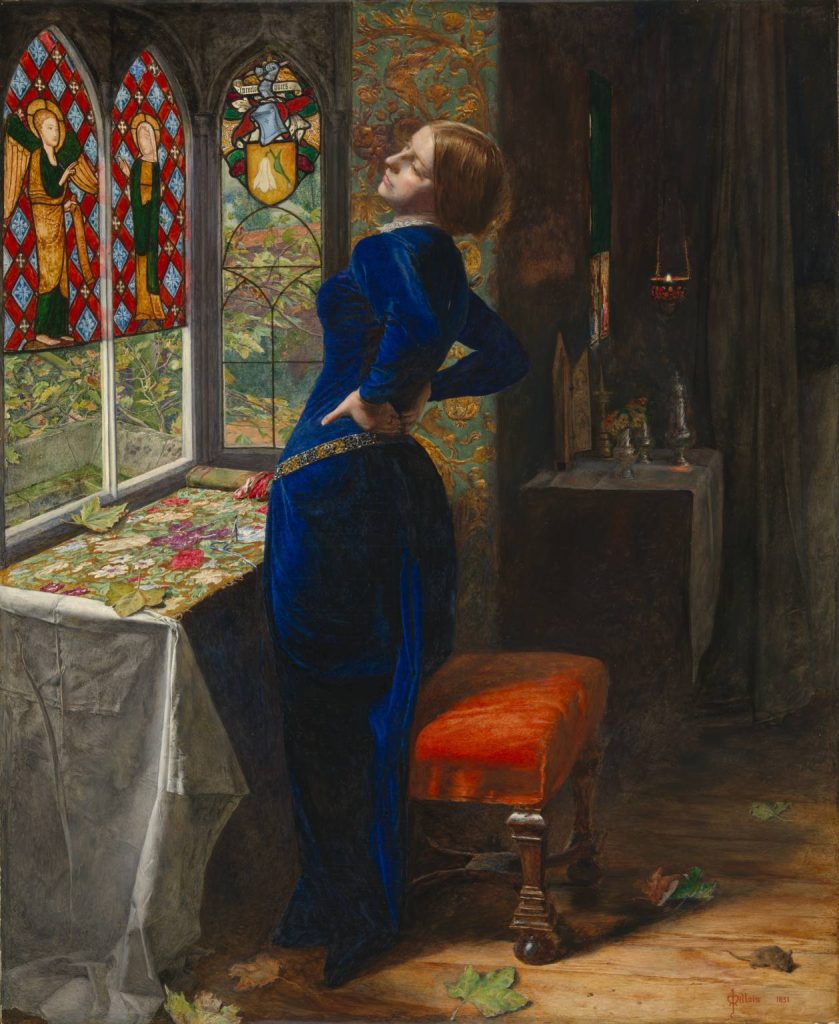
    Mariana, Sir John Everett Millais
    Mariana, Sir John Everett Millais

    Myths, legends, Shakespeare, Arthurian romance… these weren’t merely escapism. They were serious material, charged with warnings and longings. Their paintings don’t merely “illustrate” a tale; they interrogate it. Who is being sanctified? Or being punished? Who is being turned into a symbol instead of allowed to be a person?

    That last question matters more than ever, because the visual internet trades in symbols. A tragic girl. The beautiful woman framed as a mood, “Opheliacore,” the languid gaze, the hair like a halo. The Pre-Raphaelites gave us many of those visual templates.

    They also, if we’re honest, helped build the cage: the idea that beauty is virtue, that suffering is poetic, that women look best when they are luminous and still.

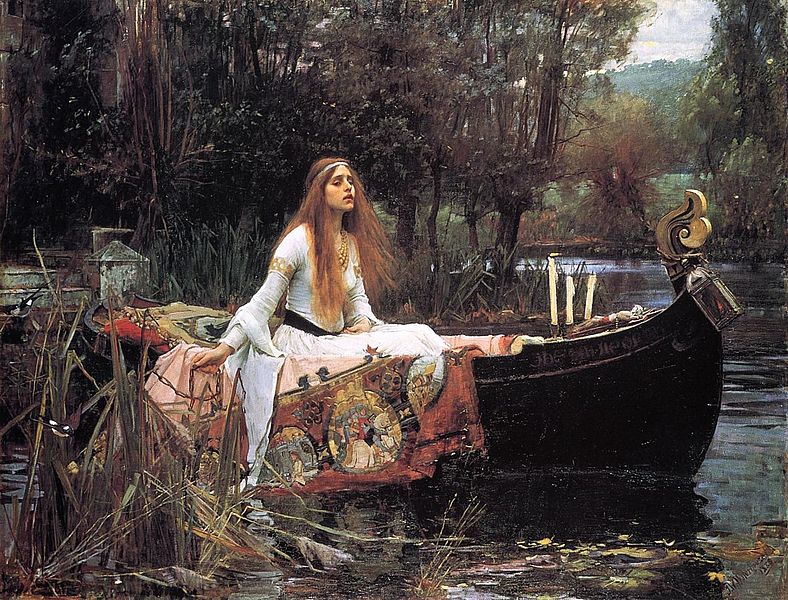
    Just look at Millais’ Ophelia, or Waterhouse’s The Lady of Shalott. Women suspended in a moment of aestheticized tragedy, turned into icons of doomed grace. (See Pre-Raphaelite Women at The Victorian Web and the Pre-Raphaelite Collection at The Tate.)

    The Lady of Shalott, John William Waterhouse
    The Lady of Shalott, John William Waterhouse

    Which is why we shouldn’t throw the aesthetic away. We should wake it up.

    If we love Pre-Raphaelite beauty (and of course we do!) we can love it with our eyes open, looking past the hair and ask what the painting is teaching you about desire, virtue, power, punishment, and the cost of being seen. Let the art be both gorgeous and complicated. Roses with thorns.

    Because that’s the real inheritance.

    Not the curls.

    The way of seeing.

  • On Being Seen (and Misunderstood)

    On Being Seen (and Misunderstood)

    We all know what it feels like when someone looks at us but fails to truly see us. The rush to interpret, to categorize, to narrate each other’s intentions creates a distance that doesn’t have much to do with reality, but everything to do with projection. And when someone misreads you, when their invented story becomes louder than your actual one, there can be a sting that catches you off guard.

    Misunderstanding can feel like an erasure.

    I think the Pre-Raphaelites understood this tension. The world saw Elizabeth Siddal‘s face, her hair, even her posture captured endlessly. She was frequently reshaped her into symbols, ideals, and myths. A drowning woman, a tragic muse, an emblem of beauty tinged with sorrow. But these images were never the whole truth. They were reflections of the people who painted her, not the woman herself.

    Siddal addressed this in her poem Lust of the Eyes

    The Lust of the Eyes
    Elizabeth Siddal

    I care not for my Lady’s soul
    Though I worship before her smile;
    I care not where be my Lady’s goal
    When her beauty shall lose its wile.
    Low sit I down at my Lady’s feet
    Gazing through her wild eyes
    Smiling to think how my love will fleet
    When their starlike beauty dies.
    I care not if my Lady pray
    To our Father which is in Heaven
    But for joy my heart’s quick pulses play
    For to me her love is given.
    Then who shall close my Lady’s eyes
    And who shall fold her hands?
    Will any hearken if she cries
    Up to the unknown lands?

    Sometimes I think about that when modern life becomes loud, when people on social media decide who you are before knowing anything at all. It’s comforting, in a way, to realize we are not the first humans to face this. The misunderstanding is old; the ache is familiar.

    But there’s another side to this story, one that feels gentler, more hopeful. 

    The ones who pause.

    Who take time to ask.

    Those who listen without sharpening their claws.

    When someone truly sees your intentions, your humor, your hopes, your contradictions, you can feel as if you are welcomed home. 

    That’s the kind of seeing I want to practice more intentionally.

    The soft kind. The curious kind. The kind that assumes complexity rather than malice.

    The kind that remembers every person carries a thousand unspoken things.

    You are not failing when others misunderstand you.

    But when even a few people truly see you, they help make the rest bearable.

    And maybe that’s all we can ask of each other, to try a little harder to see the person, not the projection.


    Leave room for nuance.

    Offer the kind of attention that feels like light and warmth rather than a searchlight.

    Seen, even imperfectly, but not mistaken for someone we never were.