

It may sound silly, but imagine Pre-Raphaelite artists using social media today.
The question reveals more than it first appears. Imagining Pre-Raphaelites on social media lets us consider that their work wasn’t just painting, but creating images with mood, persona, symbolism, and a sort of self-mythology. They weren’t merely making art; they were building worlds. This impulse remains relevant in today’s social media sphere, where we, too, construct identities and realities.
The Pre-Raphaelite Brotherhood was founded in 1848 by seven young artists and writers in England, including Dante Gabriel Rossetti, John Everett Millais, and William Holman Hunt. Their name showed they wanted to break away from what they saw as formulaic and boring academic rules in Victorian painting, and to return to the bright colors, detail, and honesty seen in Italian art before Raphael. This wasn’t just a small preference. It was a bold artistic movement.
From the start, they spread their work through letters, journals, exhibitions, reviews, patrons and personal networks. They built strong followings, and both shocked and charmed people. Essentially, they already recognized the power of a platform.

Rossetti would have thrived on Instagram. It brings together everything he loved: images, words, mood, and personality. He’d post close-up shots of rich fabrics, dreamy faces, and symbolic objects, with captions that felt like part poem, part challenge. Some themes would keep showing up. There would be a pomegranate. No one would really know why, and that mystery would make it even more interesting.

He would also be great at blending real life with performance. The Pre-Raphaelites cared deeply about beauty, but for them, beauty was never simply decoration. It was full of memory, medieval themes, desire, faith, sadness, and hints of stories. Social media loves this kind of layered symbolism. One picture can suggest a whole mood or set of values. Rossetti would get this right away, and he’d probably enjoy reading the comments, even if he acted like he didn’t.

Millais, on the other hand, might have had a trickier time with social media. His early paintings were extremely detailed and technically impressive, and he painted plants with careful accuracy. You can imagine him posting process videos that amaze viewers with their detail. Here’s the hem. Here’s the waterweed. Here are seventeen steps to painting a hand that turns out to be much harder than expected. He’d run the kind of account that makes people want to try oil painting, until they realize they don’t have the patience or sharp eyesight for it.

But Millais also shows us that public image can change. Over time, his style moved from the strict, detailed Pre-Raphaelite look to a bigger, more popular style. Today, some people might call that “selling out,” while others would say he was just adapting, making a living, and connecting with his audience. The debates would go on and on, and they’d be interesting.
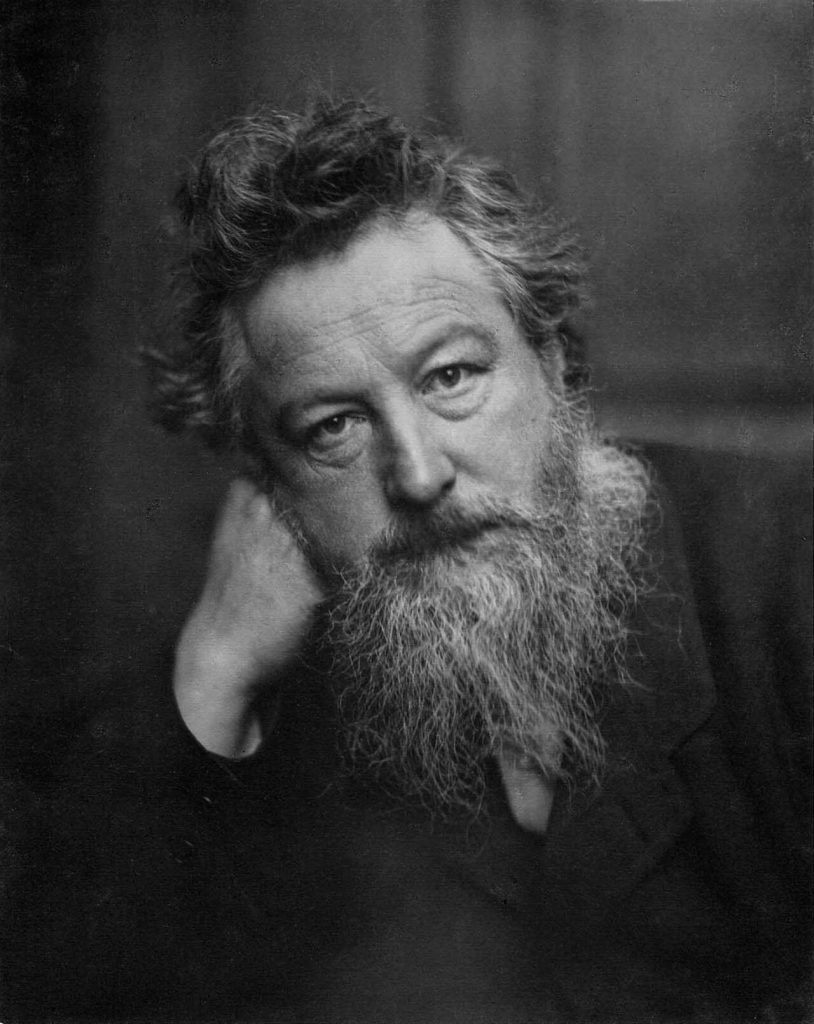
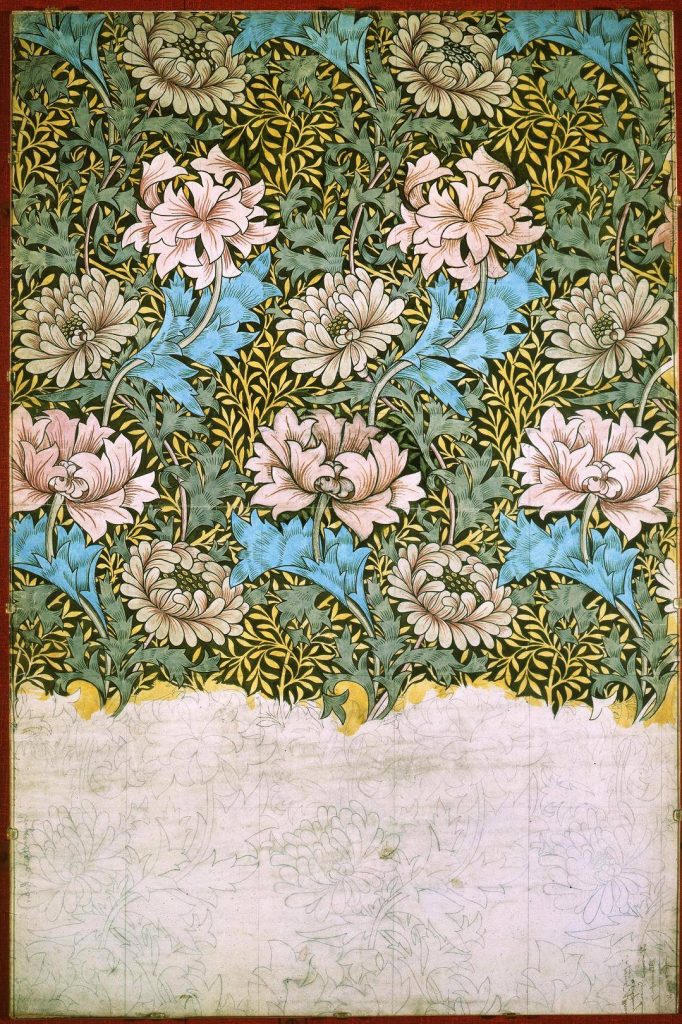
Then there’s William Morris, who was close to the Brotherhood and would be a key part of this imagined social feed. Morris wouldn’t just share objects; he’d share his whole philosophy of making things. Textile patterns, fonts, wallpapers, manuscripts, workshops, dyes, labor, craft, and his dislike of ugly mass production would all show up. His account would start with beautiful images and finish with you thinking about industrial capitalism. You’d come for the wallpaper and leave questioning the meaning of everyday objects.
This thought experiment is more than just a playful idea. It helps us see what links the Pre-Raphaelites’ world-building to today’s platform culture. The Pre-Raphaelites worked where art, technology, mass reproduction, and public attention met during a time of big changes in Victorian Britain. Instead of rejecting modern life, they responded by creating new worlds inspired by imagination, craft, and historic styles. This careful balance between old and new is a lot like how we use social media now.
Today, many people use social media to build a different world, not just to talk to others. Sometimes this world feels supportive; other times, it’s just a shiny illusion, and often it’s both. We gather objects, values, and styles, and arrange them carefully to say: this is what I love, this is what I resist, this is who I am when it feels right.

The Pre-Raphaelites knew that beauty is persuasive. Their art is rich, but never just about looks. Their images invite us to look deeper, using religion, literature, legend, and history to stir emotions. Social media works in a similar way: a carefully chosen image can show what matters, what’s desired, and who we are.
The Pre-Raphaelites knew both the appeal and the risks of focusing so much on aesthetics. Wanting to make life beautiful is a natural and worthy human urge. Noticing texture, color, symbols, and shapes isn’t silly, it’s a way of paying attention and saying the world has meaning, not just usefulness. I don’t want to give that up, and I doubt they would either.
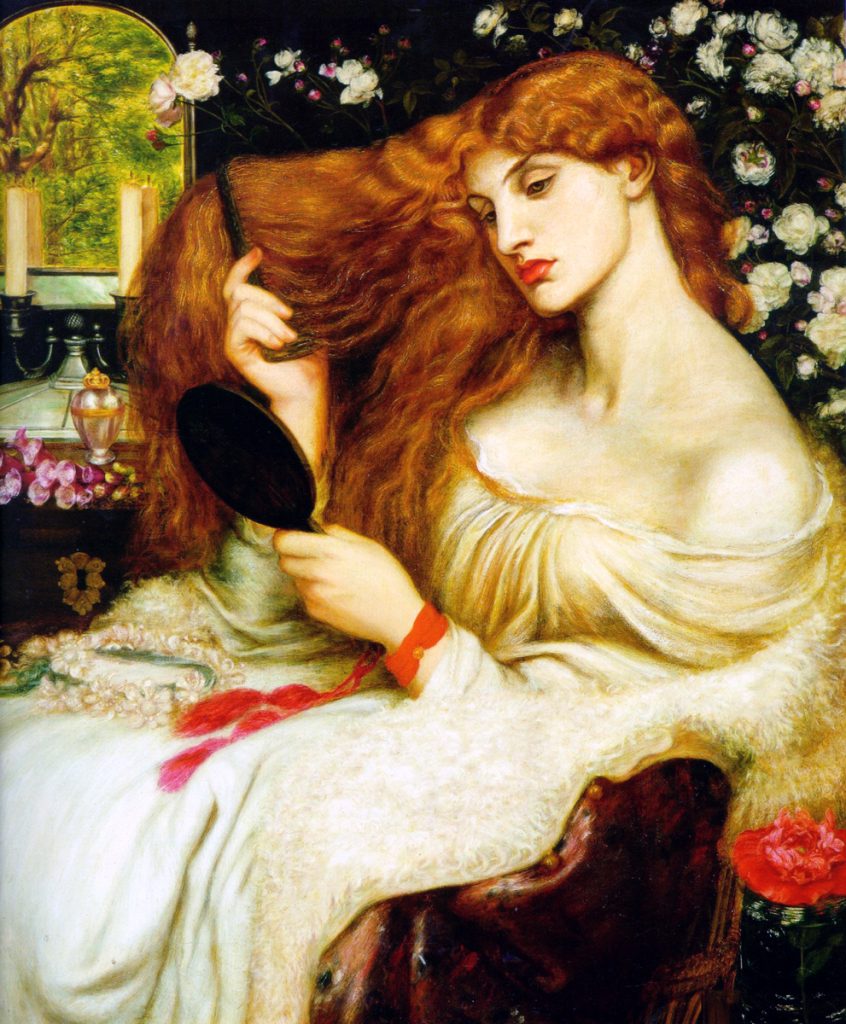
But beauty, if left unchecked, can also become slippery. The Brotherhood’s world, full of symbols and longing, sometimes lets real women, work, and grief fade into the background. Their art gives us beauty but also a warning. Style can help us see things more clearly, or it can take over. It reminds us of the urge to turn feelings into mood boards before we really think about them.
So the real question isn’t just whether the Pre-Raphaelites would use social media, but how thinking about them helps us see the purpose and effects of how we build our own online selves.
They would probably remind us that social platforms reward intensity, recognizability, and myth, just like their art did. They would show how easily aesthetics turn into identity, and identity into performance. Most importantly, they would ask us to remember that decoration isn’t the enemy of truth. Sometimes, it lets truth sneak in quietly. In our fast-paced digital world, caring about thoughtful creation and genuine feeling can be a form of resistance.
The Pre-Raphaelites would have done well online for the same reasons they did in paint and print: they believed details and stories mattered, and that surfaces could hold meaning. They would have chosen what to share carefully, maybe even shared too many symbols. And they definitely would have posted lots of lilies.
And maybe, after all the velvet, clever captions, and medieval style, they would leave us with one simple lesson: whether you’re an artist or just scrolling, mean what you share. Don’t let the performance become more important than substance. That’s a good rule for both the Pre-Raphaelites and for us in our digital lives today.

Also see:
The women behind Rossetti’s paintings: a guide to his most frequent muses
For more beauty, color, and curiosity, subscribe to the Guggums newsletter