

Each artistic circle has its bright figures: painters, muses, the names we read in exhibition labels and biography titles. But Victorian art also had its covert operators of dealers, agents, secret keepers, and charmers who crept softly through studios and drawing rooms, leaving behind stories that are as much rumor as reality.
Charles Augustus Howell was one of them.
Born in Portugal and active in London’s art world, Howell became entangled with some of the most famous names of the Pre-Raphaelite circle. He worked for John Ruskin, acted as an agent for Dante Gabriel Rossetti, James McNeill Whistler, and Edward Burne-Jones, and moved among artists with a mixture of usefulness, theatrical charm, and alarming unreliability. He was, depending on whom you asked, brilliant, helpful, untrustworthy, magnetic, or dangerous.
His reputation has never been clean. Howell has been described as an art dealer, collector, secretary, agent, model, forger, manipulator, and rogue. He seems to have understood both art and artists very well: their ambitions, vanities, weaknesses, and needs. That made him valuable. It also gave him room to manipulate the very people whose lives and careers he had so carefully insinuated himself into.
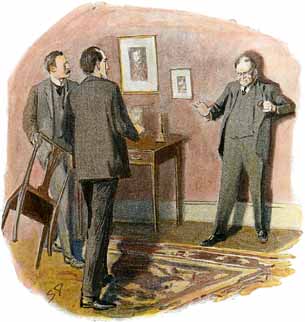
He even slid from art history into detective fiction. Sir Arthur Conan Doyle based the blackmailer in The Adventure of Charles Augustus Milverton, one of Sherlock Holmes’s most repellent adversaries, on Howell. The art-world fixer is transformed into a literary predator who profits from other people’s secrets.

For those who know the story of Elizabeth Siddal, Howell’s name appears in one of its darkest chapters. Seven years after Siddal’s death, Dante Gabriel Rossetti decided to retrieve the manuscript of poems he had famously buried with her. Howell helped arrange the exhumation. Rossetti did not attend; Howell did. The scene has become one of the most macabre episodes in Pre-Raphaelite history, part literary recovery, part violation, part Victorian gothic nightmare.

Max Beerbohm later captured Howell’s reputation in a wicked little caricature: Howell eavesdropping while his paramour Rosa Corder forges Rossetti drawings. It is a comic image, born from the stories of dishonesty, manipulation, and double-dealing had gathered thickly around him.
It is tempting to make Howell into a simple villain. The Pre-Raphaelite story almost invites it: Rossetti as haunted poet, Siddal as wronged deceased wife, Howell as the sinister fixer who knew how to get things done. And the Sherlock Holmes connection strengthens that impression. Once we see Howell’s shadow behind Milverton, it becomes difficult not to imagine him as a man who understood the terrible power of private knowledge.
But Howell is more interesting, and perhaps more disturbing, if we see him as something more complicated. He was not outside the art world; he was part of how it worked. He moved paintings, brokered relationships, handled secrets, and understood that creativity often came tangled with money, reputation, desire, and control.
That is why Howell matters. He reminds us that art history is not only about moments of inspiration and creation. It is the tale of negotiations, debts, scandals, favors, and uncomfortable compromises. Behind the glowing canvases and poetic legends, there were people like Howell: clever, charming, suspect, and impossible to ignore.
Charles Augustus Howell will never be one of the beloved names of the Pre-Raphaelite world. But he belongs to its story. He is there in the margins, holding a key, carrying a rumor, opening a grave, and perhaps, somewhere in the fog of Baker Street, inspiring one of Sherlock Holmes’s most chilling villains.