For centuries, the most luminous ultramarine came from lapis lazuli mined in remote mountains (and moved across continents by hand, animal, ship, and at great risk).
Before it ever touched a brush, it had already lived several lives: as stone, as treasure, as trade, as an ordeal. By the time the pigment reached a painter’s studio, it arrived with a built in mythology of rarity and great value.
Where it comes from and why it mattered
Natural ultramarine is made by grinding lapis lazuli and laboriously separating the blue particles from duller minerals. It was hard work and low yield, meaning you could throw a lot of money at it and still not get much.
That scarcity became part of its aura. It was limited, temperamental, and priced like a jewel.
The business of a sacred blue
In many workshops, ultramarine was treated like a luxury ingredient. Patrons sometimes specified it in contracts, especially when they wanted a painting to announce devotion and status in the same breath.
A painter would often make decisions like:
Use ultramarine only where it counts
Substitute cheaper blues elsewhere
Reserve it for the most symbolically loaded surfaces
In other words: color as strategy.
The symbolism
Ultramarine’s cultural meaning didn’t come only from religion, but religion supercharged it. In Western European painting, it became linked to the sacred, especially through Marian blue*.
The Virgin with Angels (La Vierge aux anges), also known as The Song of the Angels, 1881, by artist William-Adolphe BouguereauThe Virgin in Prayer, Giovanni Battista Salva da Sassoferrato 1650
Ultramarine evokes emotion
It’s a hue that carries the hush and mystery of distance: deep ocean, a starry night, or the far side of a mountain range. Because it’s so saturated, it doesn’t just sit on the surface; it seems to gather light and hold it.
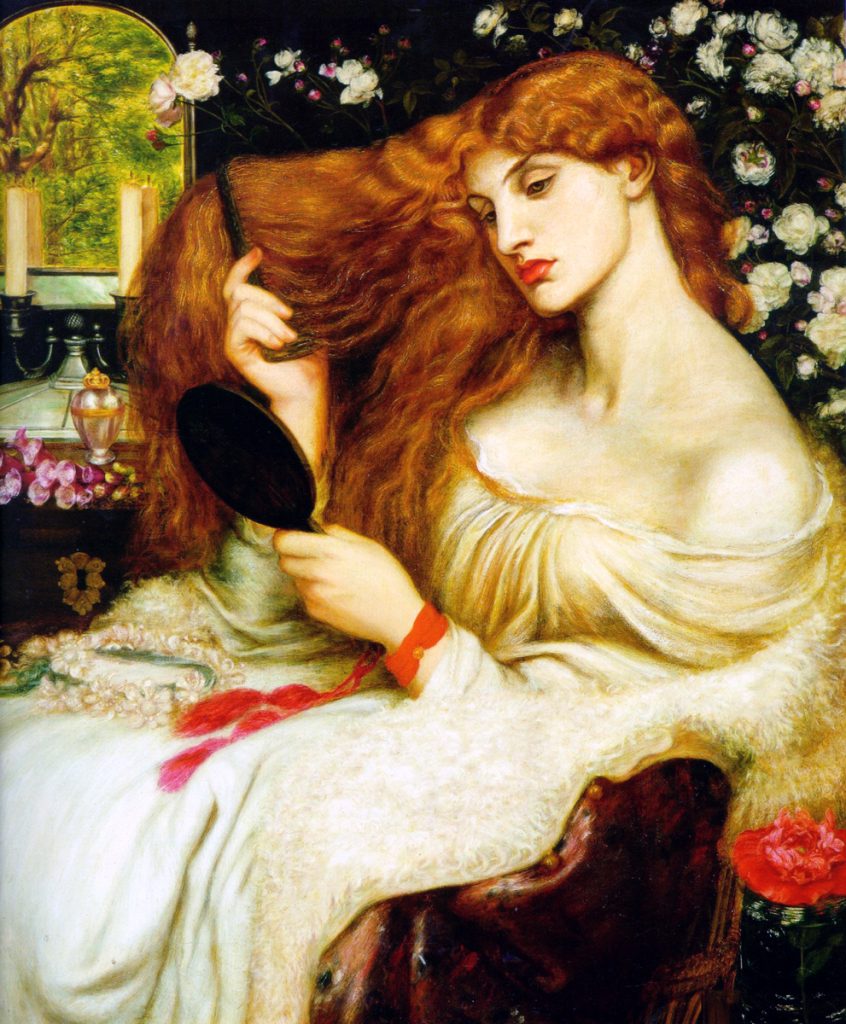
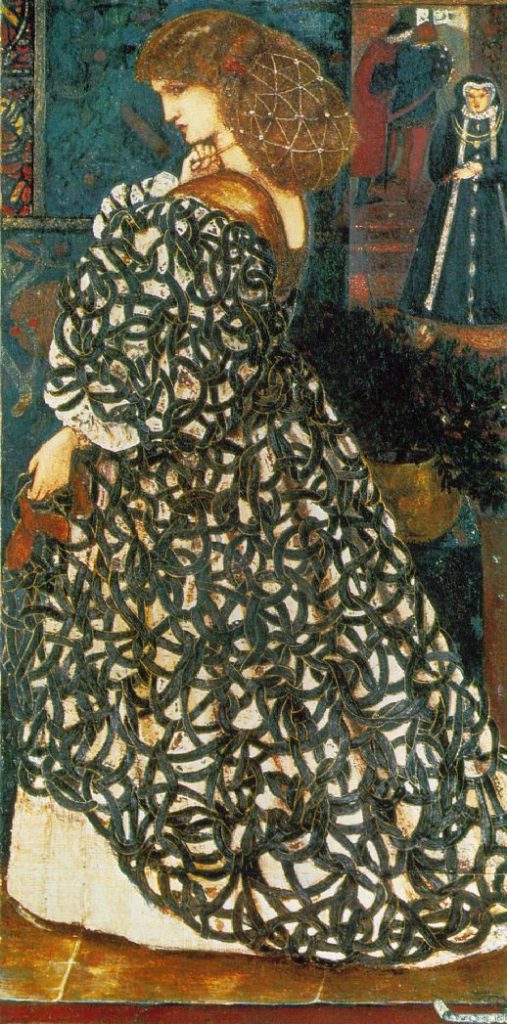
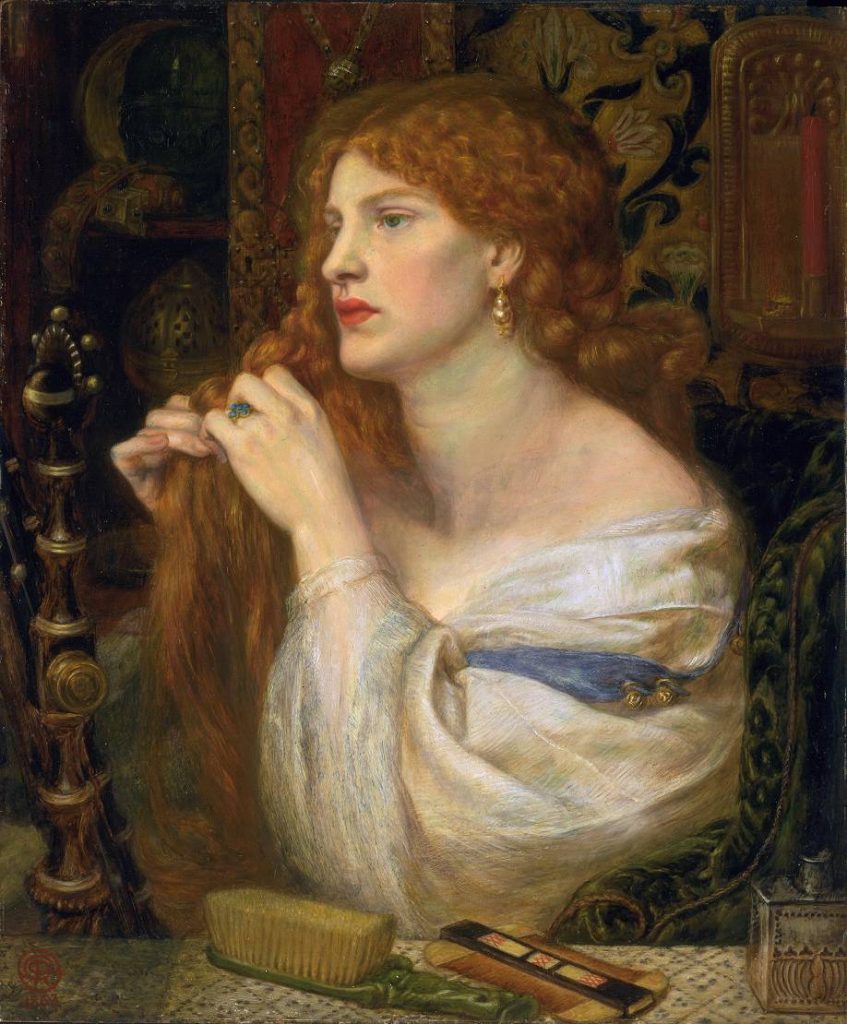
The Blue Silk Dress, Dante Gabriel Rossetti (model Jane Morris)
The beauty of ultramarine is that it refuses to be merely decorative. It has depth without gloom, richness without shouting. It can read as sky, sea, velvet, or benediction, sometimes all at once, holding both distance and devotion in the same breath. Even now, when the pigment is no longer rare, the color still behaves like something precious: it gathers our attention, steadies our gaze, and makes a little room in the mind for wonder.
Ultramarine doesn’t just color a surface; it dignifies it, quietly.
*More on Marian Blue on this Wikipedia page, along with links to a variety of shades, complete with swatches.
Somewhere along the way, we learned a suspicious equation:
beauty = avoidance joy = ignorance aesthetic pleasure = moral failure
Art history disagrees.
The creation of art has rarely been a lounge chair on a sunny terrace. More often, it’s been a hand pressed to the wall in a burning building, testing for heat, searching for the exit, steadying the trembling. People have turned to images in plague years, war years, famine years, and exile years. Not because they were indifferent, but because the human psyche cannot metabolize catastrophe in a single sitting.
We do not live on truth alone. We live on truth with a pulse.
Beauty, then, isn’t a sugar coating.
It’s a nutrient.
It’s one of the ways we remain human while the world tries, daily, to render us numb.
Hope in the Prison of Despair, Evelyn De Morgan
Beauty as companionship, not denial
Behold: the modern feed, a corridor of sirens and screams. The news arrives like a tumultuous weather system. Uninvited, invasive, changing the pressure in the room. Many of us are walking around with a body that thinks it’s still in emergency mode: shoulders near the ears, jaw locked like a stubborn gate, breath held as if air must be rationed.
And then someone posts a painting. A small still life. A luminous face. A forest green drapery, a gold-edged sleeve. The comments split into two camps: How can you post this now? versus Thank you, I needed this.
I’m realizing that this is where Guggums lives: in the tender seam between those reactions. Not to arbitrate who is correct, but to ask a more useful question:
What if beauty isn’t a detour from reality, but a way to stay with it?
What if art, at its best, is not denial? Perhaps it is companionship.
Community care isn’t always a grand sweeping movement. Sometimes it’s a “quiet room.”
When people say “community care,” we often imagine action: fundraising, organizing, showing up, building the infrastructure of survival. Yes. Absolutely. No argument from me; bring the banners, bring the water, bring the phone chargers.
But community care also includes something subtler: regulation.
A community of dysregulated nervous systems cannot sustain long-term work. If your body is constantly braced for impact, even your compassion will start to feel like a task you’re failing.
This is why we should make space for art.
Not art that says, “Everything is fine.” Art that says, “You are here. I am here. Breathe with me.”
Companionship, not denial.
What the painters knew: the eye can be a lifeline
Let us wander back through a few centuries, as one does.
The medieval icon: a stare that holds you steady
Medieval icon of St. George
Icons aren’t “pretty.” They are present. Their gold grounds do not mimic the world; they insist that another kind of reality is available, one where your suffering is seen without spectacle. The gaze is frontal, unwavering. Not entertainment. Not escape.
A companion.
Willem Kalf, Still-Life with a Late Ming Ginger Jar, circa 1650
The Dutch still life: attention as resistance
A lemon peel spirals. A wineglass catches light. The tablecloth wrinkles like a small landscape. In eras shadowed by death (and yes, the Dutch knew plague and war intimately), still lifes were not naive. They were meditations on time, fragility, and the holiness of the ordinary.
Sometimes the most radical thing you can do is look slowly.
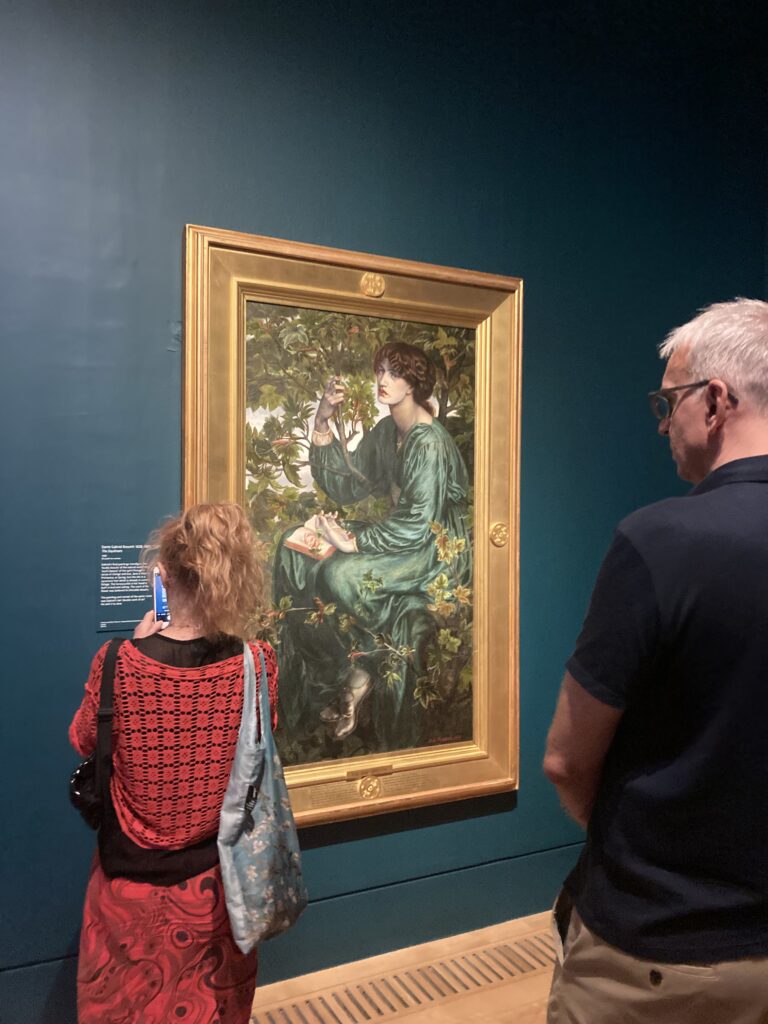
The Day Dream, Dante Gabriel Rossetti
The Pre-Raphaelite dream: beauty with a bruise
Those lush greens and medieval reveries? They weren’t just aesthetic indulgence. They were a protest against industrial brutality, against a world flattening into soot and speed. Their beauty wasn’t complacent; it was insistent.
Art doesn’t always solve. It often stays.
The Black Brunswicker, Sir John Everett Millais
The difference between tone deaf and tender
So how do we share beauty without sounding like we’re handing someone a lavender-scented bandage for a broken bone?
Here’s the difference, distilled:
Tone deaf beauty says: “Look at this and stop feeling bad.” Tender beauty says:“Look at this while you feel what you feel.”
Tone deaf beauty insists on a pivot. Tender beauty offers a parallel lane.
Tone deaf beauty performs positivity. Tender beauty practices presence.
Tone deaf beauty centers the poster’s comfort (“let’s keep it light!”). Tender beauty centers the audience’s reality (“this is heavy; you’re not alone”).
If you want a rule you can carry in your pocket like a coin:
Do not use beauty to erase pain. Use beauty to accompany people who are in pain.
This is where The Tempest slips off the page. Pre-Raphaelite attention pins unseen magic to a real patch of grass and leaf, until the atmosphere around him feels nearly touchable.
A quick Tempest refresher (no homework required)
Millais is painting an episode from The Tempest, Act I, Scene II: Ferdinand, shipwrecked on Prospero’s enchanted island, hears music and tries to locate it “i’ the air or the earth?” as Ariel sings “Full fathom five thy father lies.”
This is the moment where the island begins to do what it does best: guide you without asking permission.
Ferdinand Lured by Ariel by Sir John Everett Millais
What’s happening in the painting
Ferdinand is foregrounded and intensely physical, wearing a red tunic, white hose, with one foot edging forward; yet his face is turned inward, listening. Ariel is there, but not there: a green, surreal presence tipping Ferdinand’s hat, close enough to touch him, impossible to truly see.
And then there are the wonderfully odd little creatures, green “bats” posed in a way that echoes “see no evil, hear no evil, speak no evil,” a detail that reportedly unsettled at least one early would-be buyer because it wasn’t the sweet, dainty fairy world people expected.
Millais isn’t offering a Victorian stage fairy. He’s giving you something stranger: nature itself behaving like theatre.
Why this painting matters in Pre-Raphaelite terms
This work is often pointed to as Millais’ first big attempt at the early PRB “paint what you actually see” intensity, done outdoors (plein air) at Shotover Park near Oxford.
That shows in the greenery. The plants aren’t “background.” They are presence: each clump, blade, and leaf treated as if it has rights. (This is the Pre-Raphaelite promise: the world is not a blur behind the story; the world is part of the story.)
There’s also the PRB brightness. Millais painting with heightened, saturated color, including working on a white ground to keep the whole surface lit from beneath. The red tunic against that ferocious green is basically a visual bell: you can almost hear it.
The genius choice: making the invisible visible (without ruining it)
How do you paint a spirit like Ariel, without making them into a literal cartoon fairy?
Millais’ solution is sly: he lets Ariel half disappear into the green, more like camouflage than costume. Ferdinand looks right at him, and still can’t see him. We, the viewers, can (sort of.)
It’s a perfect visual equivalent of the scene: Ferdinand is being led by something he can’t name. The island doesn’t announce itself. It insinuates.
A few things to notice when you look
The hands at Ferdinand’s ears: he’s not just hearing, he’s straining, trying to catch meaning.
That hat string detail: such a small, domestic tether in a supernatural moment, and it makes the enchantment feel practical.
The arched/circular framing: it reads like a portal, a vignette, a “peep into another world” shape. Very fairy tale, but also very controlled.
The greens: not one green, but many: acid, moss, olive, yellow green, stacked until “nature” becomes almost hallucinatory.
A tiny afterlife note (because art has one)
The finished painting was exhibited at the Royal Academy in 1850, and it has lived largely in private collections; it even became the subject of a UK temporary export bar in 2019, a reminder that these early PRB works are still treated as cultural treasures with real stakes attached.
Why I keep coming back to it
Because it’s not just “Shakespeare, illustrated.”
It’s Shakespeare filtered through that Pre-Raphaelite conviction that the world is charged, that grass and shadow can be as dramatic as a human face; that beauty can be exacting, almost severe; that the supernatural doesn’t have to glitter to be real.
Millais shows us a man lured by a musical spell.
And if you’ve ever felt art do that to you, pull you forward by the collar with something you can’t quite explain, then you already know this painting’s secret.
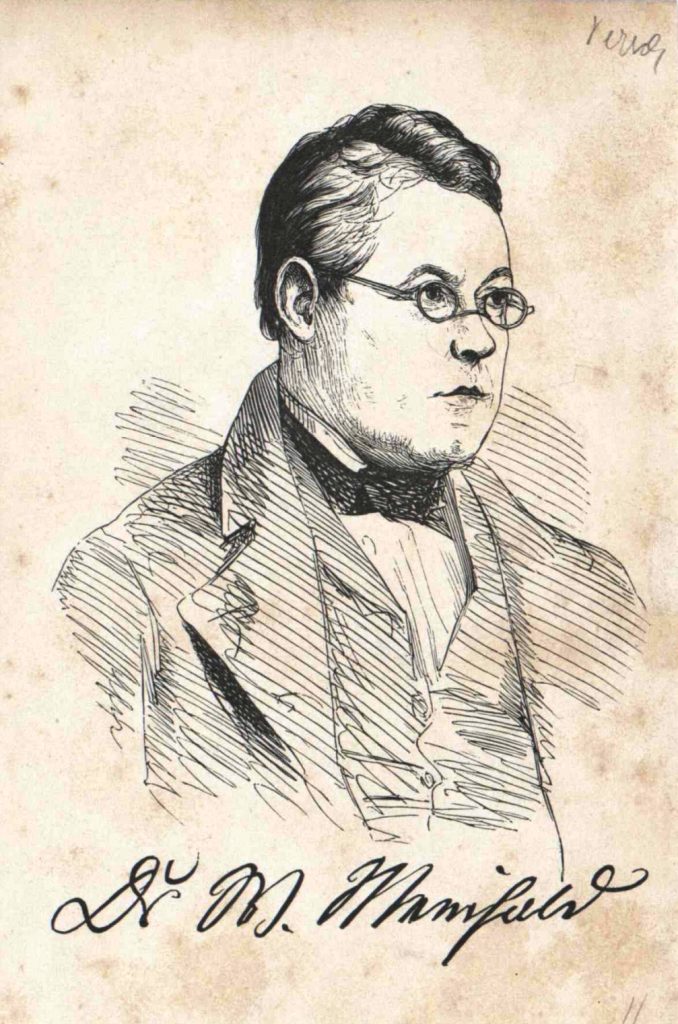
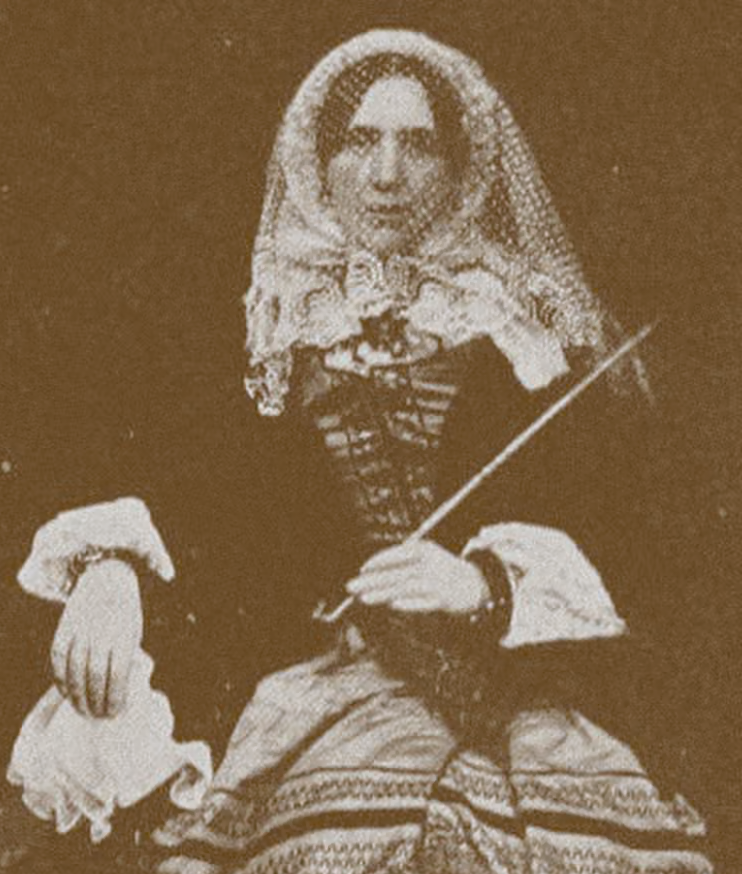
Madeleine Smith stood trial in 1857 for the murder of her former lover, Pierre Emile L’Angelier, becoming a subject of public fascination.
The relationship between Madeleine and L’Angelier was secretive, with passionate letters that ultimately put her future at risk.
L’Angelier’s death from arsenic poisoning led investigators to Madeleine, who had previously purchased arsenic, making her a prime suspect.
Despite the scandal, the court ruled ‘not proven,’ and Madeleine continued her life, marrying George Wardle and later moving to New York.
The case reflects Victorian society’s obsession with crime and the complex interplay between beauty and morality, as illustrated by Rossetti’s remark on Madeleine.
In 1857, a twenty-two-year-old woman stood trial in Glasgow for murdering her former lover, and Victorian Britain did what it does best: turned scandal into spectacle.
Her name was Madeleine Smith, and she was not only accused; she was watched. Reported on. Speculated over. Consumed in newspapers the way we consume true-crime documentaries now, except with more soot, more sermons, and far fewer guardrails.
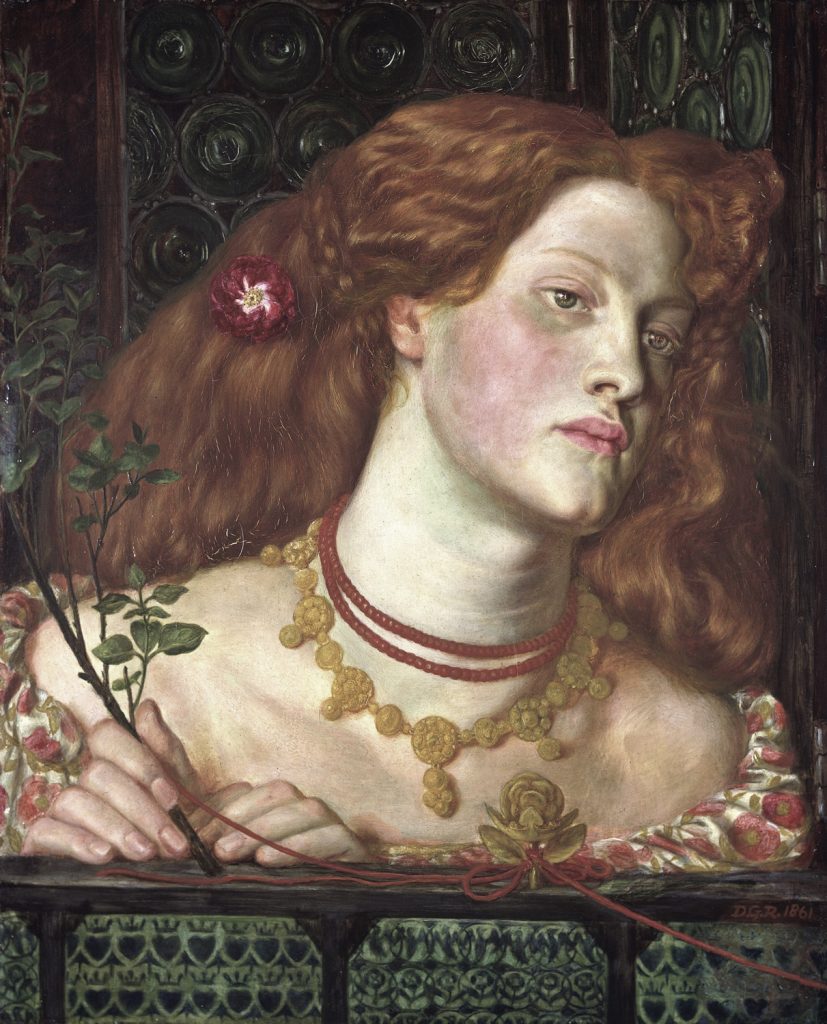
And somewhere down in London, in the orbit of the Pre-Raphaelite circle, artist Dante Gabriel Rossetti heard about the case and delivered a remark so Rossettian it feels like a shard of his personality in a single line:
“you wouldn’t hang a stunner!” (“Letters of D. G. Rossetti,” Atlantic Monthly, vol. 77)
Rossetti used “stunner” often, his favorite shorthand for beauty with impact, beauty that almost feels like a force. But here, the word lands with a strange shiver. It’s funny in that appalling way men can be funny about women in danger. It’s a compliment that doubles as a verdict: she’s too beautiful for consequences.
Which is, of course, its own kind of sentence.
Madeleine Smith and the Secret Romance
Madeleine was the daughter of an upper-middle-class family. Respectability was part of her furniture. Then she met Pierre Emile L’Angelier, a clerk at a shipping firm, who was low income, with uncertain prospects, and, crucially, not “acceptable.”
So they did what so many people do when a relationship can’t survive daylight: they made it a secret.
There were letters, of course. Dramatic, poetic, deeply Victorian love letters, full of the intensity that feels like forever right up until it doesn’t.
Their relationship became sexual, and they wrote about it openly to each other. That detail matters, because it becomes the lever that could ruin her.
Because once Madeleine’s feelings cooled and once her parents introduced her to William Minnoch, a suitable match in every social sense, L’Angelier suddenly held something dangerous:
He had her words. In ink. In her handwriting.
And he could use them to destroy her future.
Madeleine Hamilton Smith. Did she murder L’Angelier?
Arsenic, the “Poison Book,” and a Trail in Plain Sight
When L’Angelier died of arsenic poisoning, investigators found Madeleine’s letters among his possessions, and the case snapped into a shape that the public could follow with relish.
There was also the practical horror of proof: it was established that Madeleine had purchased arsenic twice and signed the “Poison Book” at the time of purchase. An ordinary administrative detail that, in a sensational trial, becomes a spotlight.
The press seized the story. In The Invention of Murder, Judith Flanders describes the appetite for this kind of coverage and the protective language used around “good families,” a tone that tries to maintain decorum while the public crowds in for a better view. (You can almost hear the polite panic in lines like, “We fervently trust that the cloud over her head… may be speedily removed.”)
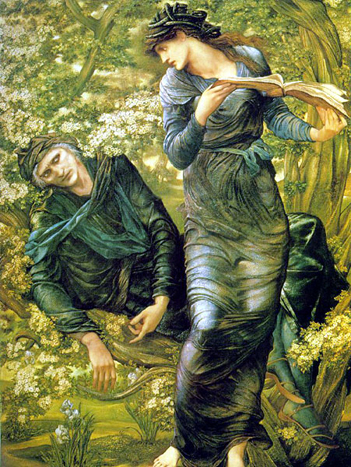
And the Pre-Raphaelite circle, so steeped in sympathetic Guineveres and Ophelias, so practiced at painting women as tragic and tender, followed too. It’s easy to imagine how Madeleine Smith might have been folded into their emotional imagination: a young woman “led astray,” cornered by the consequences of desire, punished by a society that loved to moralize after it had finished gawking.
Hence Rossetti: too beautiful to hang.
Actress Ann Todd portrayed Madeleine Smith in the 1950 film ‘Madeleine’, directed by Todd’s husband David Lean.
“Not Proven”
In the end, the verdict was “not proven.” Madeleine was released.
She left Glasgow. She did not marry Minnoch. Her life continued, but not as it had been. Notoriety has a way of becoming a shadow that follows you into every room.
And here is the twist that feels almost designed for a Guggums post, one of those strange little stitches connecting art world circles to scandal-world headlines:
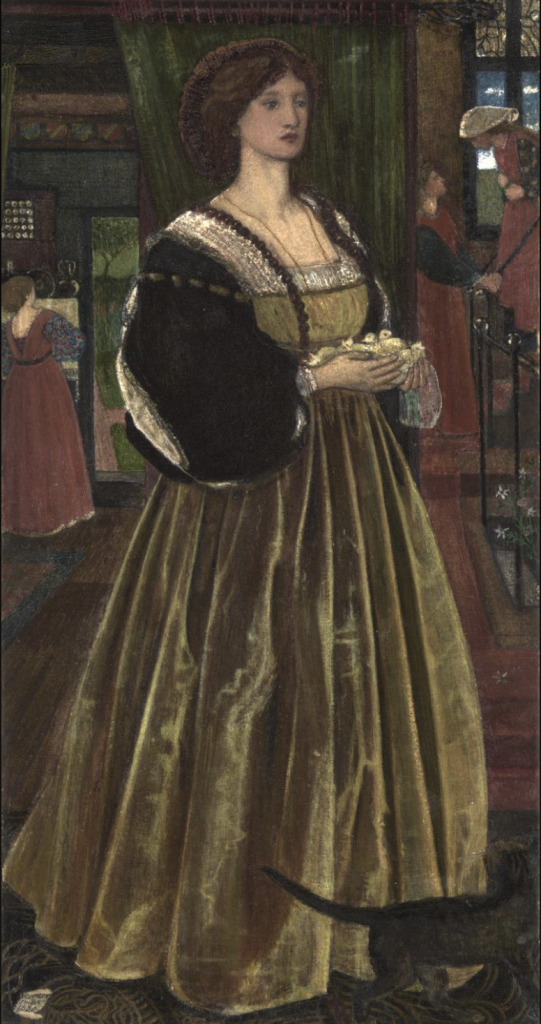
In 1861, Madeleine married George Wardle, a manager at Morris & Co., a man Rossetti and his circle knew well. Rossetti later wrote a satire, The Death of Topsy, in which Madeleine poisons William Morris with coffee. (Victorian men had many ways of processing their anxieties; satire was one of their safer outlets.)
Madeleine and Wardle separated in 1889. She later moved to New York, remarried (to William Sheehy), and lived until 1926, long enough for the scandal to fade into “story,” the way public hunger always eventually moves on to the next thing.
She may never have known that a famous painter/poet weighed in on her fate with a breezy line about beauty and execution.
Why the Victorians Couldn’t Look Away
The Madeleine Smith trial sits inside a larger Victorian obsession: murder as mass entertainment.
There was a market for souvenirs of hangings. People bought pieces of the execution rope. Penny publications, called penny bloods and penny dreadfuls, fed a public appetite for villainy, gore, and moral panic packaged as thrill.
And that appetite didn’t vanish. It evolved.
It helped build the runway for sensation fiction and the detective story, genres that still shape what we frequently watch and read today.
The Mystery Lineage (and the Pre-Raphaelite Overlap)
Victorian crime culture helped produce the fictional mysteries we now treat like comfort food… cozy, macabre, brainy, addictive.
And in that lineage, you can find flickers of Pre-Raphaelite connection:
Wilkie Collins, friend to Millais, gave us The Woman in White and The Moonstone, stories full of identity, concealment, and dread disguised as domestic order.
Mary Elizabeth Braddon gave us Lady Audley’s Secret, a sensation novel with a deliciously painterly awareness of surfaces and the violence they can hide.
Sherlock Holmes became the enduring Victorian detective, endlessly reimagined, and Holmes’s world even brushes against the Pre-Raphaelite orbit through the shadowy figure of Charles Augustus Howell, often cited as a model for Doyle’s villain Charles Augustus Milverton.
What I love about these overlaps is that they reveal something the Victorians understood instinctively: beauty and danger are not opposites. They are often co-conspirators. The prettiest room can hide the darkest story. The most “respectable” household can be the one that needs the most careful looking.
What Rossetti’s “Stunner” Line Really Exposes
On the surface, Rossetti’s quip is easy to repeat. It’s witty, scandalous, irresistibly quoteable.
But underneath it, there’s an uncomfortable truth: Madeleine’s beauty became part of the public argument about what she deserved. As if appearance could cancel out culpability or amplify it.
As if a face could be a defense.
As if a woman’s fate could be weighed on a scale where one side is morality and the other is the aesthetic pleasure she provides.
The Victorians loved to paint women as symbols. They also loved to punish them for being human.
And Madeleine Smith, whatever the truth of what happened between her and L’Angelier, became a perfect vessel for that contradiction.
She was a scandal. A story. A stunner. A warning.
And, like so many women in Victorian culture, she became legible to the public in ways that may have had very little to do with who she actually was.
Which is exactly why she still haunts the imagination.