Category: Pre-Raphaelite Brotherhood

The Pre-Raphaelite Brotherhood (PRB), later known as the Pre-Raphaelites, was a group of seven English painters, poets, and art critics, founded in 1848 and formed a “Brotherhood” that was originally a secret rganization, although the secret was revealed quite soon after their formation.

  • When Charles Dickens Hated a Masterpiece: What His Harsh Review Can Teach Us About Criticism Today

    When Charles Dickens Hated a Masterpiece: What His Harsh Review Can Teach Us About Criticism Today

    Some reviews are harsh, but Charles Dickens’s review of Millais’s Christ in the House of His Parents took criticism to another level.
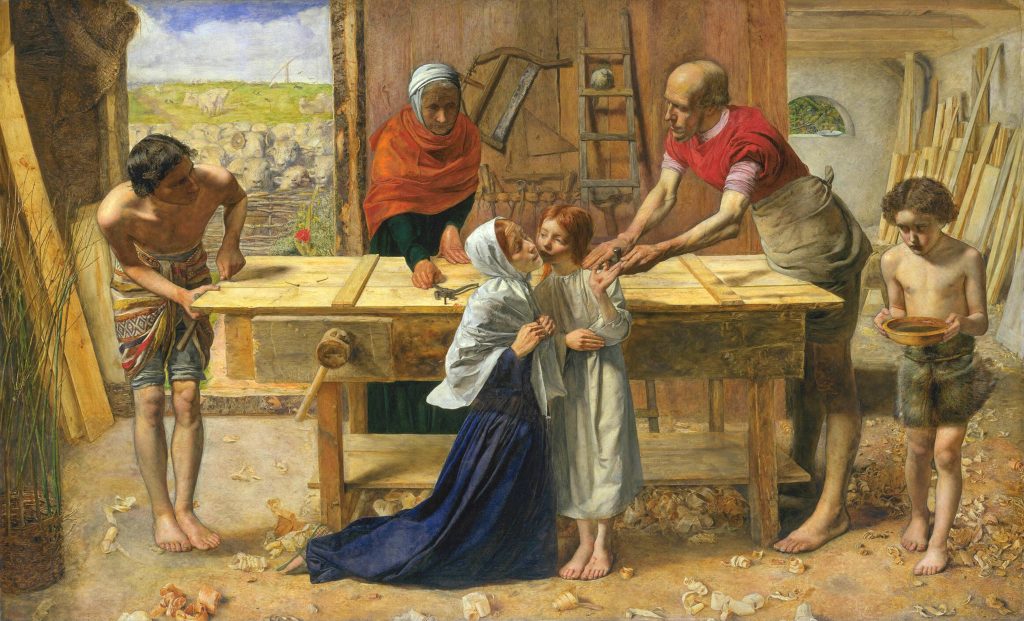
    Millais, Christ in the House of His Parents

    In 1850, John Everett Millais, then just twenty, exhibited his painting Christ in the House of His Parents at the Royal Academy. Instead of showing the Holy Family in an idealized biblical scene, he placed them in Joseph’s busy, dusty carpenter’s shop, surrounded by wood, tools, shavings, and people painted with careful attention to detail.

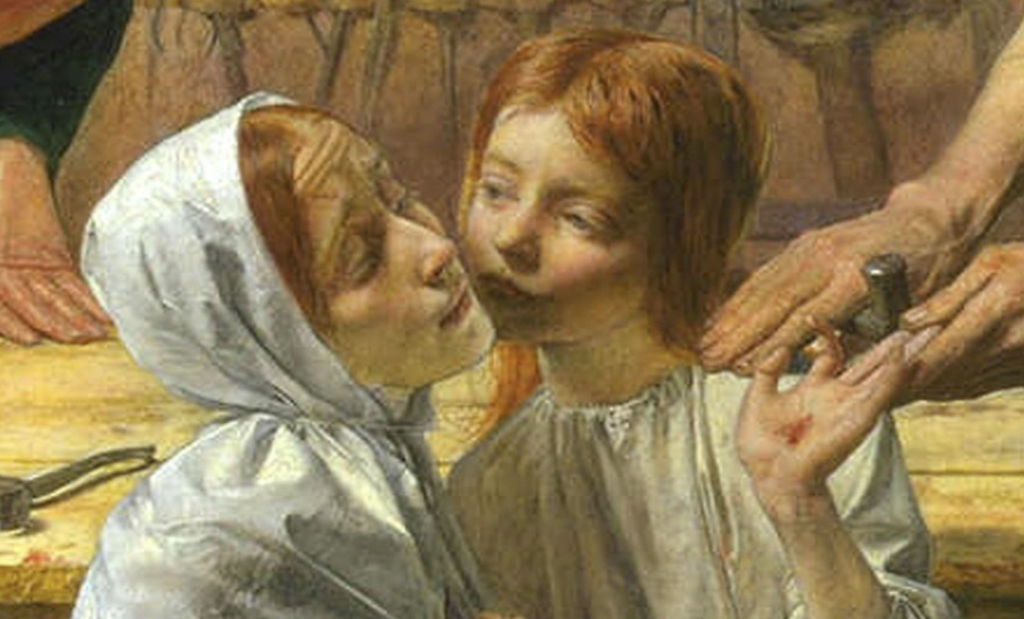
    In the painting, the young Christ hurts his hand on a nail, and blood drips toward his foot, hinting at the wounds he will later receive on the Cross. Mary cares for him, Joseph checks the injury, and young John the Baptist brings water. Outside, sheep gather behind a fence, symbolizing the future Christian flock.

    The painting is full of symbols, using everyday items like a nail, a bowl of water, a wooden door, a ladder, a dove, a scared child, and workers’ hands.

    Today, Christ in the House of His Parents is on display at Tate Britain and is seen as a key early Pre-Raphaelite work. But in 1850, its realistic style shocked many people.

    Dickens responded with fierce criticism.
    The shock of an ordinary Holy Family

    Victorian viewers expected religious art to show the Holy Family as beautiful, dignified, and distant. Millais took a bold step by showing them as part of an ordinary working family.

    The shop is not pretty. Joseph’s arms show signs of hard work. Their fingernails are dirty, and wood shavings cover the floor. The people in the painting are grounded in real life, not set apart from it.

    This was Millais’s intention. By mixing careful observation with Christian symbols, he showed that the sacred can come from everyday life, not just from distant ideals. The painting encourages viewers to see holiness in work, vulnerability, family care, and even pain.

    To Dickens, this approach did not feel like spiritual truth. Instead, he saw it as disrespectful.

    Dickens’s response, called “Old Lamps for New Ones,” appeared in Household Words on June 15, 1850. He admired Raphael and took the term “Pre-Raphaelite” as a criticism of Raphael’s tradition. His dislike of the Oxford Movement, which was linked to early Pre-Raphaelitism, also shaped his view. He believed there was more than one unattractive painting involved and thought this art was leading culture, religion, and art in the wrong direction.

    When criticism becomes spectacle

    Dickens didn’t just criticize the painting’s style, symbolism, or technique. He also attacked how the people looked, especially the young Christ and the Virgin Mary.

    He warned readers who hadn’t seen the painting to expect something “mean, odious, repulsive, and revolting.” He insulted the figures, describing their bodies and faces as ugly.

    Reading this is uncomfortable, partly because it’s so unexpected. Readers of Dickens know his writing usually inspired sympathy for people society ignored. In his novels, his detailed descriptions revealed injustice and gave a voice to the neglected. Here, though, his skill with detail turned into a tool for attack.

    His words were lively, memorable, and fierce, but they were also so dramatic that they drew attention away from the painting itself.

    This is the risk when contempt is presented as criticism. It draws attention but makes thoughtful discussion difficult.

    Dickens did raise important questions, though: Should sacred art make its subjects look ideal? Can realistic details fit with spiritual themes? Why did some people find it offensive to see the Holy Family as working people? What beliefs about class, beauty, cleanliness, and holiness were being questioned?

    These questions could have started a thoughtful discussion about the painting.

    But ridicule ended that possibility.

    Fame is not the same as infallibility.

    By 1850, Dickens was no longer just a reviewer. He was one of Britain’s most famous writers, with a strong moral voice, a large audience, and his own platform.

    His fame made his opinions more influential, but not always right.

    This episode is still interesting because Dickens was smart and often showed empathy. He cared about social issues and moral questions, but sometimes his certainty, biases, and desire to perform made him unfair.

    We often believe that authority settles a debate. When a famous critic or expert shares an opinion, their confidence can seem like proof, even without real evidence.

    But sounding certain is not the same as being right.

    History is full of confident judgments that later seem narrow, rushed, or even silly. Prestige does not protect a critic from mistakes; sometimes it just gives those mistakes a bigger stage.

    Did Dickens regret it?

    The answer is more complex than just yes or no.

    Five years after his review, Dickens sent Millais a copy of Household Words and referred to their past disagreements. He still did not like that painting, but he made it clear he respected Millais’s growing talent. They later became good friends.
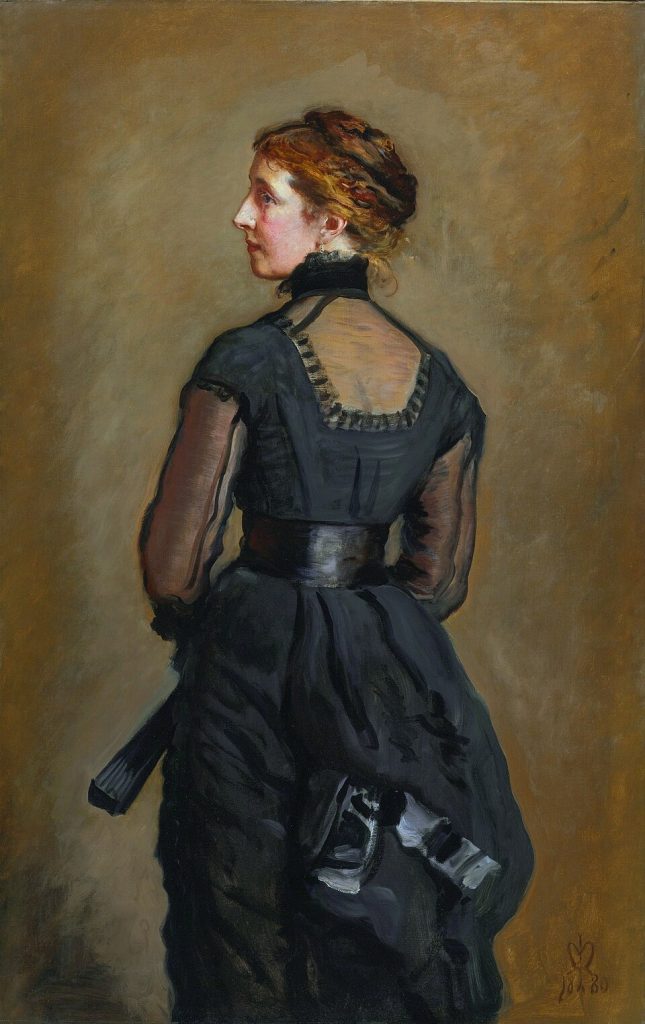
    Kate Dickens Perugini
    Charles Dickens’s daughter, Kate Dickens Perugini, painted by Millais

    In 1903 Kate Perugini, who was an artist herself, stated that her father’s reaction had been a “very harsh and hasty criticism” and said that she had “reason to believe he regretted having published” it.

    Regret does not mean we have to change every opinion we once held. Sometimes we regret how we expressed our judgment, whether it was rushed, hurtful, showy, or failed to consider another person’s humanity.

    Dickens may never have come to like Christ in the House of His Parents. Still, he could have realized that disliking a painting does not mean he had to insult the artist or those in the painting.

    What time did to the argument
    Dickens is still relevant today. People keep reading his work because it is lively, complex, funny, and poignant.

    Time has not shown that all criticism of the Pre-Raphaelites was wrong. Their art can be sentimental, overdone, troubling, beautiful, uneven, and amazing, all at the same time. Honest criticism helps us notice these details.

    But over time, the relationship between Dickens’s review and Millais’s painting has shifted.

    The review is remembered mostly because Dickens wrote it and its harshness is now part of the painting’s story. The painting lasts because it still draws viewers in. Its symbols are still there. Its realism still surprises. And its tenderness still shows through the sawdust.

    Dickens’s harsh review was just one part of the painting’s story, not the final word.

    This may be time’s most helpful role as a critic. Over time, it separates helpful insights from insults that only made a splash. Good criticism can stay important even as tastes change. Dramatic contempt often reveals more about the critic than about the work itself.

    Today, our culture can create an “Old Lamps for New Ones” moment almost every few minutes.

    A first impression quickly turns into a final judgment, and reactions become performances. Online, the most shocking phrase spreads faster than the most accurate one. People respond to short clips, rally supporters, and find that drama gets more attention than curiosity for the truth.

    The technology may be new, but the temptation is not.

    What Charles Dickens’s Review of Millais Teaches Us Today

    Examine thoughtfully before reacting.

    Public opinion often distracts from the real issue. Before accepting someone else’s view, look at what is actually there. We should examine it closely; read the original words and consider the whole work, not just its reputation.

    Know the difference between criticism and humiliation.

    Criticism looks at what works, what does not, what shapes the work, and what results from it. Humiliation attacks how someone looks, their character, intelligence, motives, or sense of belonging. Criticism helps us understand; humiliation just draws a crowd.

    Don’t mistake prominence for proof.

    A big audience can make a claim louder, but that does not make it true. The speaker’s reputation matters, but we still need to check the facts ourselves.

    Be open to changing your mind.

    We all make mistakes when we interpret things. Our views on art and each other come from our own experiences, loyalties, fears, tastes, and expectations. Being humble about our ideas is not weakness, it means knowing that even strong opinions can be incomplete.

    Remember that time will judge what we say.

    A snappy insult might get attention now, but the work itself, the evidence, and the record last much longer.
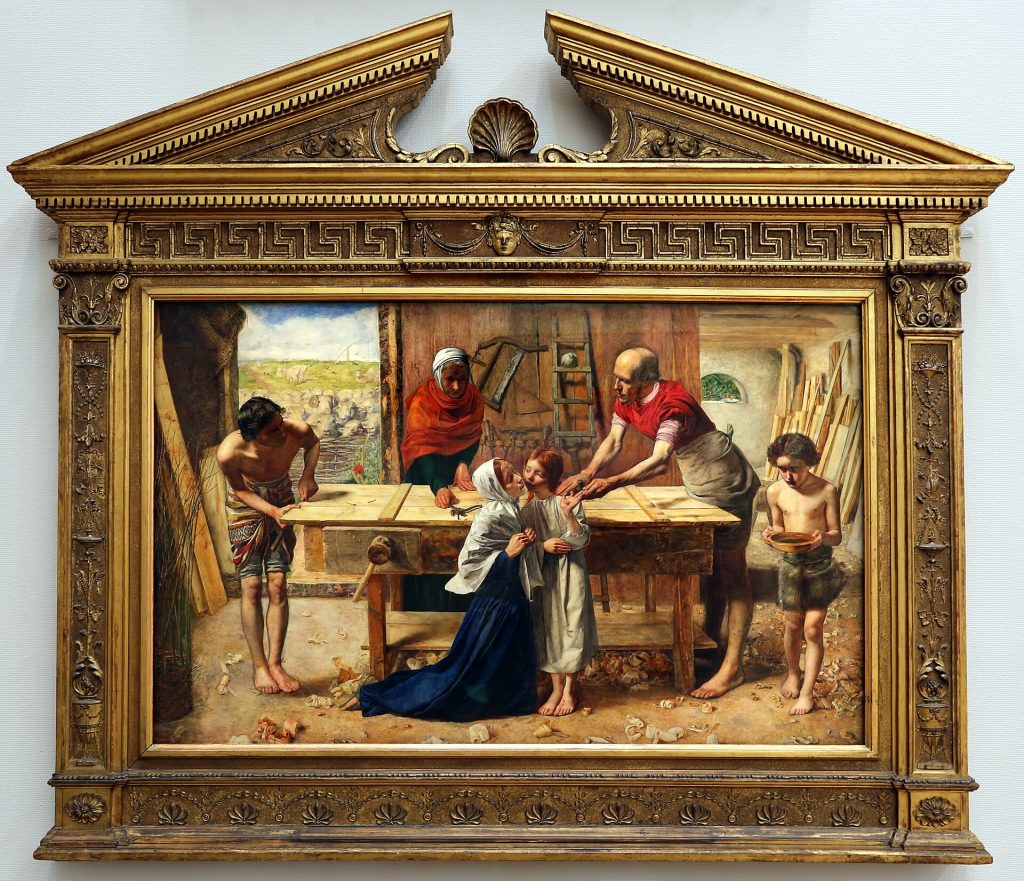
    The work remains

    The point is not just that critics are often wrong, that would be too simple. The real lesson is that we all sometimes mistake forceful words for clarity.

    Dickens viewed Millais’s painting through his own artistic loyalties, religious worries, and ideas about beauty. Instead of separating these feelings, he turned them into criticism. His skill made the review memorable, but not generous.

    Millais’s painting did not need Dickens’s approval to last.

    The carpenter’s shop is still there. The worried family remains. The wound, the water, the wood, and the waiting sheep remain. People can still stand before the painting today and decide for themselves what they see.

    The quiet strength of focusing on meaningful work, instead of harsh criticism, is that the work can keep speaking long after the critic is gone.

    Further reading

  • If a Gothic Novel Walked Into a Pre-Raphaelite Studio

    If a Gothic Novel Walked Into a Pre-Raphaelite Studio

    Let us open the parlor door a crack.
    A cold wind slips in.
    Someone murmurs “witch.”
    Someone else whispers “fashion.”

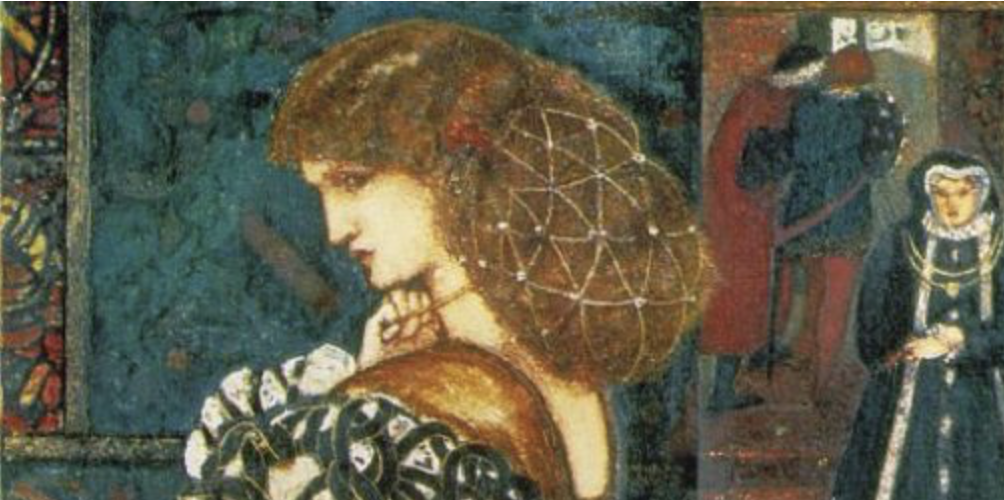
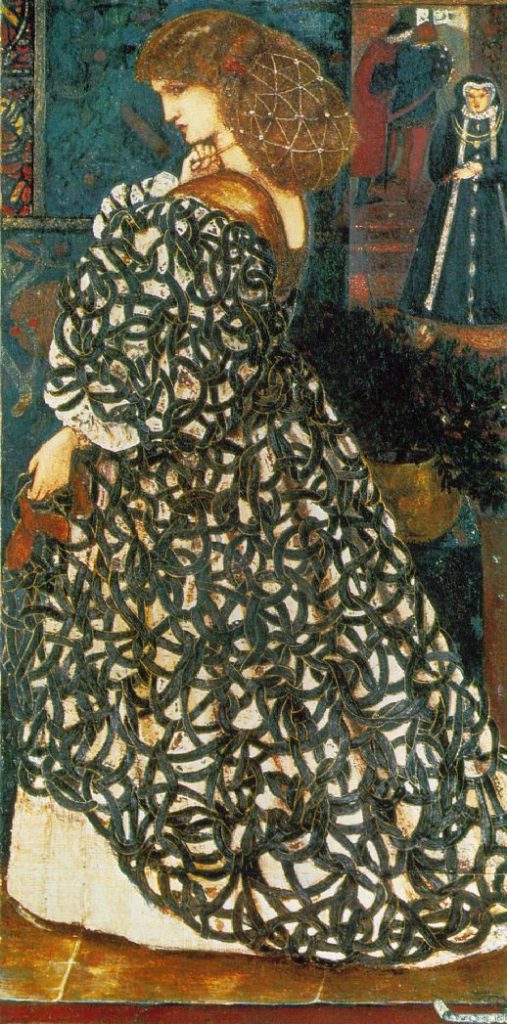
    And there she stands: Sidonia von Bork.

    Sidonia Von Bork

    Equal parts legend, literature, and lightning rod, she seems to saunter straight out of Wilhelm Meinhold’s Gothic romance and into Edward Burne-Jones’ paintbox like she pays rent there.
    (She does not.)

    First: Who is Sidonia, and why was everyone clutching their pearls?

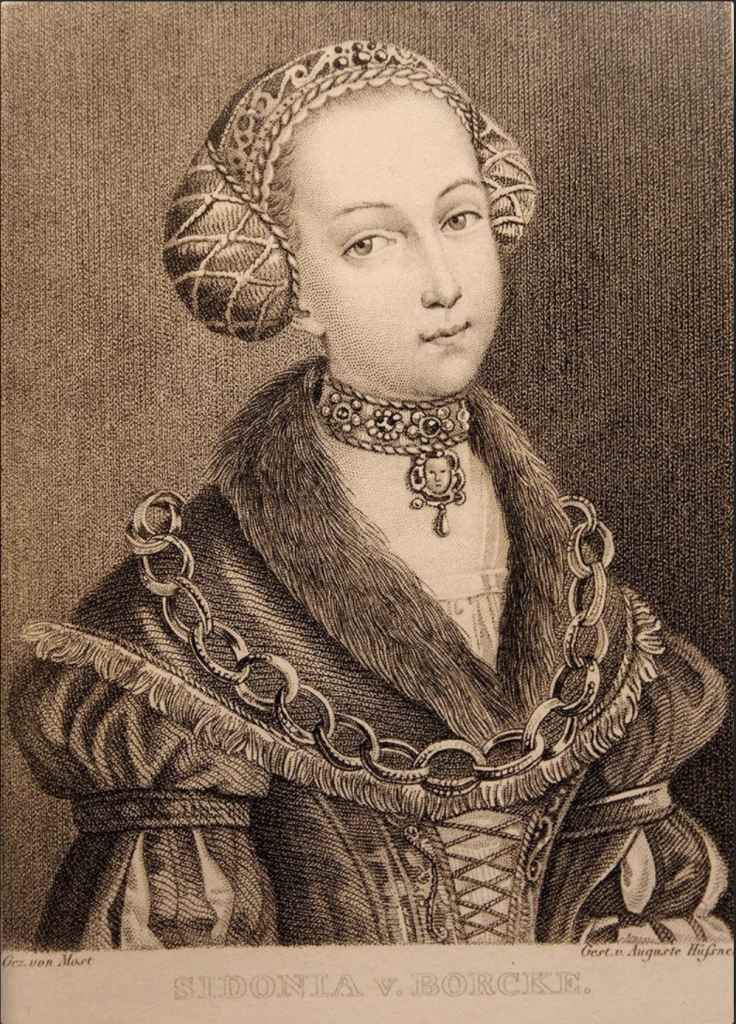
    Sidonia was as a real historical figure: Sidonia von Borcke (1548–1620), who was a Pomeranian noblewoman who was later tried and executed for witchcraft in Stettin (today Szczecin). 

    Her story gathered myths the way velvet gathers lint: quickly, dramatically, and with a certain inevitability.

    Then the nineteenth century came along, an era that adored a good shiver, and said: “What if we made her… more?”

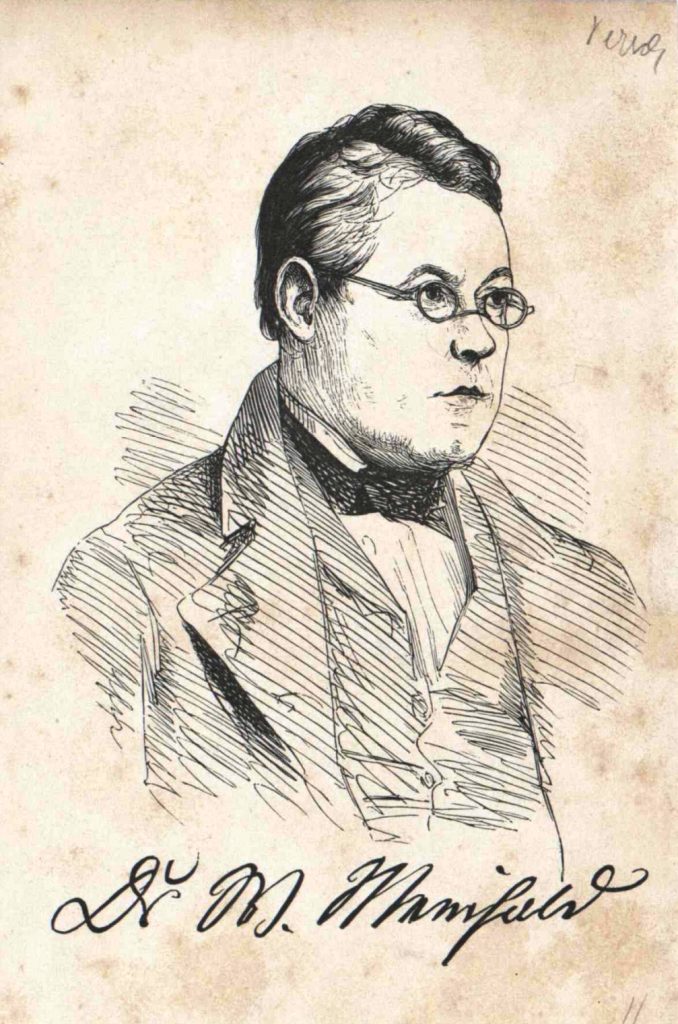
    Enter Wilhelm Meinhold, who wrote Sidonia von Bork, die Klosterhexe (published 1847–1848). You can read it free online at Project Gutenberg.

    Wilhelm Meinhold

     
    In his telling, Sidonia becomes a grand Gothic engine: beauty, grievance, power, menace, basically all the elements we still see in fictionalized Femme Fatales.

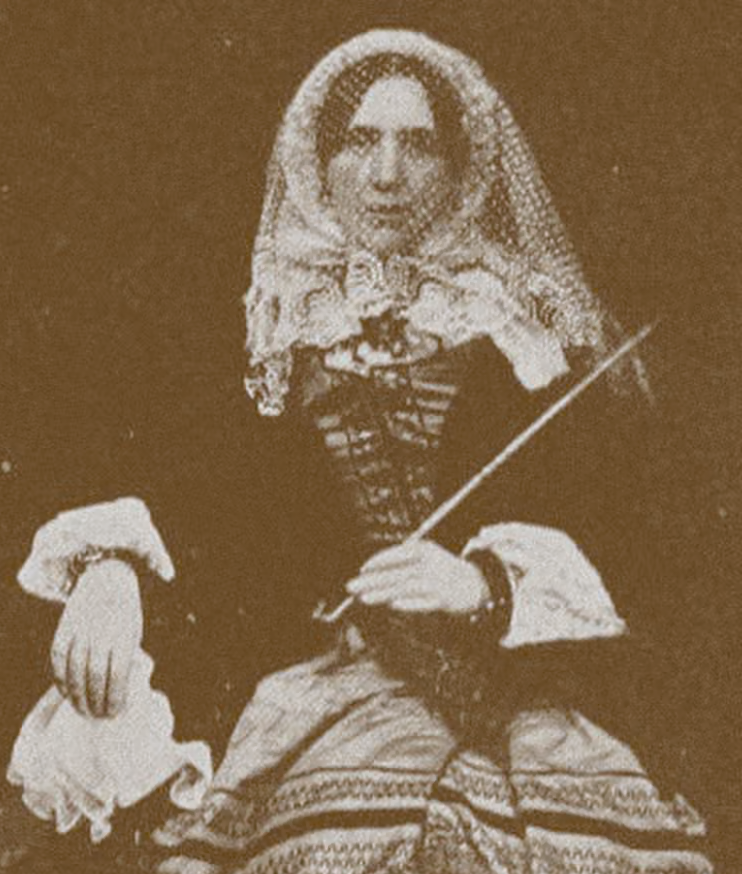
    And because English readers love a delicious import, Jane Wilde (mother of Oscar), writing as “Francesca Speranza”, then translated it into English as Sidonia the Sorceress in 1849. (Flip through a digitized version at Archive.org.)

    Pre-Raphaelites promptly took one look and said, in essence:
    “Yes. We’ll have that.”

    Lady Jane Wilde
    Lady Jane Wilde

    The Pre-Raphaelite Taste for “Beautiful Trouble”

    The Pre-Raphaelites (and their orbit) had a fondness for women who arrived with a certain atmosphere.

    Saints with sorrow.
    Queens with complicated backstories.
    Enchantresses with impeccable hair.

    Sidonia fits right in: she is not merely wicked; she is composed, as though her evil nature is simply a kind of interior decorating choice.

    And now, behold the pivot from page to pigment.

    Sidonia
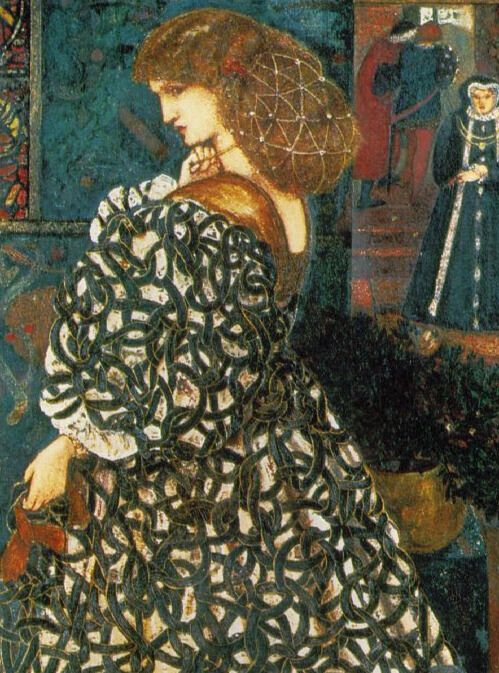
    Sidonia von Bork, Sir Edward Burne-Jones

    Burne-Jones Paints Sidonia (And Gives Her a Dress That Basically Has a Plot)

    In 1860, the young Edward Burne-Jones created Sidonia von Bork 1560, a watercolour and gouache work now in Tate Britain. 

    Sidonia turns partly away, as though she’s already bored with our judgment.
    Her gown is an extraordinary tangle of black looping forms over white.
    It’s a textile enchantment.

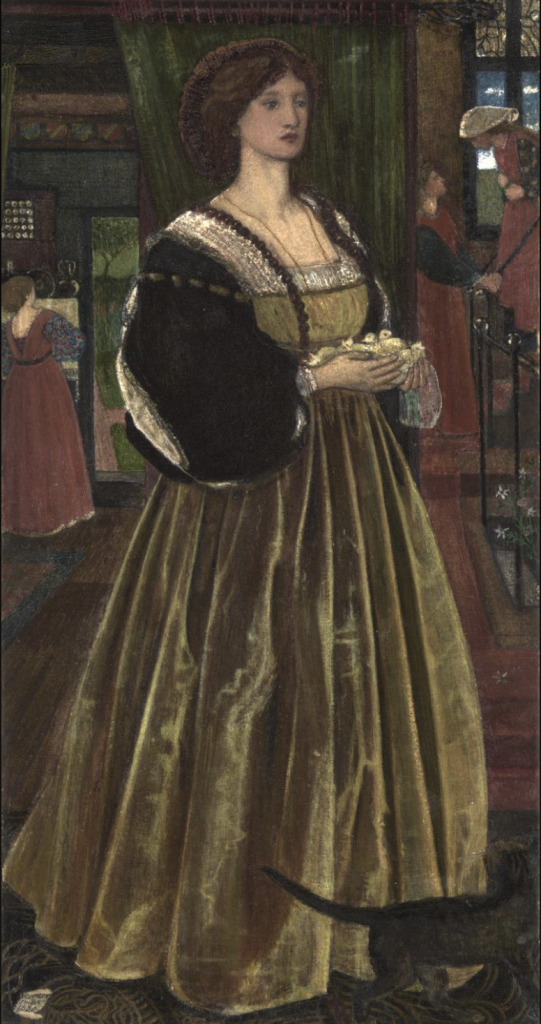
    It’s also interesting to note that Burne-Jones wasn’t painting Sidonia in a vacuum. Sidonia was painted as a partner to another Burne-Jones work: Clara von Bork 1560, based on Sidonia’s in-laws.. 

    Clara Von Bork 1560, Sir Edward Coley Burne-Jones
    Clara Von Bork 1560, Sir Edward Coley Burne-Jones

    Clara von Dewitz is the subject here: gentle, loyal, and tragically outmatched. She marries Sidonia’s virtuous cousin, Marcus Bork, stands by Sidonia when she falls into trouble, and is eventually led by her to a gruesome death.

    That relationship shows up in the details. Clara holds a nest of fledgling doves, while Sidonia’s black cat (her familiar) looks up at them expectantly.

    A Delicious Detail: The Model, the Costume, and the Borrowed Renaissance Glamour

    Tate Britain notes that Burne-Jones used Fanny Cornforth, who was at one time Dante Gabriel Rossetti’s model and mistress, as his model for Sidonia. 
    Which is fascinating, because it means the painted Sidonia is not only a character; she’s also a part of a network of studio relationships, muses, rivalries, and the drama often found among relationships in the Pre-Raphaelite circle

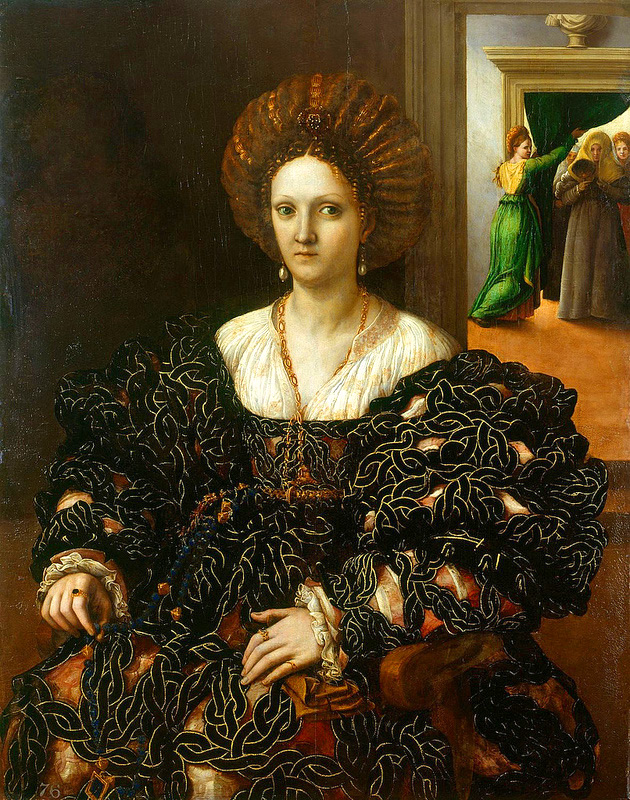
    And Sidonia’s fabulously serpentine dress? It’s based on a Renaissance reference: the costume was inspired by a portrait of Isabella d’Este by Giulio Romano. 

    romano portrait of isabella d este
    Portrait of Isabella d’Este by Giulio Romano 

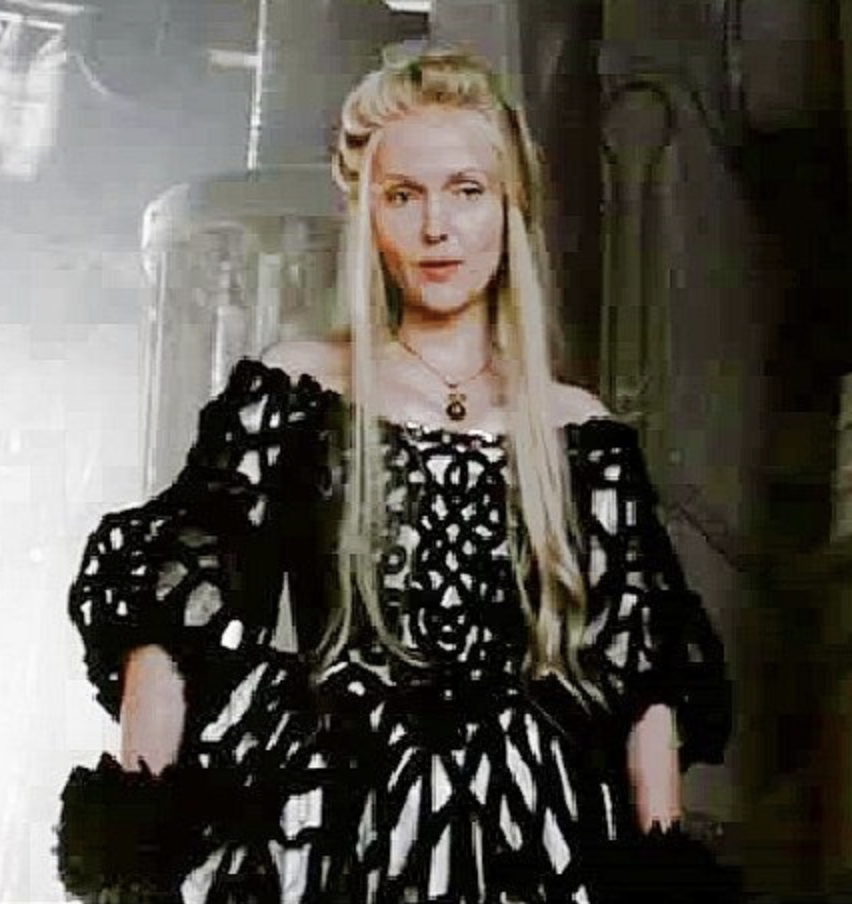
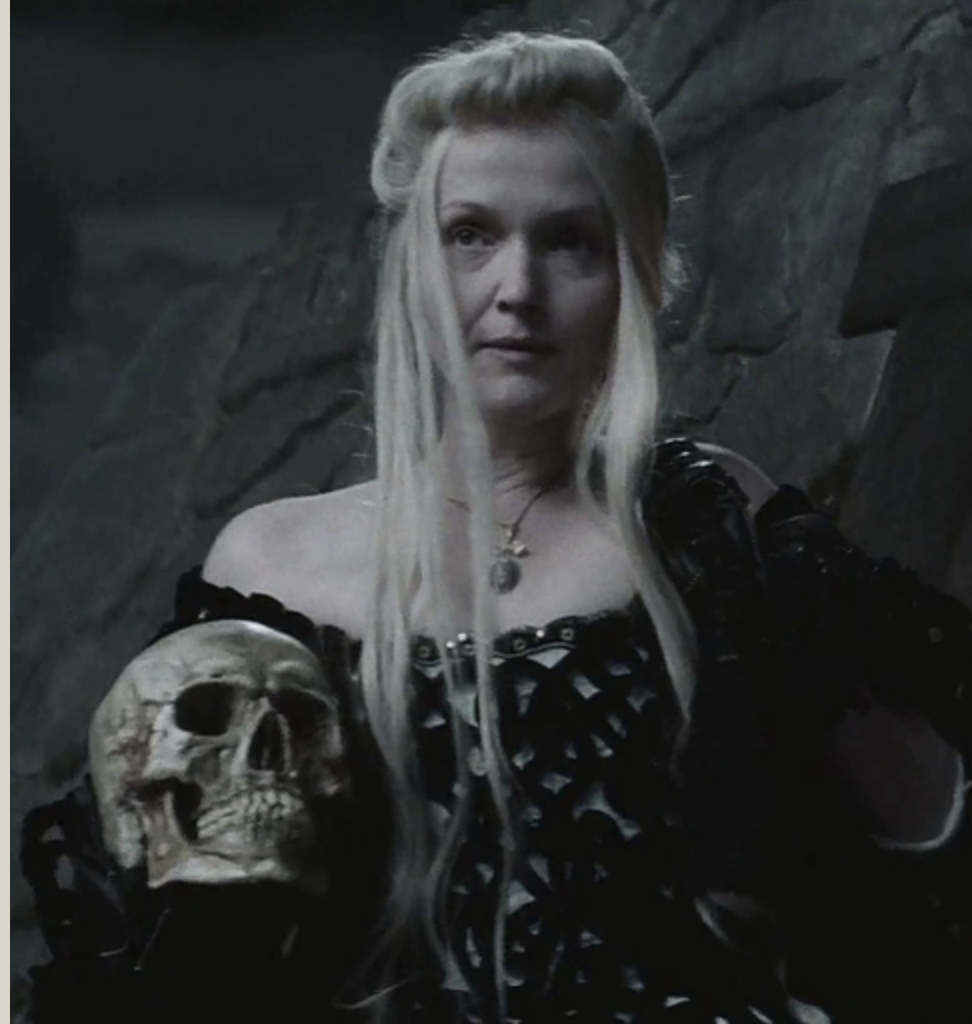
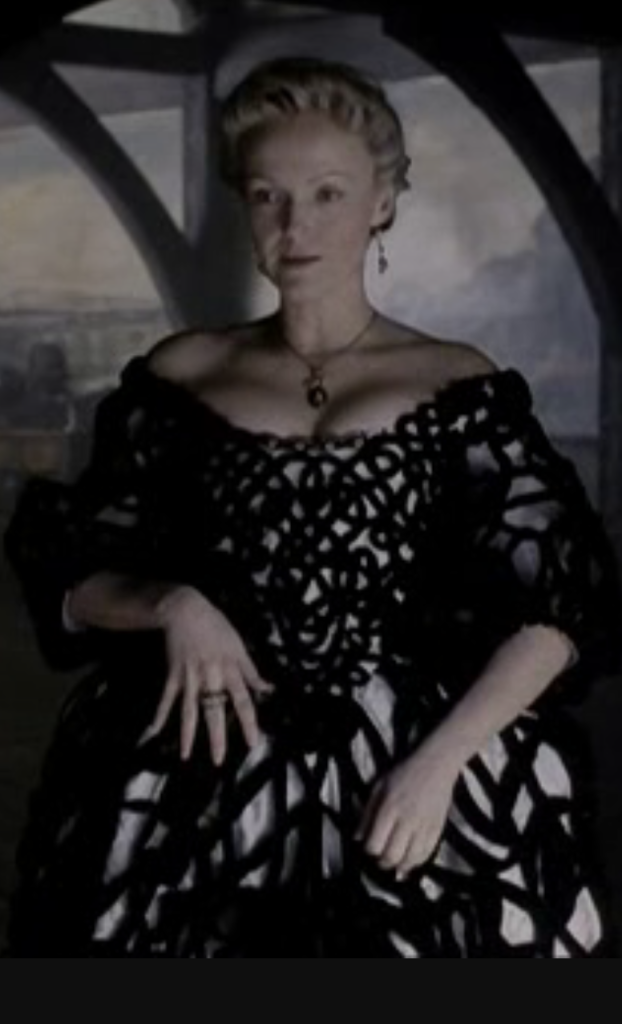
    Both Burne-Jones’ Sidonia von Bork 1560 and Portrait of Isabella d’Este seem to be visual ancestors of the dress worn by Miranda Richardson in Sleepy Hollow (1999), directed by Tim Burton (streaming on Amazon Prime). As Lady Van Tassel, Richardson wears a gown similar to Sidonia’s, with a dense ornamental surface and almost unnaturally controlled elegance.

    Burne-Jones paints Sidonia as a figure whose beauty is inseparable from the threat she holds, and that same logic shapes the costuming in Sleepy Hollow. Lady Van Tassel’s clothes do not simply signal wealth or taste; they turn fabric into a kind of narrative misdirection. The effect is quintessentially Burtonesque gothic, theatrical, and faintly funereal, but it also recalls the Pre-Raphaelite habit of female dress carrying psychological weight.

    In that sense, the resemblance to Sidonia matters not only as an art-historical echo but as a clue to how Sleepy Hollow imagines wicked feminine power: ornate, cultivated, and dangerous enough to look decorative until it is far too late.

    The Background Cameo: Court as Theater, Sidonia as Plot Device

    In Burne-Jones’ image, Sidonia isn’t alone and the background hints at courtly life, a scene-within-a-scene.

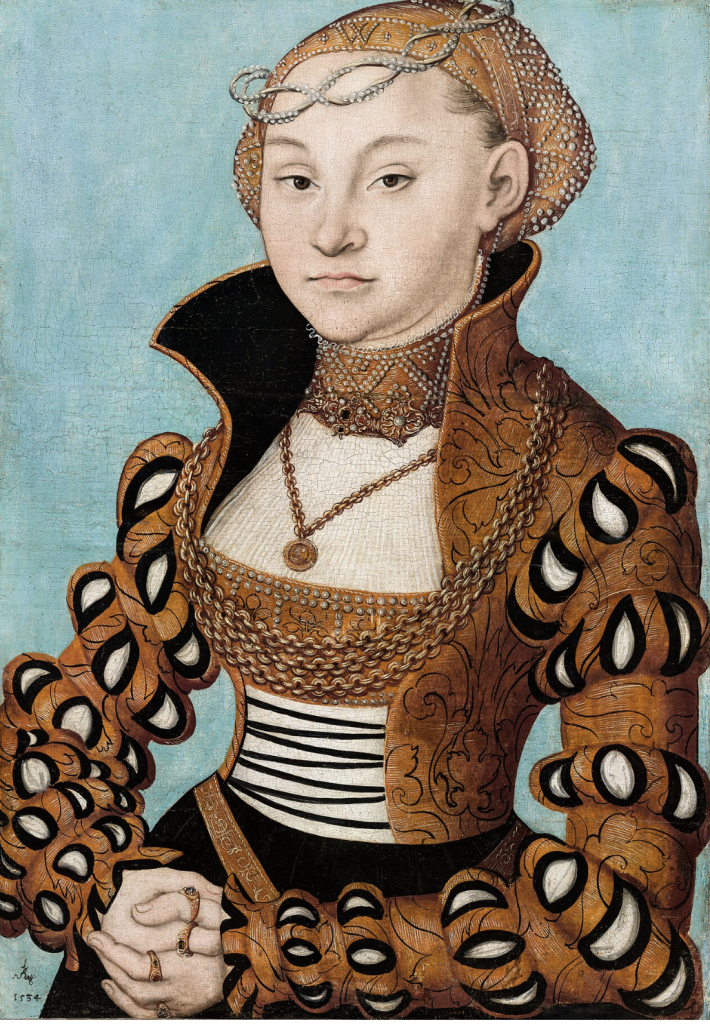
    Sidonia is perhaps plotting another outrage at the court of the dowager Duchess of Wolgast, where her earliest crimes began. The Duchess herself can be seen approaching in the distance.

    Dowager Duchess of Wolgast, Maria of Saxony, painted by Lucas Cranach the Elder

    And that’s exactly how Meinhold’s Sidonia operates: she moves through court culture like a chaotic storm, and everyone feels her presence. Consequences, of course, follow. 

    Is she truly supernatural?
    Or merely a woman made monstrous by a society eager to punish inconvenient power?

    The Victorian imagination, ever thirsty, happily drank both interpretations at once.

    The Witch Trial Shadow

    It is tempting to stop at the Gothic pleasure of Sidonia von Bork. But Sidonia’s story rests on a darker historical foundation: the very real world of witch trials, social panic, and fear turned into accusation.

    Her execution in 1620 is part of that history. So when Burne-Jones paints her as a figure of eerie beauty and charisma, he is working with a subject already shaped by persecution, rumor, and power.

    I think that makes the painting more complicated. Its beauty is real, but it is not detached from the violence and suspicion that helped create the legend in the first place.

    Why This Pairing Still Hits: Novel + Painting = The Original “Adaptation”

    What we’re watching, across Meinhold and Burne-Jones, is a Victorian-era version of something we recognize very well:

    A story goes viral.
    The image makers pick it up.
    A character becomes an aesthetic.
    And the aesthetic outlives the plot.

    Meinhold supplies the narrative machine (1847–48). 
    Jane Wilde supplies the English-language spark (1849). 
    Burne-Jones supplies the image you can’t forget (1860). 

    Sidonia becomes, almost inevitably, an icon and we continue to see her DNA in fictional characters.

    She’s the “dangerous woman,” the “bewitching woman,” the “woman who won’t behave.”

    And the painting, with its ornate restraint and quietly chilling pose, doesn’t shout. It simply confirms what the world had already decided to see in her.

    A Final Parlor Thought (Before She Vanishes Down the Hall)

    And If the Pre-Raphaelites still return to us in fashion, visual culture, and through our repeated hunger for certain kinds of feminine myth then Sidonia shows why.

    She is a story reduced to an emblem.
    The muse with a shadow attached.
    Beauty sharpened into threat.

    Naturally, she will absolutely be the last person to leave the party.

    (After she’s stolen the candlesticks.)

    Sidonia
  • Millais’ Ferdinand Lured by Ariel: The Tempest, but make it Pre-Raphaelite

    Millais’ Ferdinand Lured by Ariel: The Tempest, but make it Pre-Raphaelite

    This is where The Tempest slips off the page. Pre-Raphaelite attention pins unseen magic to a real patch of grass and leaf, until the atmosphere around him feels nearly touchable.

    A quick Tempest refresher (no homework required)

    Millais is painting an episode from The Tempest, Act I, Scene II: Ferdinand, shipwrecked on Prospero’s enchanted island, hears music and tries to locate it “i’ the air or the earth?” as Ariel sings “Full fathom five thy father lies.”

    This is the moment where the island begins to do what it does best: guide you without asking permission.

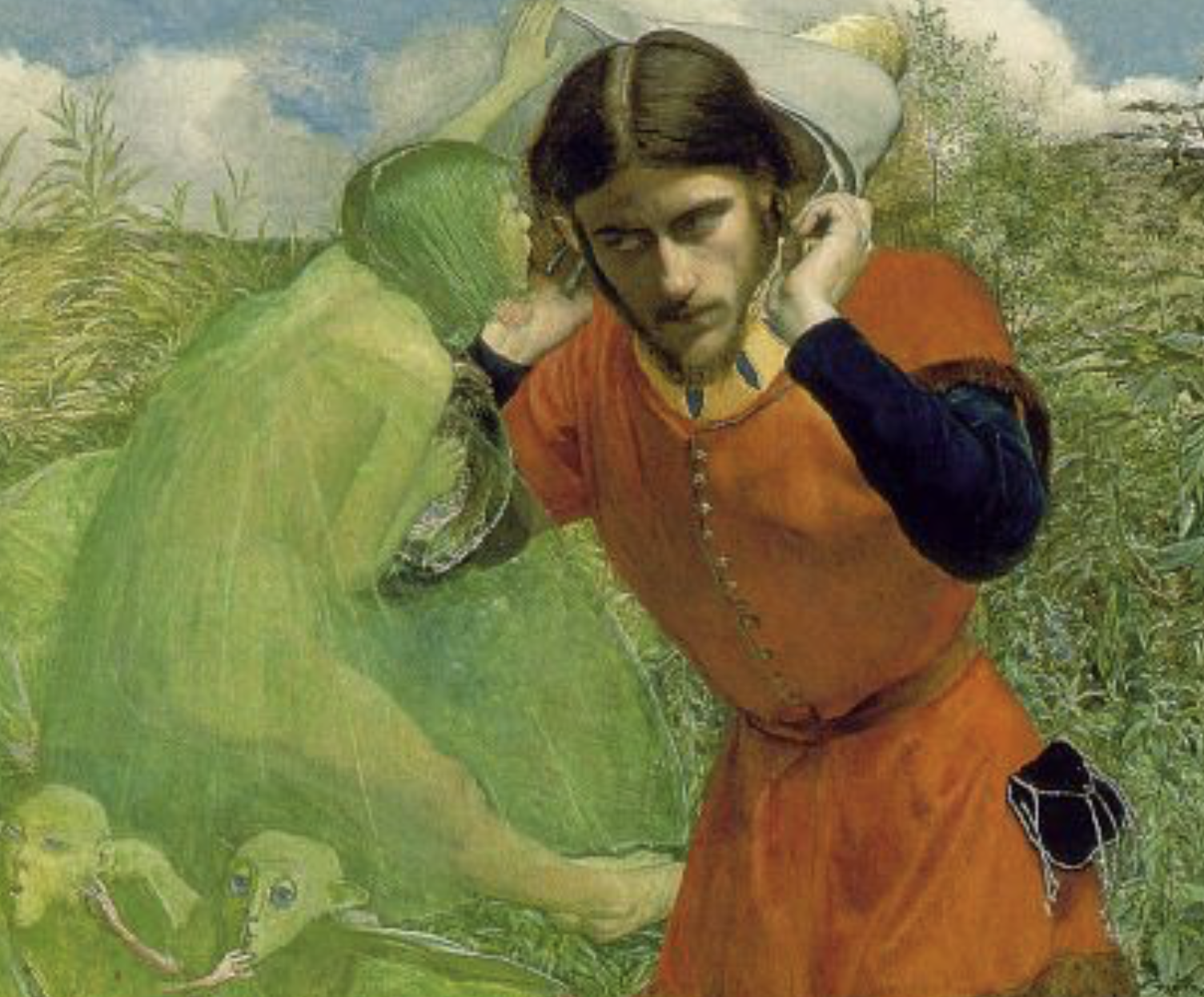
    Ferdinand Lured by Ariel by Sir John Everett Millais
    Ferdinand Lured by Ariel by Sir John Everett Millais

    What’s happening in the painting

    Ferdinand is foregrounded and intensely physical, wearing a red tunic, white hose, with one foot edging forward; yet his face is turned inward, listening. Ariel is there, but not there: a green, surreal presence tipping Ferdinand’s hat, close enough to touch him, impossible to truly see.

    And then there are the wonderfully odd little creatures, green “bats” posed in a way that echoes “see no evil, hear no evil, speak no evil,” a detail that reportedly unsettled at least one early would-be buyer because it wasn’t the sweet, dainty fairy world people expected. 

    Millais isn’t offering a Victorian stage fairy. He’s giving you something stranger: nature itself behaving like theatre.

    Why this painting matters in Pre-Raphaelite terms

    This work is often pointed to as Millais’ first big attempt at the early PRB “paint what you actually see” intensity, done outdoors (plein air) at Shotover Park near Oxford.

    That shows in the greenery. The plants aren’t “background.” They are presence: each clump, blade, and leaf treated as if it has rights. (This is the Pre-Raphaelite promise: the world is not a blur behind the story; the world is part of the story.) 

    There’s also the PRB brightness. Millais painting with heightened, saturated color, including working on a white ground to keep the whole surface lit from beneath. The red tunic against that ferocious green is basically a visual bell: you can almost hear it.

    The genius choice: making the invisible visible (without ruining it)

    How do you paint a spirit like Ariel, without making them into a literal cartoon fairy?

    Millais’ solution is sly: he lets Ariel half disappear into the green, more like camouflage than costume. Ferdinand looks right at him, and still can’t see him. We, the viewers, can (sort of.)

    It’s a perfect visual equivalent of the scene: Ferdinand is being led by something he can’t name. The island doesn’t announce itself. It insinuates.

    A few things to notice when you look

    • The hands at Ferdinand’s ears: he’s not just hearing, he’s straining, trying to catch meaning. 
    • That hat string detail: such a small, domestic tether in a supernatural moment, and it makes the enchantment feel practical.
    • The arched/circular framing: it reads like a portal, a vignette, a “peep into another world” shape. Very fairy tale, but also very controlled.
    • The greens: not one green, but many: acid, moss, olive, yellow green, stacked until “nature” becomes almost hallucinatory.

    A tiny afterlife note (because art has one)

    The finished painting was exhibited at the Royal Academy in 1850, and it has lived largely in private collections; it even became the subject of a UK temporary export bar in 2019, a reminder that these early PRB works are still treated as cultural treasures with real stakes attached.

    Why I keep coming back to it

    Because it’s not just “Shakespeare, illustrated.”

    It’s Shakespeare filtered through that Pre-Raphaelite conviction that the world is charged, that grass and shadow can be as dramatic as a human face; that beauty can be exacting, almost severe; that the supernatural doesn’t have to glitter to be real.

    Millais shows us a man lured by a musical spell.

    And if you’ve ever felt art do that to you, pull you forward by the collar with something you can’t quite explain, then you already know this painting’s secret.

  • “You Wouldn’t Hang a Stunner”: Rossetti and the Madeleine Smith Murder Trial

    “You Wouldn’t Hang a Stunner”: Rossetti and the Madeleine Smith Murder Trial

    Key Takeaways

    • Madeleine Smith stood trial in 1857 for the murder of her former lover, Pierre Emile L’Angelier, becoming a subject of public fascination.
    • The relationship between Madeleine and L’Angelier was secretive, with passionate letters that ultimately put her future at risk.
    • L’Angelier’s death from arsenic poisoning led investigators to Madeleine, who had previously purchased arsenic, making her a prime suspect.
    • Despite the scandal, the court ruled ‘not proven,’ and Madeleine continued her life, marrying George Wardle and later moving to New York.
    • The case reflects Victorian society’s obsession with crime and the complex interplay between beauty and morality, as illustrated by Rossetti’s remark on Madeleine.

    In 1857, a twenty-two-year-old woman stood trial in Glasgow for murdering her former lover, and Victorian Britain did what it does best: turned scandal into spectacle.

    Her name was Madeleine Smith, and she was not only accused; she was watched. Reported on. Speculated over. Consumed in newspapers the way we consume true-crime documentaries now, except with more soot, more sermons, and far fewer guardrails.

    And somewhere down in London, in the orbit of the Pre-Raphaelite circle, artist Dante Gabriel Rossetti heard about the case and delivered a remark so Rossettian it feels like a shard of his personality in a single line:

    “you wouldn’t hang a stunner!”
    (“Letters of D. G. Rossetti,” Atlantic Monthly, vol. 77)

    Rossetti used “stunner” often, his favorite shorthand for beauty with impact, beauty that almost feels like a force. But here, the word lands with a strange shiver. It’s funny in that appalling way men can be funny about women in danger. It’s a compliment that doubles as a verdict: she’s too beautiful for consequences.

    Which is, of course, its own kind of sentence.

    Madeleine Smith and the Secret Romance

    Madeleine was the daughter of an upper-middle-class family. Respectability was part of her furniture. Then she met Pierre Emile L’Angelier, a clerk at a shipping firm, who was low income, with uncertain prospects, and, crucially, not “acceptable.”

    So they did what so many people do when a relationship can’t survive daylight: they made it a secret.

    There were letters, of course. Dramatic, poetic, deeply Victorian love letters, full of the intensity that feels like forever right up until it doesn’t.

    Their relationship became sexual, and they wrote about it openly to each other. That detail matters, because it becomes the lever that could ruin her.

    Because once Madeleine’s feelings cooled and once her parents introduced her to William Minnoch, a suitable match in every social sense, L’Angelier suddenly held something dangerous:

    He had her words. In ink. In her handwriting.

    And he could use them to destroy her future.

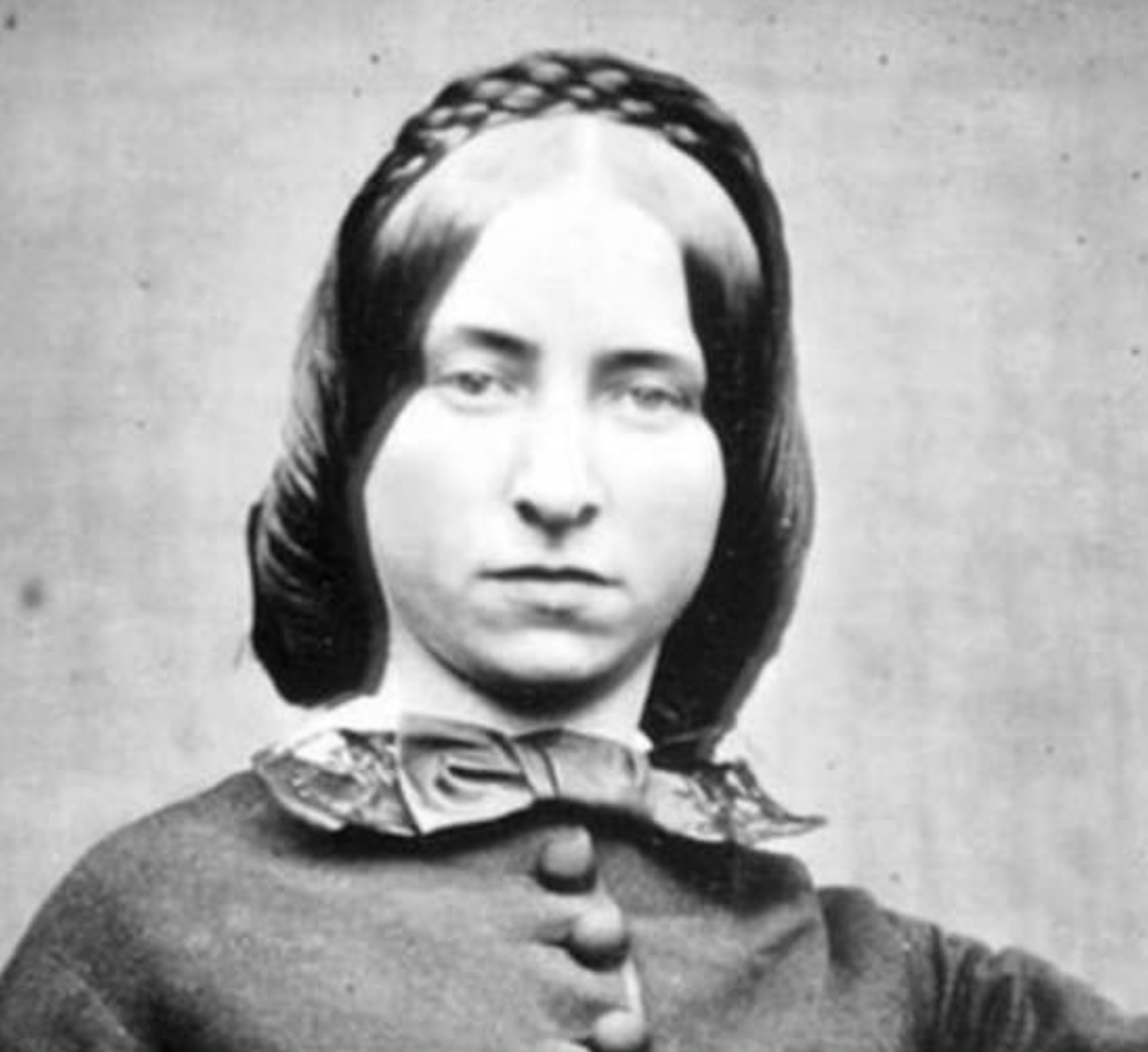
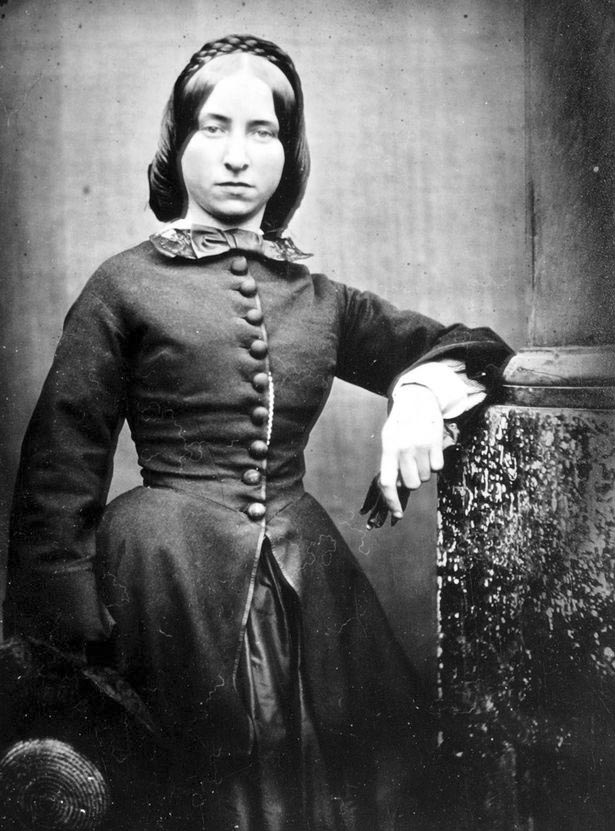
    Madeleine Hamilton Smith
    Madeleine Hamilton Smith. Did she murder L’Angelier?

    Arsenic, the “Poison Book,” and a Trail in Plain Sight

    When L’Angelier died of arsenic poisoning, investigators found Madeleine’s letters among his possessions, and the case snapped into a shape that the public could follow with relish.

    There was also the practical horror of proof: it was established that Madeleine had purchased arsenic twice and signed the “Poison Book” at the time of purchase. An ordinary administrative detail that, in a sensational trial, becomes a spotlight.

    The press seized the story. In The Invention of Murder, Judith Flanders describes the appetite for this kind of coverage and the protective language used around “good families,” a tone that tries to maintain decorum while the public crowds in for a better view. (You can almost hear the polite panic in lines like, “We fervently trust that the cloud over her head… may be speedily removed.”)

    And the Pre-Raphaelite circle, so steeped in sympathetic Guineveres and Ophelias, so practiced at painting women as tragic and tender, followed too. It’s easy to imagine how Madeleine Smith might have been folded into their emotional imagination: a young woman “led astray,” cornered by the consequences of desire, punished by a society that loved to moralize after it had finished gawking.

    Hence Rossetti: too beautiful to hang.

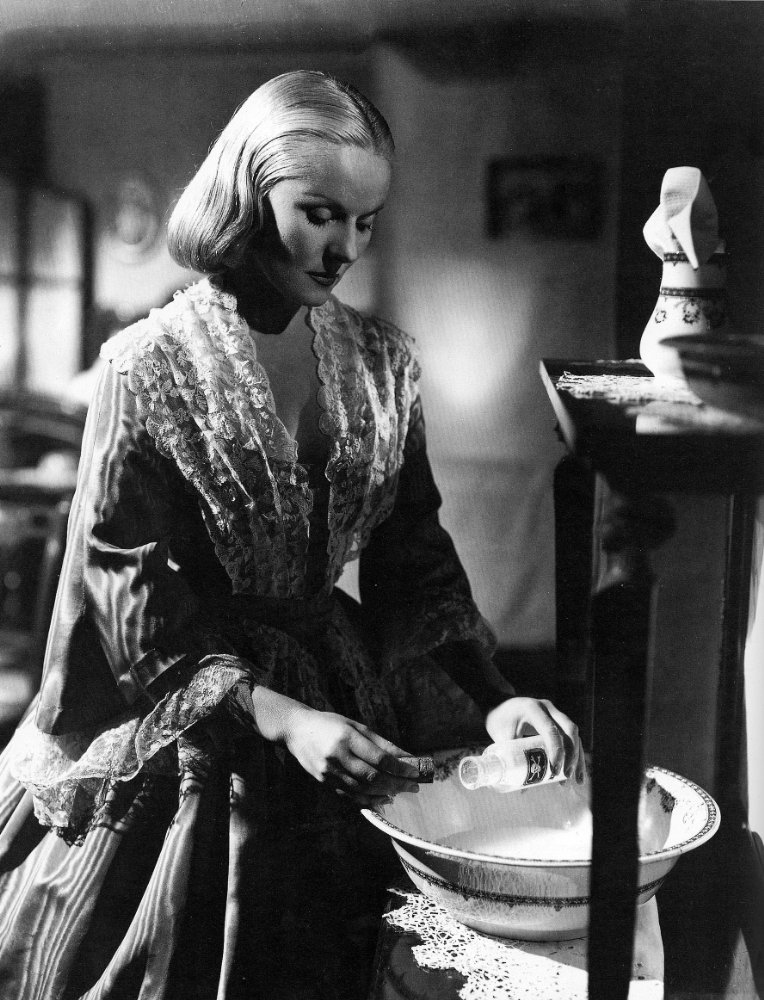
    Ann Todd as Madeleine Smith
    Actress Ann Todd portrayed Madeleine Smith in the 1950 film ‘Madeleine’, directed by Todd’s husband David Lean.

    “Not Proven”

    In the end, the verdict was “not proven.” Madeleine was released.

    She left Glasgow. She did not marry Minnoch. Her life continued, but not as it had been. Notoriety has a way of becoming a shadow that follows you into every room.

    And here is the twist that feels almost designed for a Guggums post, one of those strange little stitches connecting art world circles to scandal-world headlines:

    In 1861, Madeleine married George Wardle, a manager at Morris & Co., a man Rossetti and his circle knew well. Rossetti later wrote a satire, The Death of Topsy, in which Madeleine poisons William Morris with coffee. (Victorian men had many ways of processing their anxieties; satire was one of their safer outlets.)

    Madeleine and Wardle separated in 1889. She later moved to New York, remarried (to William Sheehy), and lived until 1926, long enough for the scandal to fade into “story,” the way public hunger always eventually moves on to the next thing.

    She may never have known that a famous painter/poet weighed in on her fate with a breezy line about beauty and execution.

    Why the Victorians Couldn’t Look Away

    The Madeleine Smith trial sits inside a larger Victorian obsession: murder as mass entertainment.

    There was a market for souvenirs of hangings. People bought pieces of the execution rope. Penny publications, called penny bloods and penny dreadfuls, fed a public appetite for villainy, gore, and moral panic packaged as thrill.

    And that appetite didn’t vanish. It evolved.

    It helped build the runway for sensation fiction and the detective story, genres that still shape what we frequently watch and read today.

    The Mystery Lineage (and the Pre-Raphaelite Overlap)

    Victorian crime culture helped produce the fictional mysteries we now treat like comfort food… cozy, macabre, brainy, addictive.

    And in that lineage, you can find flickers of Pre-Raphaelite connection:

    • Wilkie Collins, friend to Millais, gave us The Woman in White and The Moonstone, stories full of identity, concealment, and dread disguised as domestic order.
    • Mary Elizabeth Braddon gave us Lady Audley’s Secret, a sensation novel with a deliciously painterly awareness of surfaces and the violence they can hide.
    • Sherlock Holmes became the enduring Victorian detective, endlessly reimagined, and Holmes’s world even brushes against the Pre-Raphaelite orbit through the shadowy figure of Charles Augustus Howell, often cited as a model for Doyle’s villain Charles Augustus Milverton.

    What I love about these overlaps is that they reveal something the Victorians understood instinctively: beauty and danger are not opposites. They are often co-conspirators. The prettiest room can hide the darkest story. The most “respectable” household can be the one that needs the most careful looking.

    What Rossetti’s “Stunner” Line Really Exposes

    On the surface, Rossetti’s quip is easy to repeat. It’s witty, scandalous, irresistibly quoteable.

    But underneath it, there’s an uncomfortable truth: Madeleine’s beauty became part of the public argument about what she deserved. As if appearance could cancel out culpability or amplify it.

    As if a face could be a defense.

    As if a woman’s fate could be weighed on a scale where one side is morality and the other is the aesthetic pleasure she provides.

    The Victorians loved to paint women as symbols. They also loved to punish them for being human.

    And Madeleine Smith, whatever the truth of what happened between her and L’Angelier, became a perfect vessel for that contradiction.

    She was a scandal.
    A story.
    A stunner.
    A warning.

    And, like so many women in Victorian culture, she became legible to the public in ways that may have had very little to do with who she actually was.

    Which is exactly why she still haunts the imagination.