

Helping young hearts explore beauty, emotion, and empathy through art
When children first encounter John Everett Millais’s Ophelia, they often react with wonder. The flowers, the colors, the soft light filtering through leaves… it looks like a scene from a fairy tale. But parents know the painting carries difficult themes beneath its beauty.
And yet, that’s what makes Ophelia such a powerful introduction to talking with kids about art, feelings, and stories.
You don’t have to hide Ophelia away until they’re older.
You just need to approach it gently.
This is a guide to help you navigate those conversations with honesty, softness, and the kind of emotional wisdom Victorian art invites.
Start With What Kids Naturally Notice
Before you explain anything, let your child look.
Ask:
- “What’s the first thing you notice?”
- “What colors do you see?”
- “How do you think she feels?”
- “Where do you think she is?”
Kids often point out:
- the flowers
- the dress
- the river
- the expression
Let their curiosity lead the way.
Focus on the Art Before the Tragedy
You don’t need to begin with Shakespeare’s darker plot.
Talk about:
- the beauty of nature
- how Millais painted outdoors
- how carefully he studied each flower
- how Victorian artists used symbolism
- how the painting looks serene at first glance
This sets the emotional tone as peaceful, not frightening.

When They Ask About the Story, Keep It Age Appropriate
Kids almost always ask:
“Why is she in the water?”
Here are gentle, truthful ways to answer based on age.
Ages 4–6 (very simple):
“Ophelia is a character from a story. She’s floating in a river and daydreaming. The artist painted her in a very magical, peaceful moment.”
Ages 7–10 (soft honesty):
“Ophelia is feeling very sad in her story. The artist painted the moment she goes into the water. The painting doesn’t show everything; it’s more like a beautiful picture of a difficult feeling.”
Ages 11–13 (more detail, still tender):
“Ophelia has a hard time in her story, and this painting shows the moment her feelings become too heavy. Some people see it as dreamy, and others see it as sad. Art helps us talk about feelings we don’t always have words for.”
You don’t need to give the entire Shakespearean plot unless your child asks.
Talk About Feelings, Not Just History
Shakespeare’s Hamlet is about grief, confusion, loss, and love, all emotions kids understand more deeply than we sometimes assume.
Ask:
- “What do you think Ophelia might be feeling?”
- “Have you ever had a day that felt heavy?”
- “What do the flowers tell us about her mood?”
- “Does the picture feel calm or sad to you?”
Children are surprisingly empathetic viewers.
They read faces, colors, and moods instinctively.
Let this be an entry point to deeper emotional conversations.
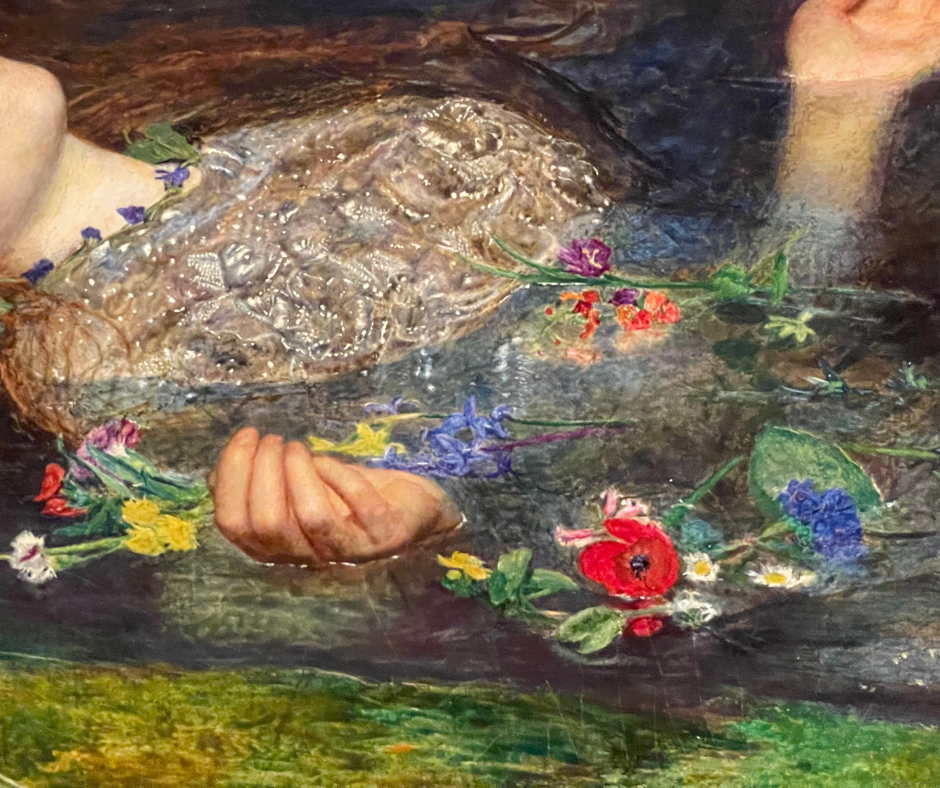
Discuss the Symbolism in a Kid Friendly Way
Victorian artists loved symbolic flowers.
Kids love discovering hidden meanings.
Some ways to phrase it gently:
- “This flower means friendship.”
- “This one means love.”
- “This one means remembering someone.”
- “Artists used flowers as a kind of secret code.”
Suddenly, the painting becomes a treasure hunt.
Use Ophelia to Encourage Creative Expression
Art about emotion can inspire art about emotion.
Try:
- Drawing Ophelia with a different feeling
- Drawing the river full of imaginary flowers
- Writing a tiny poem about floating in water
- Creating an “Ophelia color palette”
- Making your own symbolic flower bouquet
These activities turn a difficult story into a creative outlet.
Reassure Without Dismissing
If your child feels sad seeing the painting, say:
- “It’s okay to feel sad. This painting makes many people feel that way.”
- “Some art shows happy moments, some show difficult ones.”
- “Ophelia’s story helps us understand empathy.”
The goal is not to remove the emotion, it’s to help them hold it safely.

Emphasize That Art Helps Us Talk About Hard Things
This is the real gift of Ophelia.
It lets children:
- explore feelings
- ask questions
- understand empathy
- discover that beauty and sadness can coexist
Victorian art, especially Pre-Raphaelite art, gives kids a safe visual space for emotional literacy.
Talking to your children about Ophelia isn’t about exposing them to tragedy. It’s about teaching them to look closely, ask questions, trust their feelings, and see art as a companion through life.
Ophelia’s story isn’t just about sorrow.
It’s about noticing beauty, understanding emotion, and remembering that every person, real or fictional, has an inner world worth exploring.
For more beauty, color, and curiosity, subscribe to the Guggums newsletter
Leave a Reply