

Exploring big feelings, brave questions, and timeless storytelling with young hearts
Younger children
At this age, children can absolutely enjoy Hamlet inspired stories, but not the original plot in full. Look for:
* Picture books that simplify the plot (or make your own!)
* Versions that remove violence and death
* Focus on themes like curiosity, choices, friendship, and bravery
* Beautiful illustrations (which help them engage with Shakespeare’s world)
Kids in this range can handle simplified versions of the story with gentle honesty about:
* betrayal
* difficult emotions
* big choices
* moral struggles
But they still don’t need the full tragedy.
Best formats:
Mary Lamb & Charles Lamb adaptations
Bruce Coville’s illustrated Shakespeare books
Stage plays for young audiences
Tweens and Teens
Middle schoolers can understand:
* the ghost’s purpose
* Hamlet’s indecision
* family conflict
* Ophelia’s emotional struggle (framed compassionately)
* the idea of revenge vs. morality
This age is ideal for:
watching a youth-friendly production
reading an abridged script
discussing themes like loyalty, grief, pressure, and choices
You can also begin connecting Ophelia to art, including Pre-Raphaelite interpretations. This age group loves symbolic imagery.
Teens can dive into:
* the original text
* politics and power
* mental health themes
* Ophelia’s arc
* existential philosophy
* the tragic ending
* the complexities of language
At this age, discussions become richer:
What does it mean to be listened to?
How does society shape Ophelia’s choices?
Why does Hamlet hesitate?
What is “madness” in a world that demands impossible roles?
This is also when Pre-Raphaelite Ophelia becomes most meaningful. Teens immediately grasp how art and literature overlap.
Introducing Hamlet
At first glance, Hamlet may seem like the last Shakespeare play you’d bring to a child. It’s a complicated saga wrapped in ghosts, grief, and betrayal, anchored by one of the most iconic tragedies ever written. And yet, beneath all that drama lies something deeply human, something children grasp with startling ease.
Hamlet is a story about feelings.
It’s about families.
It tumbles through confusion, love, fear, and courage.
And it asks how any of us make sense of a world that has shifted beneath our feet.
Children already grapple with big emotions and big questions.
They just do it in smaller settings.
You don’t have to shield them from Hamlet, however, I recommend you introduce it with care.
Here’s how to guide them gently into this extraordinary story.
Begin With the Story, Not the Language
Before diving into the play, first share Hamlet as a story.
For example: Disney’s The Lion King is loosely based on Hamlet.

The Lion King carries the echo of Hamlet, a tale of a stolen throne, a grieving son, and a ghostly father whose memory refuses to fade. Scar stands in for Claudius, the treacherous uncle who reshapes the world through violence; Simba steps into the role of the reluctant heir, driven into exile before he can understand the weight of what’s been taken from him. Even the comic relief, Timon and Pumbaa, play a lighthearted parallel to Rosencrantz and Guildenstern, companions who shift the story’s tone without altering its core.
What Disney offers, of course, is a gentler retelling: one where the prince returns, restores the world to balance, and walks into the sunrise rather than tragedy. Missing are the darker threads (Ophelia’s unraveling, the spirals of grief and madness) but the heartbeat of Shakespeare’s story remains, softened for younger eyes yet still rooted in themes of responsibility, legacy, and the courage it takes to come home.
But, back to Hamlet specifically. You can frame it in child friendly terms:
“Hamlet is a young prince who misses his dad very much. When he learns something strange and upsetting, he doesn’t know what to do. The story is about the choices he makes, the feelings he feels, and how he tries to understand what’s right.”
By doing so, you set the emotional foundation without introducing the darker complexities too quickly.
If your child is curious, tell them:
- it’s a mystery,
- a ghost story,
- a family story,
- a play full of questions.

Introduce Hamlet as a Character Before a Tragedy
Children relate to characters first.
Let them meet Hamlet through:
- his friendship with Horatio,
- his love for his father,
- his confusion when things don’t make sense,
- his desire to do the right thing.
Ask:
- “What do you think Hamlet wants most?”
- “Do you think he’s lonely?”
- “Who do you trust in this story?”
Kids answer with disarming honesty.
They see Hamlet as a young person trying to navigate feelings bigger than himself.
Use the Ghost Scene to Talk About Fear & Mystery
Children often fixate on the ghost, not with terror, but fascination.
You can gently frame it like this:
“Hamlet sees the ghost of his father. In stories, ghosts often appear to share an important message or help a character understand something difficult.”
This opens the door to talk about:
- fear
- intuition
- mysterious moments in literature
- how stories use supernatural elements to explore emotions
For young kids, you can soften the scene:
“Hamlet has a dreamlike moment where he thinks he sees his father.”
Let them interpret it imaginatively.
Talk About the Big Feelings
Hamlet experiences:
- sadness
- anger
- confusion
- frustration
- loneliness
- love
- fear
- bravery
This makes Hamlet an incredible emotional literacy tool.
Ask:
- “Why do you think Hamlet is sad?”
- “What would you do if you felt confused like that?”
- “Do you think he has someone to talk to?”
- “Is it hard for him to know what’s right?”
- “Have you ever felt torn between two choices?”
Children are capable of remarkable emotional insight when given space.
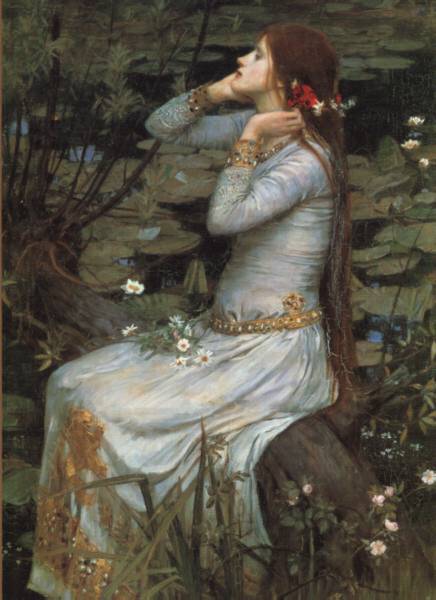
Discuss Ophelia With Care
Ophelia’s story is delicate.
Her sadness is deep.
Her arc requires gentleness.
With younger kids:
“Ophelia is a young woman who feels very overwhelmed. She doesn’t have anyone who listens to her. The story shows how important it is to share our feelings with people who care.”
With older kids:
“Ophelia is dealing with a lot of pressure. Shakespeare shows how sadness can grow when people don’t feel supported or heard.”
Focus on:
- empathy
- emotional support
- listening
- compassion
Not the tragedy itself.
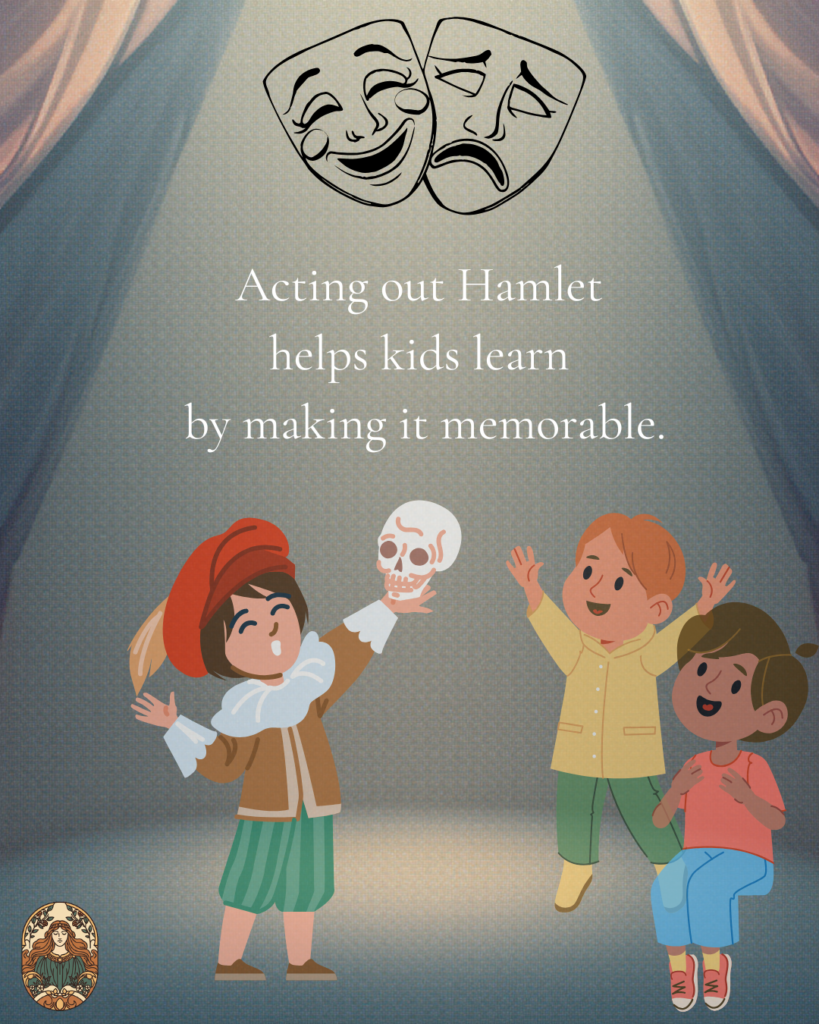
Make It Playful! Let Them Act It Out
Shakespeare was written for performance, not quiet reading.
Children learn best through play:
- Act out Hamlet and Horatio meeting the ghost.
- Let them pretend to be Ophelia sharing a secret with a friend.
- Have a “to be or not to be” moment using silly voices.
- Use puppets or toys to recreate scenes.
- Stage a mini play with toy crowns, capes, or paper swords.
When kids act out Shakespeare, they often understand it instinctively.
Use Questions, Not Explanations
Kids don’t need analysis. They need curiosity.
Great questions include:
- “Why do you think Hamlet hesitates?”
- “Do you trust the ghost?”
- “Is Claudius a good leader?”
- “What makes a family feel safe?”
- “Why do you think Hamlet talks to skulls?”
- “Who do you think is the most loyal character?”
Let them guide the discussion.
Their answers will surprise you.
Keep the Ending Gentle
For young children, a simplified ending is kindest:
“A lot of characters make choices that lead to sad endings. Shakespeare wanted to show how important honesty, communication, and kindness are. And how secrets and revenge can cause harm.”
Older kids (10+) can handle a clearer explanation:
“Tragedies help us understand the importance of empathy, integrity, and thinking before we act.”
Focus on meaning, not mechanics.
Closing the Curtain
Introducing your kids to Hamlet isn’t about giving them a tragic story. It’s about giving them a framework for:
- empathy
- courage
- emotional depth
- moral complexity
- honesty
- reflection
- and the beautiful messiness of being human
Shakespeare didn’t write Hamlet for scholars.
He wrote him for anyone who knows what it feels like to be overwhelmed, unsure, hopeful, afraid, or brave.
Children know these feelings intimately.
You might be surprised how naturally they understand him.

For more beauty, color, and curiosity, subscribe to the Guggums newsletter
Leave a Reply