

We all know what it feels like when someone looks at us but fails to truly see us. The rush to interpret, to categorize, to narrate each other’s intentions creates a distance that doesn’t have much to do with reality, but everything to do with projection. And when someone misreads you, when their invented story becomes louder than your actual one, there can be a sting that catches you off guard.
Misunderstanding can feel like an erasure.
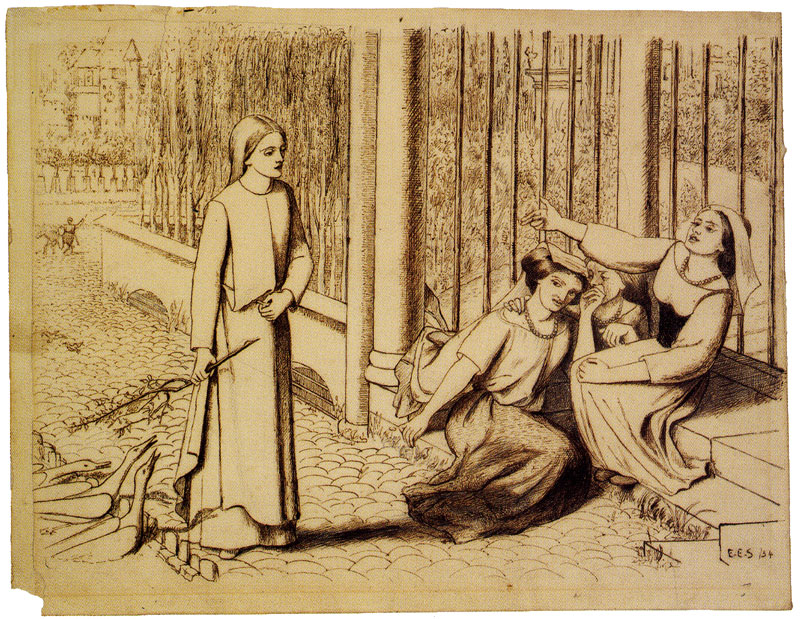
I think the Pre-Raphaelites understood this tension. The world saw Elizabeth Siddal‘s face, her hair, even her posture captured endlessly. She was frequently reshaped her into symbols, ideals, and myths. A drowning woman, a tragic muse, an emblem of beauty tinged with sorrow. But these images were never the whole truth. They were reflections of the people who painted her, not the woman herself.
Siddal addressed this in her poem Lust of the Eyes
The Lust of the Eyes
Elizabeth Siddal

I care not for my Lady’s soul
Though I worship before her smile;
I care not where be my Lady’s goal
When her beauty shall lose its wile.
Low sit I down at my Lady’s feet
Gazing through her wild eyes
Smiling to think how my love will fleet
When their starlike beauty dies.
I care not if my Lady pray
To our Father which is in Heaven
But for joy my heart’s quick pulses play
For to me her love is given.
Then who shall close my Lady’s eyes
And who shall fold her hands?
Will any hearken if she cries
Up to the unknown lands?
Sometimes I think about that when modern life becomes loud, when people on social media decide who you are before knowing anything at all. It’s comforting, in a way, to realize we are not the first humans to face this. The misunderstanding is old; the ache is familiar.
But there’s another side to this story, one that feels gentler, more hopeful.
The ones who pause.
Who take time to ask.
Those who listen without sharpening their claws.
When someone truly sees your intentions, your humor, your hopes, your contradictions, you can feel as if you are welcomed home.
That’s the kind of seeing I want to practice more intentionally.
The soft kind. The curious kind. The kind that assumes complexity rather than malice.
The kind that remembers every person carries a thousand unspoken things.
You are not failing when others misunderstand you.
But when even a few people truly see you, they help make the rest bearable.
And maybe that’s all we can ask of each other, to try a little harder to see the person, not the projection.
Leave room for nuance.
Offer the kind of attention that feels like light and warmth rather than a searchlight.
Seen, even imperfectly, but not mistaken for someone we never were.

For more beauty, color, and curiosity, subscribe to the Guggums newsletter